Texas Flooding: What’s Happening and How to Stay Safe
Millions in Texas Face Flash Flood Risk
Imagine rain falling so fast that the ground can’t drink it up quickly enough, and water starts rushing everywhere. That’s what’s happening in Texas this week.
- Millions of people across Texas are in danger of flash flooding (that’s when water rises super fast after heavy rain).
- The Weather Prediction Center (a group that guesses what the weather will do) says most of the state has some flood risk.
- On Tuesday, parts of South Texas were moved to the highest warning level (Level 4 out of 4). This includes a place called Uvalde.
- San Antonio and Austin are at Level 3 out of 4 (still very serious!).
- On Wednesday, San Antonio and the Big Bend Region stay at Level 3 out of 4.
Important: A Level 4 out of 4 flood threat means the danger is as high as it gets. If you’re in those areas, take warnings very seriously.
Flood Watches and How Much Rain Is Coming
A Flood Watch is like a heads-up: “Hey, flooding might happen here soon.”
- Flood Watches are on for much of south-central Texas, from the Big Bend Region up to Waco.
- Forecasters (weather guessers) say some places, mostly in the Big Bend Region, could get up to a foot of rain (that’s 12 inches!).
- Across most of the risky area, people will likely see 2 to 5 inches of rain.
Dangerous Flooding Already Reported
Even before the worst, water was already causing trouble:
- Roads covered in water and rescues (saving people from water) happened in Sabinal and Hondo.
- D’Hanis had flooding in lots of places.
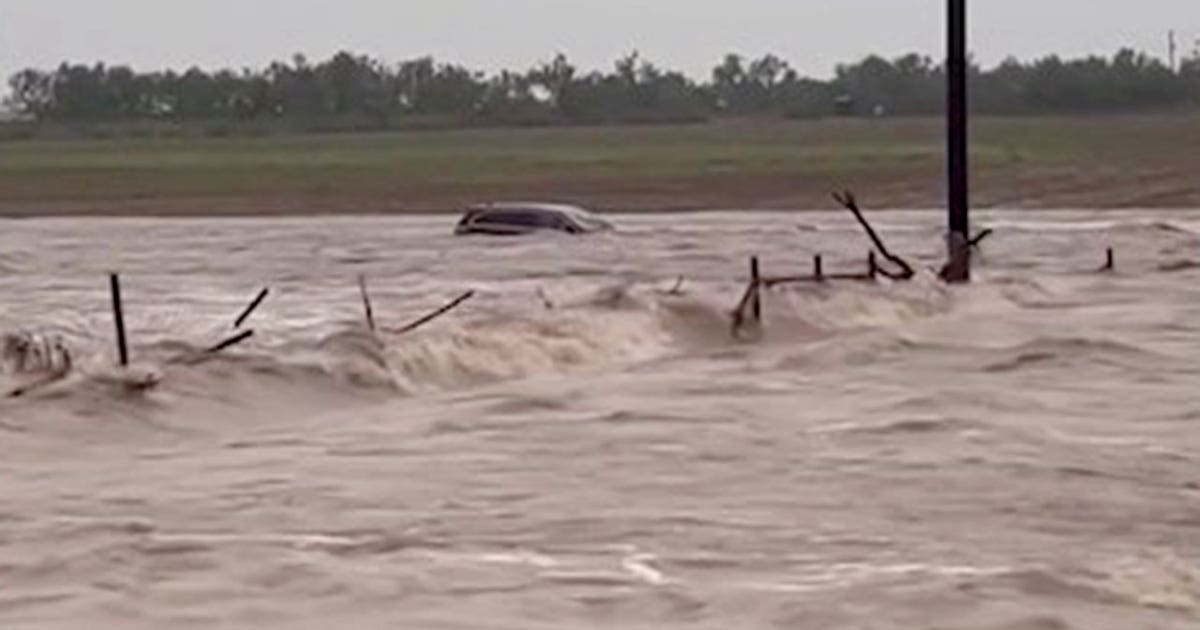
- Texas Game Wardens (like park rangers for the state) shared a video from Uvalde County showing:
- A car stuck in floodwater
- Another car being swept away by the water
- The people in that swept-away car were rescued just before it went!
- In Boerne, officials posted video of Cibolo Creek (a stream) overflowing its banks.
- Boerne officials said: “Numerous roads remain closed and will remain blocked until the water begins to recede” (meaning the water goes back down).
- Over the weekend, Texas Governor Greg Abbott turned on emergency help (like extra workers and tools) as the flood danger grew.
Turn Around, Don’t Drown
This is the big safety rule for floods:
- Never drive through water that is covering a road.
- Most flash-flood deaths happen when people in cars try to cross flooded roads and get washed away.
- Just remember: Turn around, don’t drown.
Important: If you see water on the road, don’t try to drive through it. Turn around and find another way.
Where Did This Info Come From?
The facts in this story came from:
- NOAA (a big weather and ocean science group)
- The National Weather Service
- The Weather Prediction Center
- Social media posts from officials
Summary
Texas is seeing dangerous flash floods this week. South Texas (like Uvalde) is at the highest risk level, while San Antonio and Austin are at the next level down. Flood Watches cover a big chunk of south-central Texas, with up to a foot of rain possible in some spots. Water has already covered roads and swept away cars, but people were rescued. Always remember: if a road is flooded, turn around and don’t drown.
FAQ
What does “flash flood” mean?
It means water rises very quickly after heavy rain, often with little warning.
What is a Flood Watch?
It’s a warning that flooding might happen in your area soon, so you should be ready.
Why shouldn’t I drive through flooded roads?
Because the water can be deeper and faster than it looks, and your car can get swept away—this causes most flood deaths.
Who declared the emergency resources in Texas?
Governor Greg Abbott activated them over the weekend as flooding threat increased.
 "Charlize Theron Stuns With Daughter at Hollywood’s Biggest Red Carpet") 1
1