11
11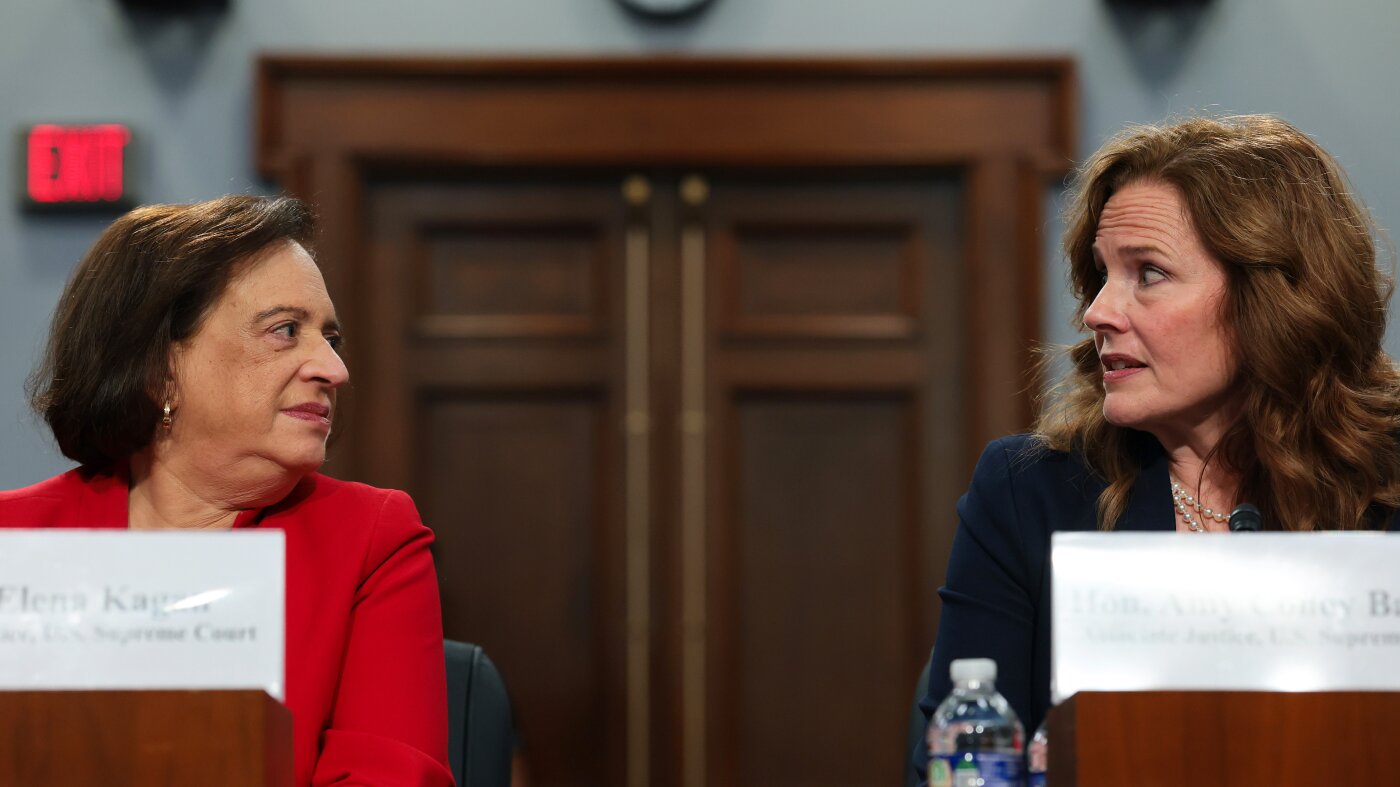
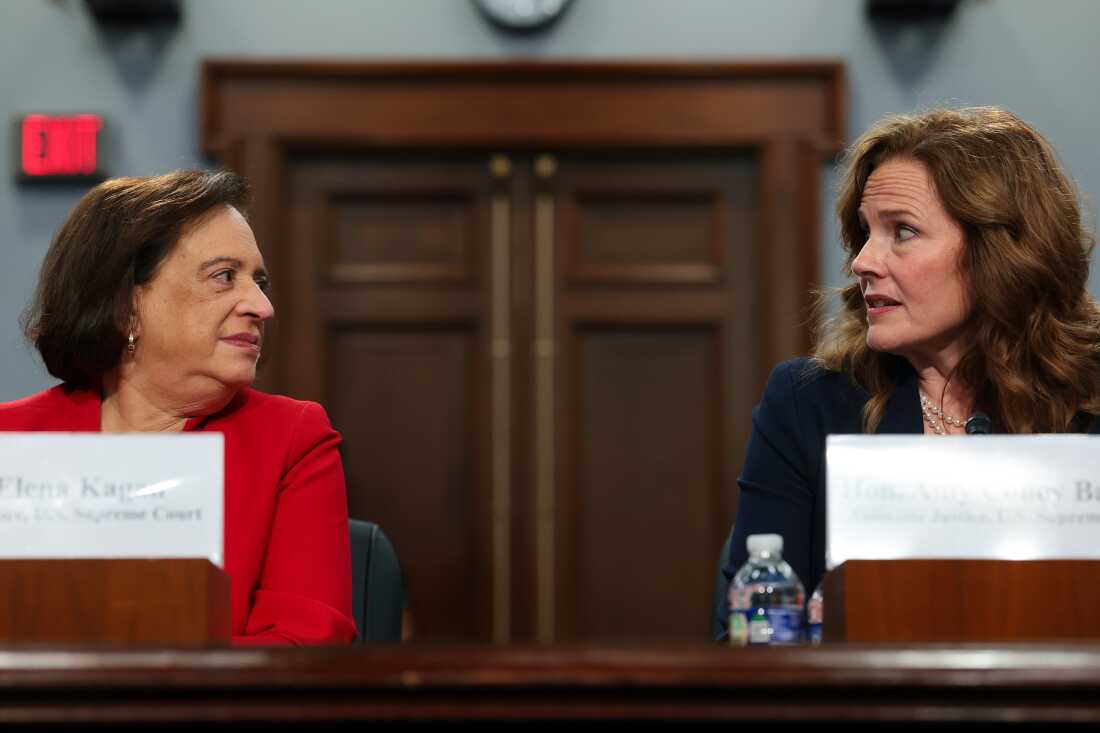
Caption: Supreme Court Justices Elena Kagan and Amy Coney Barrett testify before the House Appropriations Committee on Capitol Hill on July 14, 2026 in Washington, D.C. Credit: Anna Moneymaker/Getty Images
The Supreme Court did something on Tuesday that it had not done in seven years. It sent two of its judges (called "justices") to Capitol Hill (where the U.S. Congress works) to talk about the court’s budget request for the next year.
The two justices who went were:
As Kagan said in her testimony (that means the spoken statements she made to Congress), it was a Republican named Darrell Issa and a Democrat named Elijah Cummings who, ten years ago, told the court to improve its security.
Kagan remembered the two Congressmen basically saying: "We think you’re crazy to have less security than the director of the Office of Personnel Management (a government office), and you have to do better."
Before that push, justices had little or no security. For example:
Important Point: The justices actually liked having no security because having bodyguards feels invasive (like people are in your personal space all the time).
In recent years, the court made big changes:
Even with all that, Kagan pointed out:
The justices talked a lot on Tuesday about how rising threats changed their lives.
Justice Barrett shared two scary stories:
The bulletproof vest story
Important Point: Threats hurt judges all over the country. After a gunman killed 20-year-old son of Judge Esther Salas (who wanted to kill her), many judges got packages with the slain son’s name on them. Barrett said these are meant to "intimidate and harass."
Senator Jack Reed asked if President Trump’s angry words about court rulings (like on tariffs and birthright citizenship) could make justices less safe.
Kagan gave a two-part answer:
Congresswoman Rosa De Lauro asked about ethics rules (rules about right and wrong behavior).
She supports a bill (a proposed law) to:
Kagan likes the idea of enforcement but says it is "hard," because:
One idea Kagan liked: a panel of retired respected judges to enforce the code. Barrett was unsure because:
This shows even agreeing on the loose ethics code in 2023 was difficult.
The justices were also asked about the court’s emergency docket, nicknamed the "shadow docket" by critics.
Critics (including Kagan) say these secret, unexplained orders make it hard for lower courts to know the law. Some say the Trump administration uses it like a fast-pass to get policies approved.
Senator Chris Van Hollen asked about this. Kagan said part of the reason for more use is:
1. Why did the Supreme Court justices go to Capitol Hill?
They went to testify about the court’s budget request for the coming year, especially money for security, something they had not done in seven years.
2. What is the "shadow docket"?
It is the court’s emergency docket where cases are decided very fast, often skipping lower courts and without clear explanation.
3. Why do justices need more security now?
Because threats to their safety have dramatically increased in number and seriousness, including scary events like swatting and bulletproof vest needs.
4. What is the gift limit issue?
Congress members can only take gifts under $50, but Supreme Court justices have no limit, and some lawmakers want to change that.
5. Why is an ethics enforcement system hard to make?
Because if the President or Congress makes it, the court could lose independence; picking a fair panel of judges is also complicated.