Big Warnings About Who Can Vote: What the Government Is Doing and Why It’s Tricky
What Happened?
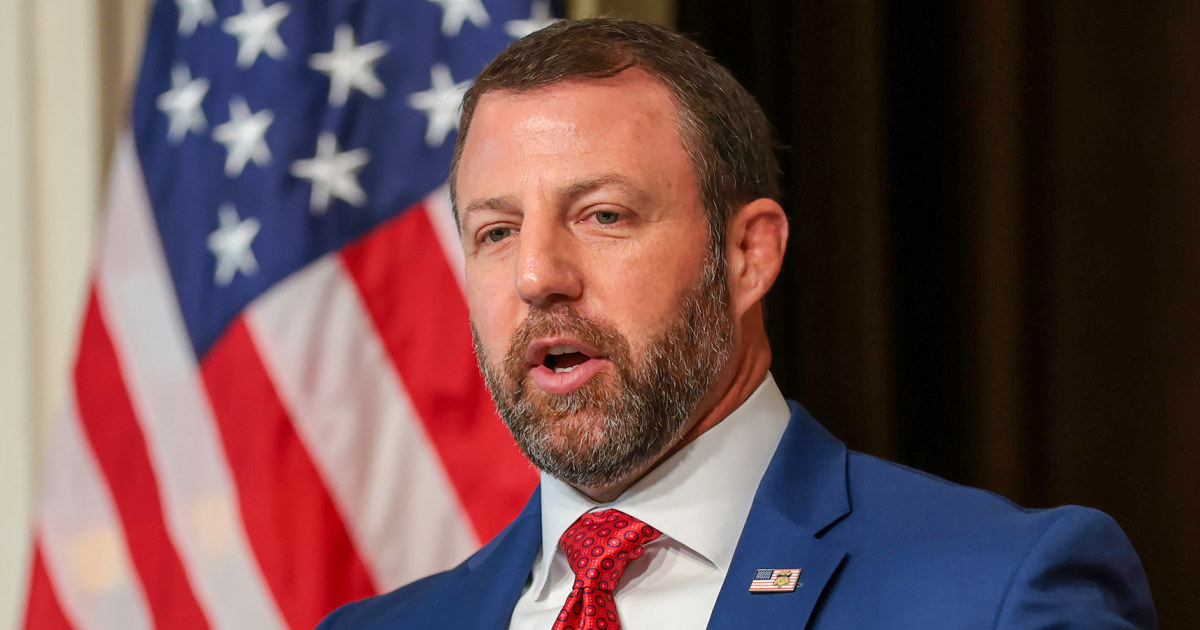
Imagine the U.S. is like a huge club where only certain people (citizens) are allowed to vote for the club leaders. Recently, a top government boss named Markwayne Mullin, who is the Secretary of Homeland Security (the person in charge of keeping the country safe at home), made a big announcement.
On Friday in Washington, Mullin said:
- State election officials (the people who run elections in each state) must follow the Trump administration’s methods to check if non-citizens (people who are not U.S. citizens) are on voter lists.
- If they don’t, he threatened them with possible prison time.
Important Point: Mullin said state officials could face fines, penalties, and even prison if they get the info they need to secure elections but choose not to act.
What Did the President Say Earlier?
The night before Mullin spoke, President Donald Trump gave a speech about elections. Mullin was basically adding more details to what Trump said.
Mullin claimed that the Department of Homeland Security (DHS) — the big government team for homeland safety — found something surprising:
- More than 250,000 non-citizens might be on voting lists.
- This was in at least four states: California, New Jersey, Nevada, and Pennsylvania.
What Is Mullin Asking States to Do?
Mullin demanded that states do the following:
- Run their voter rolls (the official lists of who can vote) through a federal database (a big computer system) kept by DHS.
- This database checks if someone is a non-citizen.
- If states don’t do this, they won’t get federal grants (money from the national government).
Steps Mullin Took Before the Announcement
- He sent letters to the secretaries of state (top election officials in those states).
- He asked them to reply within two weeks.
- He told them to promise they will work with the federal government.
Why Is the Database a Problem?
The DHS database was originally made to check immigration benefits (like who gets to stay in the country). Using it for voting checks is new and messy.
- A federal judge (a top court official) blocked this use because it broke rules about keeping Social Security records (your secret ID number) private.
- The database also makes mistakes. For example:
- It often marks people who just became citizens (new Americans) as non-citizens.
- Voting rights experts say this is flawed and could kick real voters off the lists.
Important Point: The database does NOT itself say “this person is not a citizen.” It checks other government systems and flags people for a closer look. But it can be outdated, so wrong people get removed.
What Else Did Mullin Say?
Mullin spoke from a building next to the White House. Here is what he promised:
- DHS will scrub (clean) election records before and after the midterms (big votes coming up) to find bad votes from non-citizens and dead people.
- Illegal voter registration and voting can mean up to 5 years in prison and $250,000 fines.
- Trump told the DHS cyber team to release an updated election security plan in 30 days.
- He said this is not about “rehashing 2020” (arguing about the last big election) but about making people trust voting.
Why Are People Doubting This?
The Trump administration is using government power to question the election system as midterms near.
- Trump keeps saying the 2020 election was “dirty” and “rigged,” even though his own Cabinet said there was no widespread fraud.
- The FBI raided a election office in Georgia and took ballots.
- The Justice Department sued states for voter data and sent warning letters about criminal charges.
- Trump fired many people from agencies that help secure elections.
Election law expert Rick Hasen wrote: “If his government had actual evidence of noncitizen voting, there would be indictments (charges). The fact that he hasn’t shows these claims likely have no legs.”
Voting rights experts say:
- Non-citizen fraud is very rare.
- The U.S. system is spread out (each state does its own thing), which protects against big cheating.
How Do Voter Rolls Normally Work?
America’s voter lists are made for signing people up, not for removing them fast.
- Dead people can stay on the list for a while.
- Officials clean the list over time, but it takes patience.
What About the SAVE Database?
Last year, DHS updated a tool called SAVE:
- It checks citizenship and immigration status.
- It lets officials search many records at once and see Social Security numbers.
- DHS says it only flags people for review; it doesn’t decide someone is a non-citizen by itself.
- But voting rights groups say outdated data wrongly kicks people off.
Summary
In simple words: The U.S. homeland security boss threatened state election officials with prison if they don’t use a federal computer system to find non-citizens on voter lists. The system is blocked by a judge, makes errors, and experts say non-citizen voting is super rare. The Trump team says this builds trust; critics say it spreads doubt without proof.
FAQ
Q1: What is a non-citizen?
A: A person who lives in the U.S. but is not a U.S. citizen (like someone from another country who hasn’t become a citizen yet).
Q2: Why would a database flag a real citizen as a non-citizen?
A: Because it can be outdated. For example, a person who just became a citizen might still appear as non-citizen in old records.
Q3: Can state officials really go to prison?
A: Mullin says if they ignore the info and don’t secure elections, yes — but a judge blocked the main method, so it’s being fought in court.
Q4: What are midterms?
A: Big elections held in the middle of a president’s term to choose many leaders; they are coming up soon.
Q5: Is non-citizen voting common?
A: Experts say it happens but is very rare, and the U.S. system is built to prevent large-scale problems.
 1
1