When the Pentagon Cut Civilian Protection Staff—and Why It Might Bring Them Back
The Big Picture: What Happened?
Imagine a team whose only job is to make sure innocent people don’t get hurt during war. That team used to exist at the Pentagon. Then, the new boss—Pete Hegseth—fired almost all of them.
Now, after a tragic mistake killed 168 people (mostly children) at a school in Iran, the Pentagon is quietly trying to hire many of them back.
Important Point: This isn’t just about numbers on a spreadsheet. It’s about whether the U.S. military has the tools to see civilians before pulling the trigger.
Who Is Pete Hegseth?
- Former Fox News host turned Secretary of Defense (the civilian boss of the military)
- National Guard veteran who served in Iraq and Afghanistan
- Known for saying the military has too many "stupid rules" and "jagoffs" (his word for military lawyers, aka JAGs)
- Believes wars should be fought to win—fast, hard, and without "politically correct" restraint
What Did Hegseth Do?
Within months of taking office, he cut ~90% of the staff working on civilian harm mitigation.
| What Existed Before |
What Happened |
| Experts who studied "patterns of life" (where civilians live, work, go to school) |
Fired or reassigned |
| Advisers who helped targeters before a strike |
Gone |
| Investigators who looked into what went wrong after |
Gone |
| A Pentagon office to train everyone on these lessons |
Gutted |
Important Point: Congress mandated some of these protections. The Inspector General later said the cuts may have broken the law.
The Strike That Changed Everything: Minab, Iran
What Happened
- Five-month war with Iran (on-again, off-again)
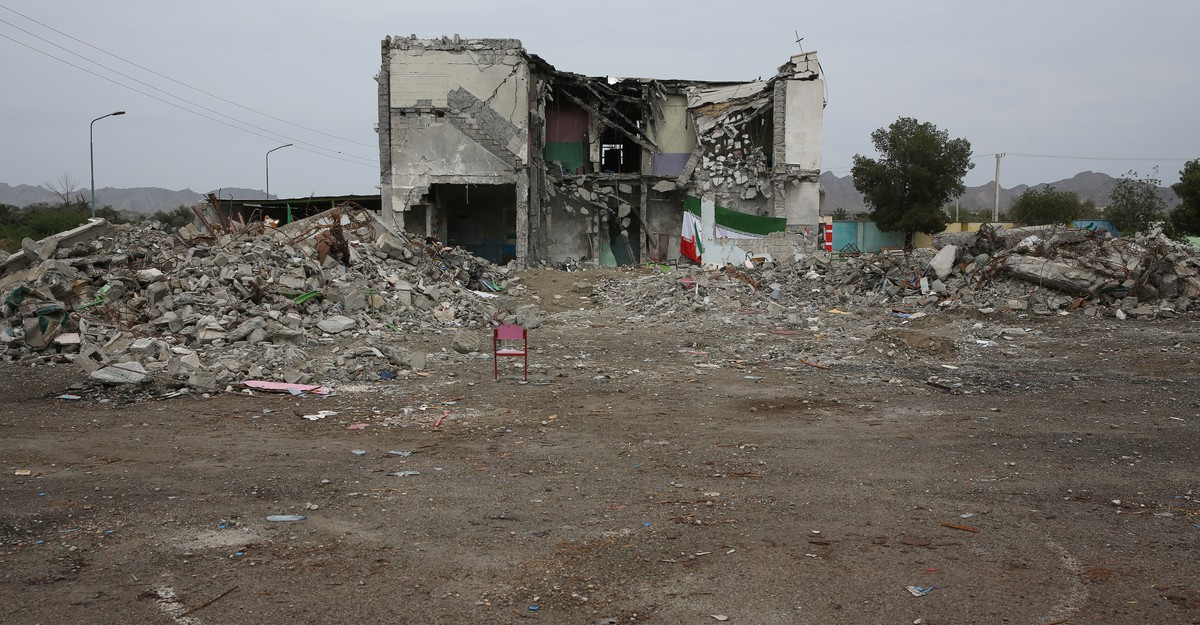
- First hours of conflict: A U.S. Tomahawk missile hit a building in Minab, southern Iran
- 168 dead — mostly children
- The building used to be an Iranian military site — but had been converted into a school
- U.S. intelligence knew this — but the strike planners never got that info
The Aftermath
- U.S. officials first didn’t believe they hit a school
- Some wondered if Israel did it
- Trump suggested Iran bombed its own school
- But: Iran doesn’t have Tomahawks — only the U.S. does
- An official Pentagon investigation is underway — the only one so far in this war
- Trump says results will be released. Hegseth promises transparency — but hasn’t said when or how much
Why Civilian Protection Matters (The "ELI5" Version)
Think of it like this:
You’re playing a video game where you have to hit bad guys. But the bad guys hide in neighborhoods. If you blow up the neighborhood, you lose the game — because everyone turns against you.
Real-World Consequences (What History Taught Us)
- Iraq & Afghanistan (2000s–2010s): Tens of thousands of civilians killed → fueled insurgent recruitment, lost local support, undermined the whole mission
- ISIS Campaign (2014–2018):
- Outside groups (like Airwars) estimated 8,000+ civilian deaths
- Pentagon’s official count: ~1,500
- Gap = trust problem
- 2021 Afghanistan Withdrawal: Drone strike killed 10 civilians (7 children) → Defense Secretary Lloyd Austin ordered a formal fix → Civilian Harm Mitigation and Response Action Plan
- Gaza & Caribbean (Recent): Global outcry over civilian deaths → reputational damage that makes allies hesitate, enemies recruit
The System That Got Built (And Then Cut)
Step-by-Step: How It Worked
- Before a strike: Civilian-pattern experts review the target — "Hey, kids go to school there at 8 AM"
- During planning: Advisers flag risks — "This building was a base in 2020, but it’s a hospital now"
- After a strike: Investigators check what actually happened — "Did we hit the right place? Did intel fail?"
- Lessons learned: A central office trains everyone so mistakes don’t repeat
Key Fact: These advisers could not veto a strike. They only advised. Commanders still decided.
Who Wants the Staff Back?
Almost every combatant commander (the generals running wars in Yemen, Somalia, Iran, etc.) privately supports restoring the staff.
Why?
- They’ve seen the cost of civilian casualties: lost intelligence, angry locals, failed missions
- Better tech (drones, sensors, AI) helps — but only if humans know how to use it
- Admiral Brad Cooper (head of Central Command) told troops:
"Our commitment to the law of armed conflict is not a constraint on our lethality. It is the source of our legitimacy."
What’s Happening Now?
The Proposal
- Restore up to half of the cut positions
- Awaits Hegseth’s signature
- Not final yet — Pentagon says it’s a "strategic reassessment"
The Political Pressure
- Democrats in Congress: "Reverse course!"
- Inspector General: "These cuts may violate laws protecting civilians"
- Watchdog groups (Airwars, Center for Civilians in Conflict): "This is the bare minimum"
The Big Question
Will Hegseth actually let them do their jobs — or just check a box?
Important Point: As former State Department lawyer Brian Finucane put it:
"If this is a box-checking exercise, it won’t make a difference."
Summary: Why This Matters to You
| If Staff Stay Cut |
If Staff Restored & Empowered |
| More "Minabs" likely |
Fewer tragic mistakes |
| World sees U.S. as reckless |
U.S. keeps moral high ground |
| Enemies recruit more easily |
Locals more likely to cooperate |
| Allies lose trust |
Allies stay willing to help |
| Wars drag on, cost more |
Wars end faster with better outcomes |
Bottom line: Protecting civilians isn’t "soft." It’s how you win — and how you keep winning.
FAQ: Your Questions, Answered
Did the U.S. mean to kill those children in Minab?
No one says it was intentional. But the strike used outdated intelligence — the U.S. knew it was a school, but the people firing the missile didn’t. That’s exactly what civilian-protection staff are supposed to prevent.
Can’t commanders just "be careful" without special staff?
They try. But modern war is fast, complex, and data-heavy. Commanders need dedicated experts tracking where civilians are right now — not where they were two years ago.
Is this just about Iran?
No. The same staff would work on operations in Yemen, Somalia, Venezuela, the Caribbean — anywhere the U.S. military strikes.
What’s a "Tomahawk missile"?
A long-range, precision-guided cruise missile launched from ships or submarines. Only the U.S. and a few allies have them. That’s how we know Iran didn’t fire it.
What happens if Hegseth refuses to sign?
The cuts stay. The Inspector General’s warning stands. And the next "Minab" becomes more likely, not less.
Final Thought:
War is always tragic. But systems that reduce civilian harm aren’t optional — they’re what separates a military that wins lasting peace from one that just makes more enemies.
The Pentagon built those systems once. It’s deciding now whether to rebuild them.
 1
1