 11
11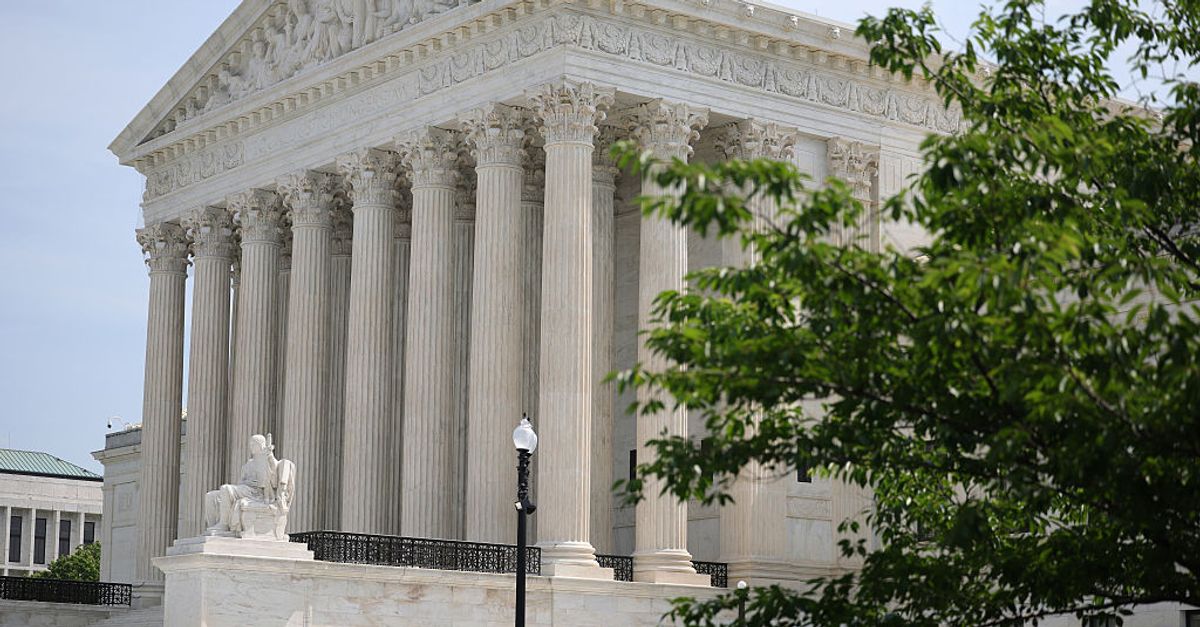
Imagine the Supreme Court is like the ultimate referee in a game. In June 2025, this referee made a big call: President Trump’s executive order trying to end birthright citizenship was unconstitutional.
Now, the Trump administration had a chance to ask for a "do-over" (legally called a petition for rehearing). The deadline was Monday, July 27, 2025. But when the court’s official record was checked that morning — no request had been filed.
Important Point:
The decision stands. Birthright citizenship remains the law of the land.
Unless something very unusual happens, this chapter is closed.
Think of it like a "welcome mat" at America’s front door.
The Rule: The 14th Amendment to the U.S. Constitution says:
"All persons born or naturalized in the United States, and subject to the jurisdiction thereof, are citizens of the United States…"
| Date | What Happened |
|---|---|
| Jan. 20, 2025 | President Trump (starting his second term) signs an executive order trying to end birthright citizenship for children of undocumented immigrants and temporary visa holders. |
| Right After | States, immigrant rights groups, and individuals sue. Federal judges across the country block the order, saying it violates the Constitution. |
| June 27, 2025 | Supreme Court rules 6–3 in a related case: Federal courts cannot issue "nationwide injunctions" (orders that stop a law everywhere in the U.S.). This was about court power, not the citizenship order itself. |
| Dec. 5, 2025 | Supreme Court agrees to review a New Hampshire judge’s ruling that struck down Trump’s order. |
| June 30, 2025 | Final ruling: Supreme Court upholds the lower court — Trump’s order is unconstitutional. |
| July 8, 2025 | Trump posts on social media: Plans to ask for a rehearing "IMMEDIATELY." |
| July 27, 2025 | Deadline passes. No petition filed. |
Chief Justice John Roberts wrote the main opinion, joined by:
Their Reason: The 14th Amendment’s words are clear. The order contradicts the Constitution directly.
Justice Brett Kavanaugh agreed the order must fall — but for a different reason.
His Reason: A federal statute (a law passed by Congress), 8 U.S.C. § 1401, uses nearly identical language to the 14th Amendment. The order violates that law, so we don’t even need to reach the Constitutional question.
Clarence Thomas, Samuel Alito, and Neil Gorsuch would have let the order take effect.
It wasn’t just missed paperwork — the odds were terrible.
To get a rehearing, you need:
That means Trump would have needed one of the 6 justices who voted against him to change their mind — and bring 4 others along.
Important Point:
Legal experts (like Professor Stephen Vladeck) agree: A rehearing was a "Hail Mary" with almost zero chance of success.
The administration likely knew this and chose not to prolong a losing battle.
Think of it like a signed instruction from the President to the executive branch (agencies, departments) on how to enforce laws. It’s not a law passed by Congress and cannot override the Constitution.
No. The Constitution can only be changed by amendment — a super-hard process requiring 2/3 of Congress and 3/4 of states. An executive order that conflicts with the Constitution is invalid.
It’s a court order that says: "The government cannot enforce this policy anywhere in the United States."
The Supreme Court ruled in June 2025 that lower federal courts don’t have the power to issue these sweeping orders — but that was a separate case about court authority, not the citizenship policy itself.
Judges sometimes say: "I agree this policy is illegal, but for a different legal reason."
Kavanaugh relied on a federal statute (a law Congress passed) rather than the Constitution. It’s like saying: "You’re speeding — not because you broke the state law, but because you broke the local ordinance." Same ticket, different rule.
Only if:
For now? The matter is settled.