 11
11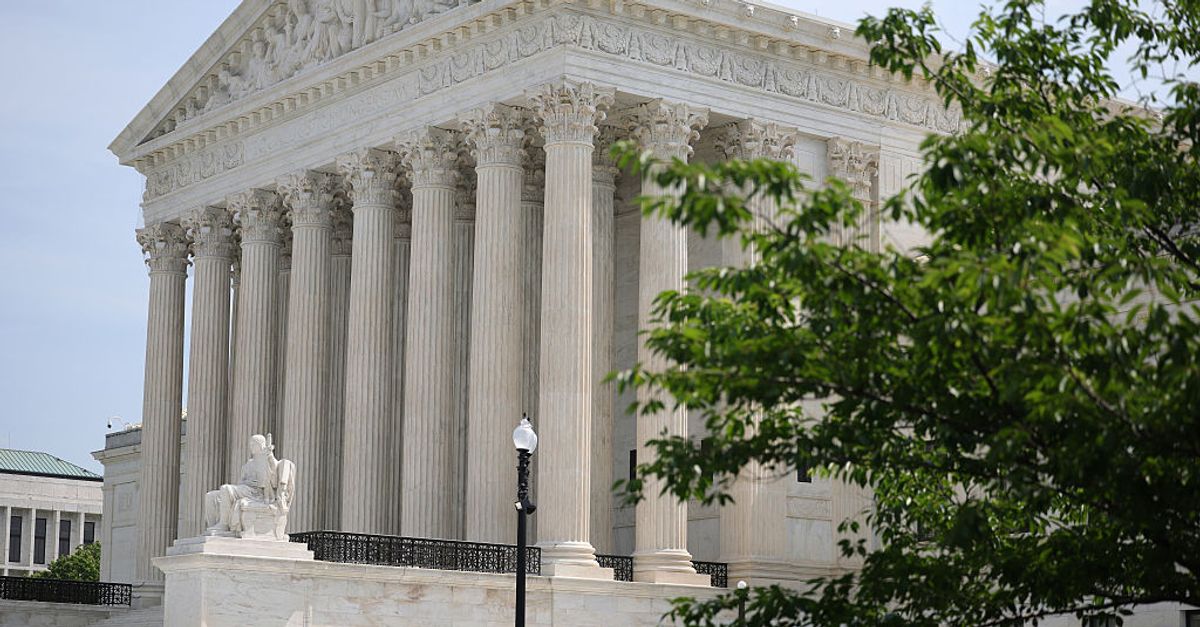
Important Point: The Supreme Court has ruled that the President cannot end birthright citizenship through an executive order. The Trump administration missed the deadline to ask the Court to change its mind, making this decision final.
Imagine you’re born in a hospital in New York City. Your parents might be from another country, they might be visitors, or they might have lived here for years. Because you were born on U.S. soil, you are automatically a U.S. citizen. This is called "birthright citizenship," and it comes from the 14th Amendment to the Constitution.
The 14th Amendment says:
"All persons born or naturalized in the United States, and subject to the jurisdiction thereof, are citizens of the United States and of the State wherein they reside."
In simple terms: If you’re born here, you belong here.
On January 20, 2025 (his first day back in office), President Trump signed an executive order trying to end birthright citizenship for certain children—specifically, those born to parents who are not U.S. citizens or lawful permanent residents.
Think of an executive order like a boss giving instructions to their employees. It tells government agencies what to do, but it cannot change the Constitution itself.
| Group | Justices | Reason |
|---|---|---|
| Majority (5) | Roberts, Sotomayor, Kagan, Barrett, Jackson | The order violates the 14th Amendment’s Citizenship Clause. |
| Concurring (1) | Kavanaugh | Agrees the order is illegal, but says it violates a federal statute (law passed by Congress) that mirrors the 14th Amendment. |
| Dissenters (3) | Thomas, Alito, Gorsuch | Would have allowed the order to take effect. |
Key Takeaway: 6 out of 9 justices said the order cannot stand. Only 3 would have let it happen.
Even if Trump had filed on time, history was not on his side:
In plain English: The Supreme Court almost never says "we changed our minds" after a full hearing and decision.
No. The Constitution can only be changed by a constitutional amendment (which requires 2/3 of Congress and 3/4 of states) or by the Supreme Court interpreting it differently. An executive order only directs the executive branch—it cannot override the Constitution.
It’s a court order that stops a government policy everywhere in the country, not just for the people who sued. The Supreme Court ruled in June 2025 that federal courts don’t have the power to issue these—though this was a separate question from whether Trump’s order was constitutional.
He believed the order violated a federal law (8 U.S.C. § 1401) that uses almost the same words as the 14th Amendment. He didn’t need to decide the constitutional question because the statute alone was enough to strike down the order.
Almost certainly not. The 14th Amendment’s Citizenship Clause is part of the Constitution. A regular law cannot override it. Only a constitutional amendment could change it.
Nothing changes. Children born in the U.S. (with very rare exceptions, like children of foreign diplomats) are still automatically U.S. citizens at birth. The executive order is permanently blocked.
Final Thought: The Constitution is like the rulebook for the country. Even the President has to follow it. When the Supreme Court—the ultimate referee—says an order breaks the rules, that’s the end of the game.