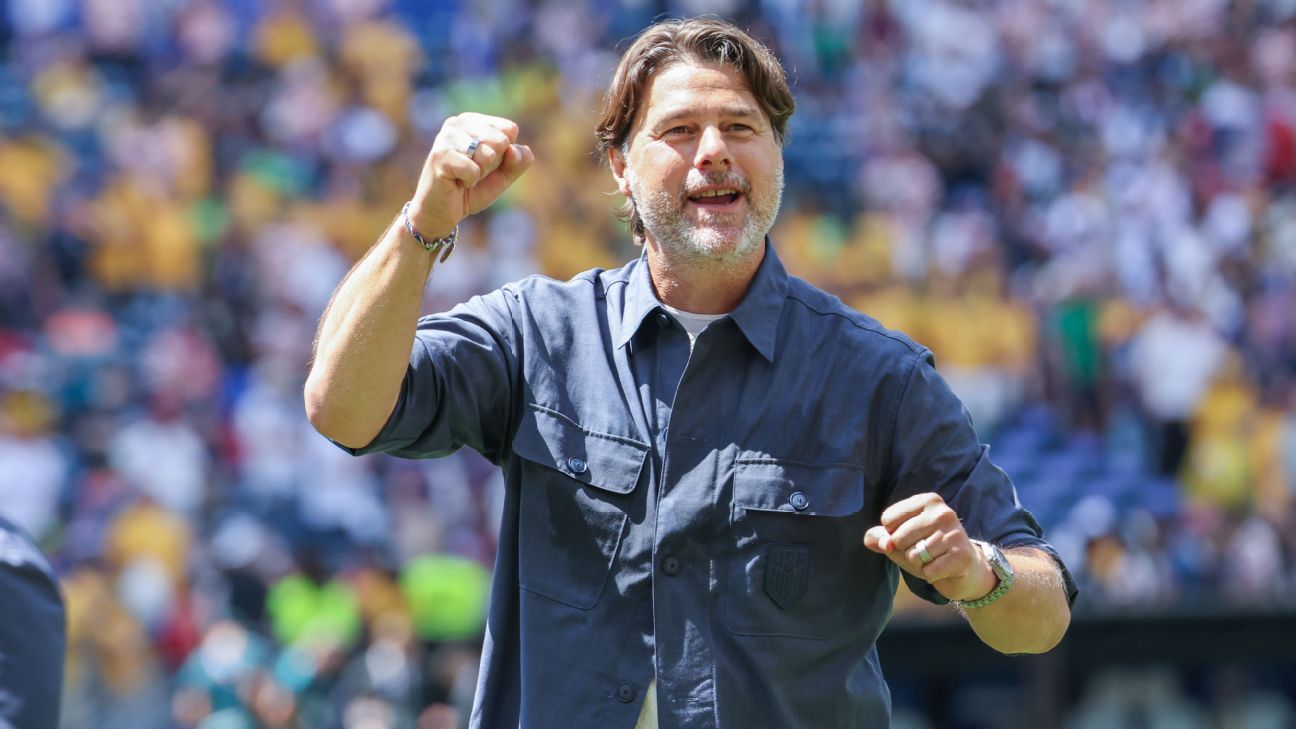
Mauricio Pochettino Stays as USMNT Coach Through 2030 World Cup: What It Means for U.S. Soccer
By Bill Connelly, Cesar Hernandez, Lizzy Becherano, and Jeff Carlisle
Originally published August 3, 2026
The Big News: Pochettino Signs Four More Years
Important Point: Despite rumors linking him to AC Milan and a disappointing Round of 16 exit against Belgium at the 2026 World Cup, Mauricio Pochettino has officially signed a new contract to remain head coach of the U.S. Men’s National Team (USMNT) through the 2030 FIFA World Cup.
ESPN gathered its four resident USMNT experts—Jeff Carlisle, Bill Connelly, Cesar Hernandez, and Lizzy Becherano—to break down what this means for American soccer.
What Went Right in Pochettino’s First Two Years?
The experts agree: Pochettino changed the culture, and fast.
1. Accountability Became Non-Negotiable (Jeff Carlisle)
- Before Pochettino, players had grown complacent—they felt safe in their spots.
- Pochettino made it clear: No one’s spot is guaranteed. Playing time must be earned.
- This "buy-in" was visible at the 2026 World Cup.
- Looking ahead: He must keep bringing in new players early to challenge veterans, or risk the same stagnation that happened under previous coach Gregg Berhalter.
2. A Fun, Athletic, Cohesive Style of Play (Bill Connelly)
- Despite the core starters barely playing together in the previous four-year cycle, Pochettino got them playing connected, aggressive soccer that maximized their athleticism.
- Reminiscent of his successful Tottenham Hotspur teams—but without the exhaustion of a 9-month club season.
- Special mention: He quickly identified and developed Alex Freeman, a young right-back who became a key contributor.
3. Culture Shift: "Everything Matters" (Cesar Hernandez & Lizzy Becherano)
- The identity and intensity of the squad transformed.
- Veteran defender Tim Ream described training sessions as intense, where "everything matters every single day from the minute you wake up until you go to sleep."
- Pochettino brought the passion and discipline he grew up with in Argentina to the U.S. setup.
- Even if some roster decisions (like leaving off Diego Luna) sparked debate, the overall roster elevation is undeniable.
Important Point: Pochettino’s biggest win wasn’t tactical—it was cultural. He made the national team feel like a privilege you earn daily, not a right you keep forever.
Where Must the USMNT Improve Over the Next Four Years?
1. Stop Worrying About What You Can’t Control (Jeff Carlisle)
- Pochettino sometimes vented frustration about things outside his control:
- Gold Cup crowds where U.S. fans were outnumbered.
- Publicly stating the U.S. "doesn’t have players in the top 100 in the world" after friendly losses.
- While factually arguable, these comments sounded like excuses and didn’t help the players.
- World Cup qualifying will be full of uncomfortable moments (hostile crowds, bad fields, travel). He must accept these realities and focus only on what the team can control.
2. Defensive Vulnerability in Open Play (Bill Connelly)
- The U.S. played wide-open, aggressive soccer—great for overwhelming weaker teams.
- Risk: Good teams (like Belgium) rip you apart on the counterattack.
- The weak link: Center-back depth and upside is arguably the thinnest position in the player pool.
- Stat to know: Against the six highest-ranked FIFA opponents this year, the U.S. conceded 18 goals.
- Adjustment needed: Find a balance—stay aggressive but don’t leave the back door wide open against elite teams.
3. Dual-National Recruitment Needs Work (Cesar Hernandez)
- In the battle for Mexican-American talent, Mexico (El Tri) has won key recruitments recently.
- Examples: Brian Gutiérrez (Chivas) and Obed Vargas (Seattle Sounders) chose Mexico despite U.S. eligibility.
- Vargas is now a key midfielder abroad; Gutiérrez is nearing a move to Europe.
- The U.S. cannot afford to lose these "tweeners" to rivals.
4. Consistency Over 90 Minutes and Across Tournaments (Lizzy Becherano)
- The U.S. looked dominant in group-stage wins over Paraguay and Australia—controlled, creative, organized.
- Then vanished against Belgium in the Round of 16. It didn’t look like the same team.
- Goal for 2026–2030: Maintain that high level for full matches and full tournaments, not just flashes.
Will Pochettino Actually Stay for Four Years? The "European Club" Threat
| Expert |
Verdict |
Key Reasoning |
| Jeff Carlisle |
Very real threat |
Pochettino’s history: fired or moves on after seasons. The "slog" of Concacaf qualifying + Nations League + Gold Cup may bore him. Contract release clause size matters. USSF needs a backup plan. |
| Bill Connelly |
Less real now, but not zero |
He re-signed because club options weren’t clear and the money was good. But four years is an eternity in soccer. He’ll be 58 in 2030. A top Premier League job could tempt him. |
| Cesar Hernandez |
He’d love to return to Europe |
Pochettino wants to prove himself in the Premier League again. The paycheck may keep him, but his heart is in club football. |
| Lizzy Becherano |
Committed to finishing the project |
He’s been honest: "I miss the Premier League… I would love to come back again." But she believes he intends to see this through to 2030—which could include a World Cup match in his native Argentina. |
Important Point: The financial release clause in his contract is the biggest practical barrier to an early exit. If a European club won’t pay it, he stays. But if he wants to leave and can’t, resentment could build. USSF must prepare for either scenario.
Summary: What This Means for You, the Fan
- Stability at the top — The USMNT has a world-class coach locked in for the most important cycle in U.S. soccer history (home World Cup in 2026, then 2030).
- Culture is fixed, now tactics must evolve — The "everything matters" mentality is in place. Next: defensive solidity, consistency, and smarter game management.
- Youth pipeline is critical — Pochettino must keep integrating young players (like Freeman) and win dual-national battles to deepen the pool.
- Enjoy the ride—but stay realistic — Four years is long. A European club could come calling. The Federation needs a Plan B.
Frequently Asked Questions (FAQ)
1. Why did Pochettino stay after flirting with AC Milan?
The reporting suggests the combination of a strong financial offer from U.S. Soccer and a lack of concrete, appealing club offers made staying the best choice. He also has a genuine belief in the project.
2. What is a "dual national" and why does it matter?
A dual national is a player eligible for two countries (e.g., Mexican-American). They can choose which national team to represent. Losing top talents like Obed Vargas and Brian Gutiérrez to Mexico weakens the U.S. pool and strengthens a rival.
3. What does "release clause" mean in a coach’s contract?
It’s a set fee another club (or federation) must pay to hire the coach before the contract ends. A high clause acts as a deterrent; a low one makes leaving easy. The exact number in Pochettino’s deal hasn’t been made public.
4. Why is center-back depth such a big deal?
Center-backs are the last line of defense before the goalkeeper. In Pochettino’s high-risk, high-reward system, they face many 1v1 situations. If they aren’t fast, smart, and composed, the team concedes goals in bunches—as seen in the 18 goals allowed to top-six opponents.
5. Could Pochettino really leave before 2030?
Yes. History shows he rarely stays four full years at a club. The grind of Concacaf qualifying (away games in hostile environments, travel, short notice) is very different from European club life. If a Premier League giant comes calling in 2027 or 2028, it will be a major test of his commitment.
This article is based on expert analysis from ESPN’s Jeff Carlisle, Bill Connelly, Cesar Hernandez, and Lizzy Becherano, published August 3, 2026.
 1
1