11
11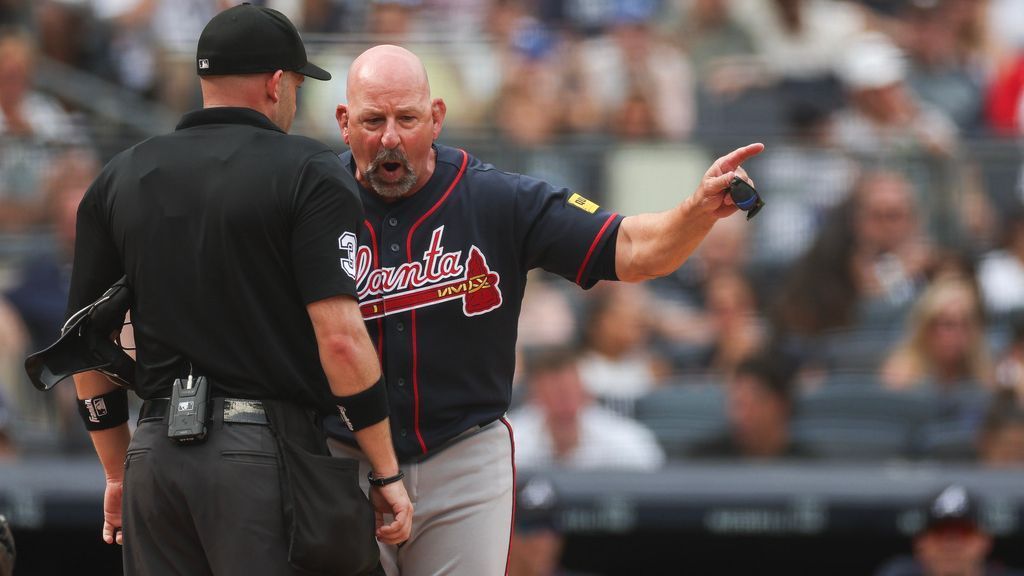
Imagine you’re playing a game of "Red Light, Green Light" but with very strict rules about how you move. That’s kind of what happened in Saturday’s baseball game between the Atlanta Braves and the New York Yankees!
During the fifth inning, something unusual occurred that led to the Braves’ manager getting thrown out of the game. Let’s break it down in simple terms.
Important People to Know
- Walt Weiss – Manager of the Atlanta Braves (the team’s head coach)
- Chris Sale – Star pitcher for the Braves (the player who throws the ball)
- Spencer Jones – Rookie player for the Yankees (new to the big leagues)
- Dan Merzel – The umpire (referee) who made the controversial call
Here’s what happened, step by step:
The Situation: There was one out in the inning, and Yankees rookie Spencer Jones was standing on third base (just 90 feet from scoring!) after hitting a triple (a hit where the batter reaches third base safely).
The Pitcher’s Move: Braves pitcher Chris Sale began his pitching motion—but the umpire noticed something unusual.
What’s a Balk? (ELI5 Explanation)
A balk is when a pitcher makes an illegal movement while on the mound that could trick the base runners. Think of it like this: if you’re playing "Freeze Tag" and the person who’s "it" pretends to tag you but doesn’t actually follow the rules of tagging—that’s a balk! The penalty? All runners get to advance one base for free.
Things got heated after the call:
Key Takeaways
- A single balk call changed the score from 2-2 to 3-2 in favor of the Yankees
- Managers often argue to protect their players from ejections
- Even veteran pitchers like Chris Sale (this was only his 3rd career balk) can make rare mistakes
- Umpires’ judgment calls on balks can be very controversial because they involve split-second movements
In Saturday’s Braves vs. Yankees game, a controversial balk call on pitcher Chris Sale allowed a run to score, giving the Yankees the lead. When Sale argued the call, Braves manager Walt Weiss rushed out to defend him—and ended up getting ejected himself. It was a dramatic moment that shows how one umpire’s decision can change a game’s momentum and lead to heated confrontations.
A balk is an illegal motion by the pitcher when there are runners on base. The pitcher must follow specific rules about how they start and stop their motion. If they break these rules—even slightly—the umpire calls a balk, and all runners advance one base automatically.
Managers often intentionally argue to draw the umpire’s attention away from the player. If the pitcher (Chris Sale) kept arguing, he might have been ejected and forced to leave the game. By arguing himself, Weiss sacrificed himself to keep his ace pitcher in the game.
Very rare! This was only the third balk of his entire career. Sale is known for having excellent control and a consistent pitching motion, which makes this call even more surprising.
We don’t know the final score from this article, but the balk directly caused a run to score and changed a tied game (2-2) to a Yankees lead (3-2). In close games, single runs often make the difference!
No. Balk calls are judgment calls by the umpire and cannot be reviewed via instant replay or challenged. Once the umpire calls it, the decision stands—though managers can still argue (at the risk of ejection).