 11
11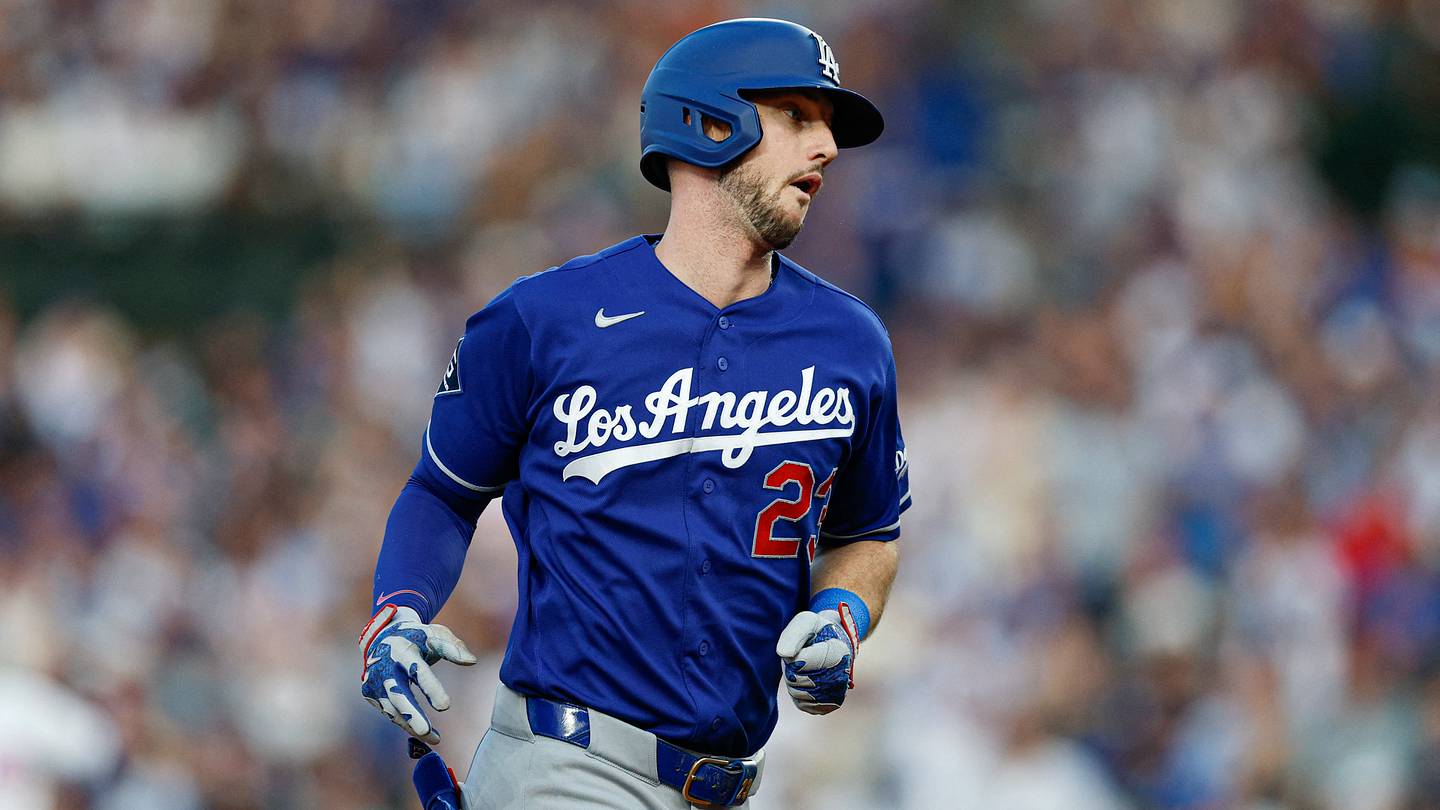
When the Los Angeles Dodgers handed Kyle Tucker a four-year, $240 million contract this past offseason (that’s $60 million per year!), the plan was simple: add a superstar bat to an offense that had been up and down. The Dodgers had just won the World Series without him, but they wanted more stability—someone they could count on every single night.
IMPORTANT POINT
This wasn’t just a big contract—it was the kind of deal that says "you are the face of our franchise for the next four years."
Through the first year of that massive deal, things have gone… poorly. Here’s the stat line that has Dodgers fans worried:
| Stat | Current Performance | What It Means |
|---|---|---|
| Batting Average | .244 | Below average for a star player |
| Home Runs | 10 | Far below his usual power output |
| RBIs | 42 | Not driving in enough runs |
| OPS | .719 | Well below his career norms |
OPS Explained Simply: On-base Plus Slugging. It combines how often you get on base + how much power you show. An OPS above .800 is good for a star. Above .900 is elite. Tucker’s .719 is… not great.
Tucker was supposed to be a complete player—great hitter, gold-glove caliber defender, and smart base runner. This year? All three have disappeared.
IMPORTANT POINT
Manager Dave Roberts publicly criticized this decision: "It just doesn’t look good when you’re down three making the first out at second base."
Roberts pulled Tucker aside for a private meeting before a game against the Diamondbacks. The goal? Check his head. Make sure the confidence was still there.
Roberts came away encouraged:
"I think he’s in a good spot, I really do. It hasn’t been what anyone had hoped for up to this point, but for me, there’s been some signs breaking. There’s still a lot of baseball left, important baseball to play. But I think he’s in a great headspace."
Translation: "He’s struggling, but he’s not broken. I still believe."
Some think the $240 million is weighing on him. Tucker strongly disagrees:
"I don’t take it like that. I just go out and play, regardless, no matter where I’m at or what I’m doing. I just go out there and try and play well, try and have good at-bats, try and play good in the field and everything, and just try to help my team win."
Even great players have down seasons. The problem? This isn’t a $10 million player having a down year. It’s a $60 million player performing like a role player.
IMPORTANT POINT
When you make $60 million a year, the spotlight finds you—fair or not. The Dodgers need this Tucker, not the one we’ve seen so far.
Here’s the good news: Baseball seasons are long. There are games left. The playoffs are a fresh start. If Tucker catches fire in October, nobody remembers April through August.
Roberts isn’t giving up. The front office isn’t giving up. Tucker says he’s not pressing about the money.
The next chapter hasn’t been written yet.
A: There’s been no public report of a significant injury. His struggles appear to be performance-based—mechanical, mental, or just a brutal slump.
A: Technically yes, but realistically no. He has a no-trade clause (standard for contracts this size), and his current value is at rock bottom. Trading him now would mean eating most of that $240M for pennies on the dollar.
A: It means a hitter is trying too hard—swinging at bad pitches, expanding the strike zone, not trusting their usual approach. It usually makes things worse.
A: Roughly $370,000 per game ($60M ÷ 162 games). That’s more than most Americans make in 5–7 years. Per game.
A: Absolutely. J.D. Martinez, Nelson Cruz, and Max Muncy all had "lost" seasons before exploding. Baseball is weird like that. One mechanical tweak, one hot streak, and the narrative flips.
Kyle Tucker’s first year as a Dodger has been a disappointment—there’s no sugarcoating it. The bat is quiet, the glove is shaky, the legs have betrayed him. But baseball is the ultimate "what have you done lately" sport, and "lately" hasn’t happened yet.
The Dodgers bet $240 million on the track record, not the last 4 months. Dave Roberts sees "signs breaking." Tucker says his head is right.
October is coming. That’s where legends are made—and where $240 million questions get answered.