11
11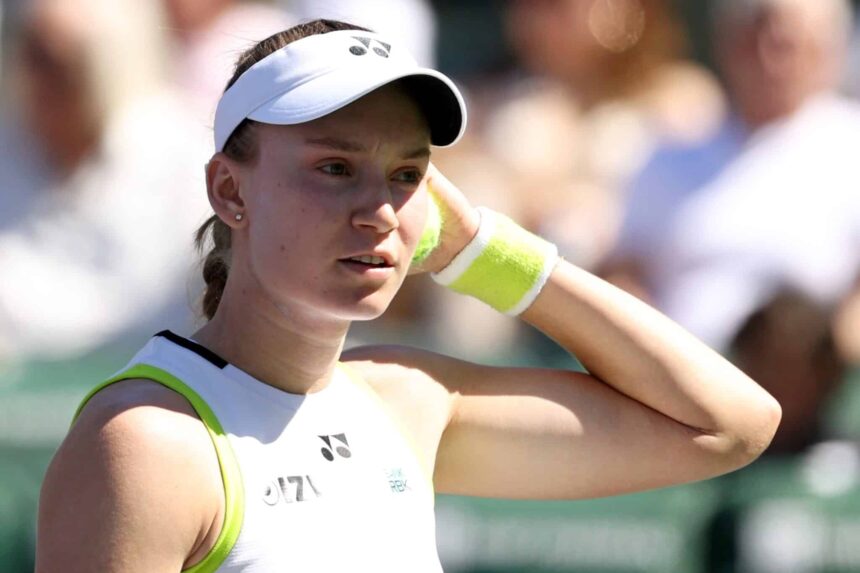
Elena Rybakina, the reigning Australian Open champion, is in Toronto this week for the Canadian Open. She’s hoping to find her winning rhythm again after a rough patch in her last few tournaments. Think of it like a video game character who found a super-power-up early in the year but has been struggling on the harder levels lately. Now, she’s back on her favorite map—hard courts—and looking for a comeback.
Rybakina began the year on fire. In just the first four months, she:
Important Point: Winning a Grand Slam (Australian Open) and three other big finals in four months is like getting straight A’s on your report card while also winning the science fair and the spelling bee.
After that hot start, things cooled off on clay and grass courts:
Sometimes the best training is no training at all. After losing at Wimbledon on July 4th, Rybakina hit pause.
Important Point: Even pros burn out. Taking a mental break is like restarting a frozen computer—it clears the glitches so you can run smoothly again.
There’s a huge extra prize on the line this week: World No.1 Ranking.
The Math for Rybakina to become No.1:
Important Point: She doesn’t just need to play well—she needs a specific scenario to unfold. It’s like needing your rival to miss a free throw AND you hitting a three-pointer at the buzzer.
Rybakina’s opening match is against Daria Kasatkina. This is her first test to see if the break worked and the hard-court magic is back.
| What Happened | What It Means |
|---|---|
| Won Australian Open & Stuttgart; finals at Indian Wells, semis Miami | Elite start to 2026 |
| Struggled on clay/grass; 1 good result in 4 events | Lost momentum & confidence |
| Took 5-day beach break + light prep | Mental & physical reset |
| Returns on hard courts (her best surface) | Prime opportunity to rebound |
| Could reach World No.1 with title + Sabalenka early loss | Massive ranking incentive |
| Opens vs. Kasatkina | First step on the comeback trail |
Bottom line: Rybakina has the game, the history, and the fresh legs. Now she needs the matches to click.
Different surfaces require different movement and timing. Clay is slow and sliding; grass is fast and low-bouncing. Hard courts (her favorite) sit in the middle. She said she practiced well but couldn’t translate it to matches—a common "practice vs. match" gap even for pros.
The tournament alternates every year between the two cities. One year it’s in Montreal (odd years), the next in Toronto (even years). Rybakina’s past semi-finals came in Montreal years.
Two things must happen:
Kasatkina is a top-15 player known for crafty shot-making and great hands. She’s tricky on any surface. A "dangerous floater" in the draw—definitely not an easy warm-up match.
Her last Tour-level match was July 4th at Wimbledon—over a month ago. That’s a long gap, which makes the beach break even more understandable.
Here’s to a hard-court resurgence!