11
11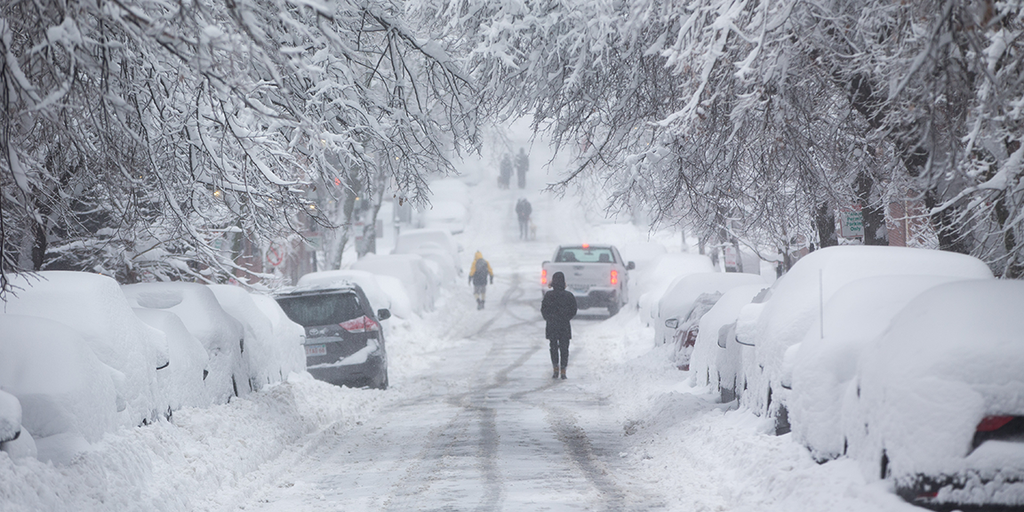
Quick Summary: The Farmers’ Almanac just released its winter predictions for 2026-2027. Thanks to a possible "super" El Niño, this winter will be full of surprises — wet in the south, mixed in the north, and unpredictable in the northeast and northwest. Bundle up and stay flexible!
Imagine a weather guidebook that’s been around since 1818 — that’s the Farmers’ Almanac! It’s the longest-running long-range weather forecast in North America. Every year, it gives people a sneak peek at what winter might bring, using a secret formula passed down through generations.
Did You Know? The Almanac doesn’t use satellites or supercomputers. Instead, it relies on a top-secret mathematical and astronomical formula that considers things like sunspot activity, tidal action, and planetary positions. Think of it like a really old, very wise weather wizard.
This year, there’s a potential "super" El Niño brewing. But what is El Niño?
ELI5 Explanation: Imagine the Pacific Ocean is a giant bathtub. Normally, warm water piles up near Asia. But during El Niño, the wind changes and pushes that warm water toward the Americas. This warms the air above it, which changes weather patterns across the entire continent — like moving a fan in a room changes how air flows everywhere.
Because of this, the Almanac says this winter will be full of sharp contrasts and plenty of surprises.
Here’s the breakdown by region, written so you can explain it to a 5-year-old (or your grandma).
From the Southeast through Texas, the Desert Southwest, to Southern California
Real Proof: This photo from January 2025 shows snow falling on a "Welcome to Florida" sign. It happens!
West, northern Plains, Upper Midwest, Great Lakes
Scene Setter: Marquette, Michigan in March 2026 — snow still falling deep into spring.
Coastal vs. inland = totally different winters
| Area | What to Expect |
|---|---|
| Coastal cities (Boston, NYC, DC) | More rain and mixed precipitation (slushy mess) |
| Inland areas (upstate NY, VT, NH, ME) | Several rounds of heavy, wet snow — especially Jan & Feb |
Almanac Warning: "Small shifts in storm tracks and temperatures could make the difference between rain, sleet, freezing rain, and accumulating snow. Residents should be prepared for forecasts to change quickly as storms approach."
Pacific Northwest, northern Plains, Upper Midwest
Mountain Reality: Traffic on I-90 near Snoqualmie Pass, WA — snow storms still happen, even in a "less reliable" year.
KEY TAKEAWAYS
- El Niño is the main driver this year — it’s like the conductor of a weather orchestra
- South = wet & stormy, North = normal but sneaky, Northeast = split personality, Northwest = roll the dice
- Coastal vs. inland matters hugely in the Northeast
- Forecasts will change — don’t trust a 10-day forecast in December
- The Almanac has been doing this since 1818 — it’s not perfect, but it’s been around a long time
The 2026-2027 winter is shaping up to be a "choose your own adventure" across the U.S., thanks to a possible super El Niño.
Bottom line: Winter is coming. It’ll be weird. Stay informed, stay prepared, and maybe keep a sled in the trunk — just in case Florida gets snow again.
It claims 80–85% accuracy, but meteorologists say it’s closer to 50/50 — about like flipping a coin. Still, it’s fun and sometimes surprisingly right (like predicting that Florida snow!). Use it as a general guide, not gospel.
Think of them as opposite moods of the Pacific Ocean:
Ocean effect! The Atlantic keeps coastal areas warmer (rain/mix), while inland areas get colder air from Canada — perfect for heavy, wet snow. A 20-mile drive can mean rain vs. a foot of snow.
Maybe a small one — or a good shovel. Snow can happen (see: Florida 2025), but it’s rare. Better investment: ice melt, good tires, and a generator for ice storms.
Two answers:
Final Thought: Whether you’re in Maine or Miami, this winter wants to keep you guessing. Check forecasts weekly, help your neighbors, and enjoy the magic — even if it’s just a single snowflake in the South.