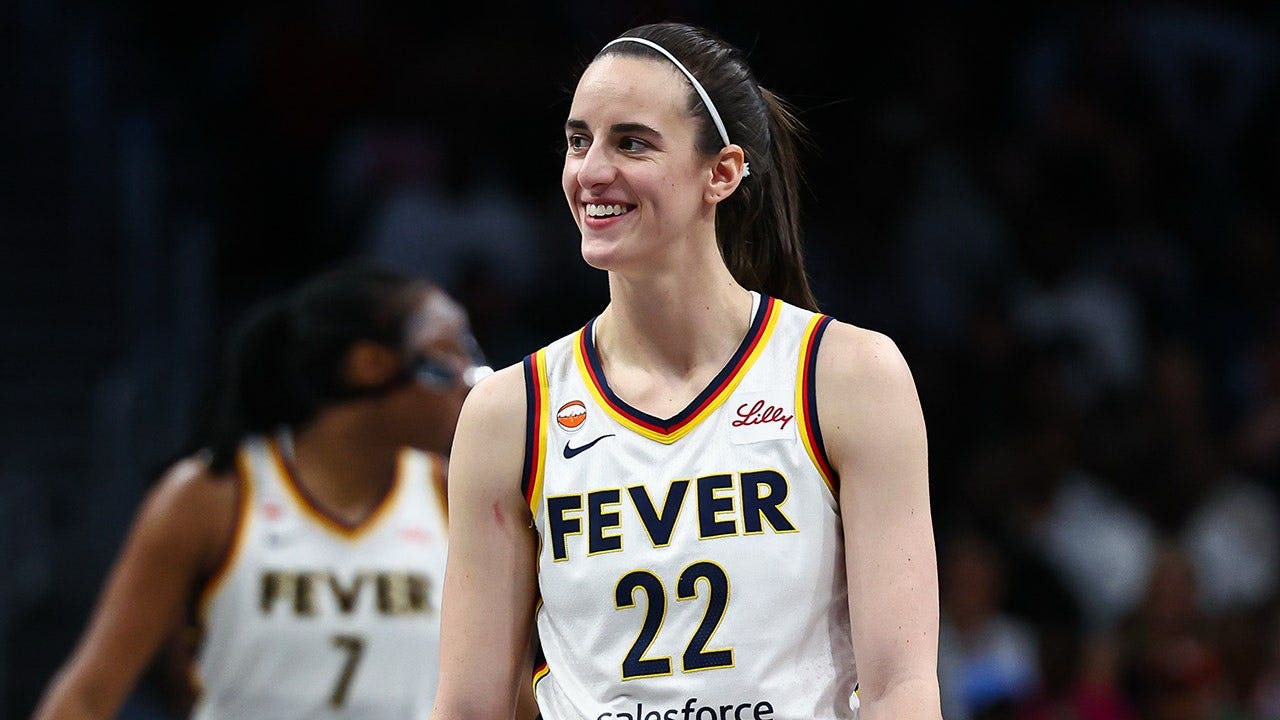
How Caitlin Clark is Changing WNBA TV Viewership (Explained Simply)
Riley Gaines Shares Her Opinion on Caitlin Clark
There is a featured video where a person named Riley Gaines talks about WNBA star Caitlin Clark. Here is what she says in kid-friendly terms:
- Gaines says the mean behavior (abuse) Clark gets during games is because other players are jealous of how amazingly talented Clark is — not because of Clark’s race (skin color) or sexuality (who she loves).
- She believes people worry about Clark simply because Clark is exceptionally good at basketball.
- Gaines suggests that jealousy from other players is causing the on-court abuse and making the league look like it is falling apart (she calls it "self-imploding").
- She also questions the "double standards" — that means the league seems to treat different athletes by different rules or with different opinions.
Important: This video shares one person’s viewpoint, but it is part of the larger conversation happening around Caitlin Clark and the WNBA.
The WNBA Celebrates Another Big TV Number
The WNBA (short for Women’s National Basketball Association — a league where women play pro basketball) has another reason to cheer, and it’s all about TV watching.
Caitlin Clark plays for the Indiana Fever. Along with her team, she helped bring an average of 1.04 million viewers (that’s 1.04 million people tuning in on TV) to a Wednesday night game against the Los Angeles Sparks. This fact comes from USA Sports PR, a group that shares sports TV data.
The game aired on USA Network and CNBC. Those are "cable" channels (the kind you usually pay for in a TV package). Clark has gotten even bigger numbers on "broadcast" TV (the free channels like ABC or CBS).
Even though the Fever lost the game (final score 106‑92), and Clark only played 16 minutes because she was returning from a back injury (she had sat out the previous two weeks), the viewership is the real story.
Why Is 1 Million Viewers Such a Huge Deal?
Getting one million people to watch a WNBA game is a monster (super big) number in almost any situation. But this particular game had a lot of things working against it:
- It was on cable only, not the free broadcast channels that more people can access.
- It was not a weekend game (weekends are when folks relax and watch more TV).
- It was a late-night slot: The game was played in Los Angeles, and for people on the East Coast of the U.S., it started at 10 p.m. (that’s late bedtime for many!).
- It was a Wednesday, a normal school or work night.
And still, it pulled in more than 1 million viewers!
Important: According to USA Sports PR (using numbers from Nielsen, a company that measures TV audiences), this Fever‑Sparks game was the most‑watched WNBA game ever on that network. It was up 149% compared to the 2025 average cable viewership for WNBA games. It was also the first time in WNBA history that a game starting at 10 p.m. Eastern Time averaged at least 1 million viewers.
Clark’s Earlier Giant Numbers
Before this late‑night game, Clark already had massive TV crowds:
- Indiana’s opening‑weekend game vs the Dallas Wings averaged 2.49 million viewers on ABC — the league’s 4th largest audience (including playoffs and All‑Star Games) since 2000.
- A later CBS game vs the New York Liberty averaged 2.56 million — the 3rd largest WNBA audience of any kind since 2000.
Those were on broadcast TV, which makes big numbers easier. The cable late‑night number is possibly even more impressive because it shows Clark can drag a huge audience to the screen even in a "bad" time slot.
How Rare Was 1 Million Before Clark? (A Simple Timeline)
Let’s look at how special this is:
- In 2008, the only previous WNBA game to hit 1 million viewers was when Candace Parker played her first pro game. It got 1.07 million on ABC.
- That game was a highly anticipated rookie debut, on a Saturday afternoon (3:30 p.m. ET) on a major broadcast network — basically perfect conditions.
- For nearly 16 years after that, the WNBA didn’t have any game average 1 million viewers.
- Now, with Clark involved, a game on cable at 10 p.m. ET gets over 1 million. That smashes the old ceiling!
The Game Itself Was Not Clark’s Best
Just to be clear, the game wasn’t great for Clark personally:
- She had a back injury from a June 24 game against the Phoenix Mercury.
- She scored only 9 points in 16 minutes.
- Indiana was behind the whole second half and never got closer than a 9‑point deficit in the fourth quarter.
But people watched anyway!
The League is Growing, But Clark is the Common Thread
Some say the WNBA’s boom is about all of women’s basketball. That’s partly true — the league is more visible than a few years ago. But the biggest TV numbers keep pointing to Clark.
- Sports Media Watch noted that the five most‑watched WNBA games this season all featured Indiana (Clark’s team).
- Interestingly, even when Clark doesn’t play, the Fever draw strong numbers. Example: July 5 game vs the Las Vegas Aces (without Clark) averaged 1.55 million on ESPN’s "Women’s Sports Sundays" — the biggest cable/streaming WNBA audience of the season at that time.
- This is actually a pro‑Clark point: she turned the Fever into the league’s most important TV brand. Fans are so interested because of her that they tune in even when she sits out.
- Proof: That 1.55 million was more than the previous two "Women’s Sports Sundays" combined (Liberty‑Valkyries 743,000 viewers and Liberty‑Sparks 778,000 viewers) — and those didn’t include the Fever.
- Even non‑Fever games now get over 700,000 viewers, which is a massive increase from the pre‑Clark era.
Important: The WNBA has announced it will expand its regular season to 50 games starting in 2027, the longest schedule in league history. Growth is happening, but every historic TV rating has one name attached: Caitlin Clark.
Summary
Let’s recap in plain words:
- Riley Gaines believes Clark’s on‑court trouble comes from jealousy of her skill, not race or sexuality, and she points out double standards.
- Caitlin Clark and the Indiana Fever got 1.04 million viewers for a late‑night cable game — a first in WNBA history.
- Before Clark, 1 million viewers was super rare; now it happens even in tough conditions like a weeknight cable slot.
- Clark’s team is now a TV magnet, even when she doesn’t play.
- The WNBA is growing, but Clark is the biggest reason for the TV boom.
FAQ
Q1: What is the WNBA?
A: It’s the Women’s National Basketball Association, a league where professional women basketball players compete — like the NBA but for women.
Q2: Who is Caitlin Clark?
A: She is a star player for the Indiana Fever in the WNBA. She is extremely popular and brings a lot of TV viewers to games.
Q3: Why is 1.04 million viewers a big deal for a WNBA game?
A: Because for nearly 16 years before Clark, no WNBA game averaged 1 million viewers unless it was a special event on free TV. Getting that many on a paid cable channel at 10 p.m. on a Wednesday is unprecedented.
Q4: Do people still watch the Fever when Clark doesn’t play?
A: Yes! In one game without her, they got 1.55 million viewers, showing she built a huge fan base for the whole team.
Q5: What did Riley Gaines say about Clark?
A: She said the abuse Clark faces is from jealousy of her talent, not her race or sexuality, and she questioned double standards in the league.
Article based on reporting by Dan Zaksheske, a reporter at OutKick.
 1
1