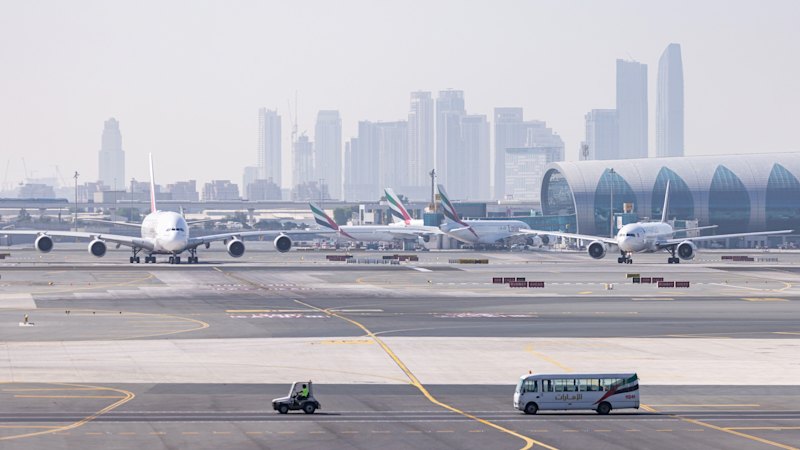
Smartraveller Updates Travel Warnings for Qatar and UAE Amid Middle East Conflict
By Chris Zappone, July 13, 2026 (explained simply)
What Is Smartraveller and What Just Happened?
Imagine a helpful website run by the Australian government that tells you: “Is it safe to visit another country?” That site is called Smartraveller. It is managed by a government group called DFAT (Department of Foreign Affairs and Trade — they handle Australia’s friendships and safety abroad).
Recently, Smartraveller changed its advice for two countries in the Middle East: Qatar and the United Arab Emirates (UAE). Why? Because fighting has started again in that part of the world.
- On a Sunday, Iran (a country in the Middle East) sent flying weapons called missiles and drones toward UAE, Qatar, Bahrain, Kuwait, Jordan, and Oman.
- At the same time, the United States attacked places inside Iran.
- Because of this, the government says there is now a real chance of attacks in Qatar and UAE, and the safety situation is “unpredictable” (meaning we can’t easily guess what will happen next).
Before this weekend, the website only said: “There remains a risk of military action.” Now it says louder: “Reconsider your need to travel” to Qatar and UAE because of the unpredictable security situation.
Which Countries Are on the Warning List?
Right now, Smartraveller tells Australians to reconsider travel to these places:
- Bahrain
- Israel
- Kuwait
- Oman
- Qatar
- United Arab Emirates (UAE)
Important Callout: The DFAT spokesperson says the Middle East situation is “unpredictable and conditions could deteriorate rapidly.” Reconsidering travel also means reconsidering if you just want to pass through (transit) these countries on your way somewhere else.
If you absolutely must travel or transit through these areas, the advice is:
- Stay as short a time as possible.
- Skip unnecessary activities (like extra sightseeing if it’s risky).
Understanding the Warning Levels (ELI5)
The government uses a simple rating system for danger:
- Level 3: “Reconsider your need to travel” – Think hard: Do you really have to go? It might be dangerous.
- Level 4: “Do Not Travel” – Absolutely stay away. It’s too dangerous.
A former DFAT official (someone who used to work there) says it’s a fair guess that the government might bump Qatar and UAE up to Level 4 (“Do Not Travel”) because the violence started again. But right now they are at Level 3.
Ian Kemish, who helped create this warning system after a 2002 bombing in Bali, explains:
- It’s easier for a government to raise a warning when trouble starts than to lower it later.
- Changing a level isn’t done lightly; they talk with ambassadors (representatives in other countries), intelligence (spies), and the Foreign Minister’s office.
- They can only judge the current reality, not predict the future.
A Short History of These Warnings
Let’s look at the timeline like a story:
- March: After the US and Israel began fighting with Iran, DFAT raised warnings for the region to Level 4. This also effectively closed the Strait of Hormuz (a narrow sea lane for ships), making energy prices go up.
- June (four months later): After US President Donald Trump and Iran agreed to a temporary peace note (called a Memorandum of Understanding) to stop the war and let ships pass safely, DFAT lowered UAE and Qatar to Level 3.
- Now (July): With new attacks, the language is tightened again, though still Level 3.
The June lowering made tour companies happy because the conflict had crushed their business. Between 1 and 1.4 million Australians a year normally use the Middle East as a shortcut to Europe. Big airlines like Emirates, Qatar Airways, and Etihad are based there.
Did you know? Roughly a third of all airline traffic to Europe goes through the Gulf region — about 40 million passengers a year!
What the Travel Industry Says
Dean Long, head of the Australian Travel Industry Association, says:
- Level 3 is not a green light to travel freely; it’s still a caution.
- If no airports are attacked (none have been in Qatar/UAE since May), he hopes the warning stays at Level 3.
- Before June, the travel industry was frustrated and ran a “Campaign for Commonsense” because Level 4 stopped insurance companies from covering flights that passed through.
- He says: “What people need to balance out is that there is a different risk ratio on the ground.” (Meaning: the danger in the airport might be different from the city outside.)
- Many people have no choice but to fly through Middle East hubs to reach Europe, Africa, or elsewhere.
What Should You Do If You Plan to Travel? (Step-by-Step)
If you are an Australian thinking about a trip that might involve the Middle East, follow these simple steps:
- Visit Smartraveller (the government website) to read the latest advice.
- Check the warning level for your destination and any transit countries.
- If it’s Level 3 or higher, ask yourself: “Do I really need to go?”
- If you must go, book the shortest stay possible and avoid extra outings.
- Check your travel insurance — if a “Do Not Travel” (Level 4) is in place, you likely won’t be covered.
- Keep watching the news because the situation can change fast.
Summary
To wrap it up in a nutshell:
- Smartraveller (run by DFAT) now warns Australians to reconsider travel to Qatar, UAE, and other Middle Eastern countries because of new missile attacks and an unpredictable security situation.
- The warnings could be raised to “Do Not Travel” if things worsen.
- Travelers should keep trips short, avoid unnecessary activities, and understand that passing through these countries counts as travel.
- The travel industry hopes the level stays at 3 so insurance works and people can still reach Europe via Gulf airlines.
- This all stems from a conflict involving Iran, the US, Israel, and neighbors, with a brief calm in June that has now broken.
The original article also mentions that you can sign up for The Business Briefing newsletter to get major stories and expert opinion every weekday morning.
FAQ (Frequently Asked Questions)
Q1: What is Smartraveller?
A: It’s a free website by the Australian Department of Foreign Affairs and Trade that gives safety advice for Australians traveling or living abroad. Think of it as a “weather forecast” for travel danger.
Q2: What does “Reconsider your need to travel” mean in plain English?
A: It means Level 3 warning: you should think very carefully and only go if it’s truly necessary, because there are serious risks.
Q3: Why are Qatar and UAE suddenly more dangerous?
A: Because Iran launched missiles and drones at those countries (and others) after the US attacked Iran. This makes the area unpredictable and raises chance of attacks.
Q4: Could the advice become “Do Not Travel”?
A: Yes, a former official says it’s a fair assumption the government might raise Qatar and UAE to Level 4 (“Do Not Travel”) if violence continues, but for now they remain at Level 3.
Q5: How does this affect my flight to Europe?
A: Many flights to Europe go through the Gulf (Qatar, UAE). If you transit there, you are still under the warning. If the level goes to 4, your travel insurance might not cover you. Try to stay brief or seek alternative routes if possible.
 1
1