The Falkland Islands and Football: A Super Simple Guide
What Are the Falkland Islands?
Imagine a bunch of small islands (grown-ups call this an archipelago) sitting far away in a big body of water called the South Atlantic Ocean. These are the Falkland Islands.
- They have been looked after and owned by the United Kingdom (Britain) since the year 1833.
- They are located about 300 miles away from the east coast of a country called Argentina.
- Argentina believes the islands should belong to them instead. In simple words, they want "sovereignty" (which just means the right to be the boss or owner of that land).
A Quick History of the Conflict
Things got really heated in 1982. Here is what happened, step by step:
- Argentina sent its army to take the islands by force (this is called an invasion).
- Britain fought back, and a short war started.
- Argentina lost the war, and Britain kept control of the islands.
The war was very sad and lasted a short time:
- It was only 74 days long.
- Sadly, 907 people lost their lives:
- 649 soldiers from Argentina
- 255 people from Britain
- 3 people who lived on the Falkland Islands
Important: Even 44 years after that defeat, remembering the soldiers who died is very important to people in Argentina. The islands are still run by Britain, and this history is kept alive in Argentine songs and culture.
How Football Brings This History Up
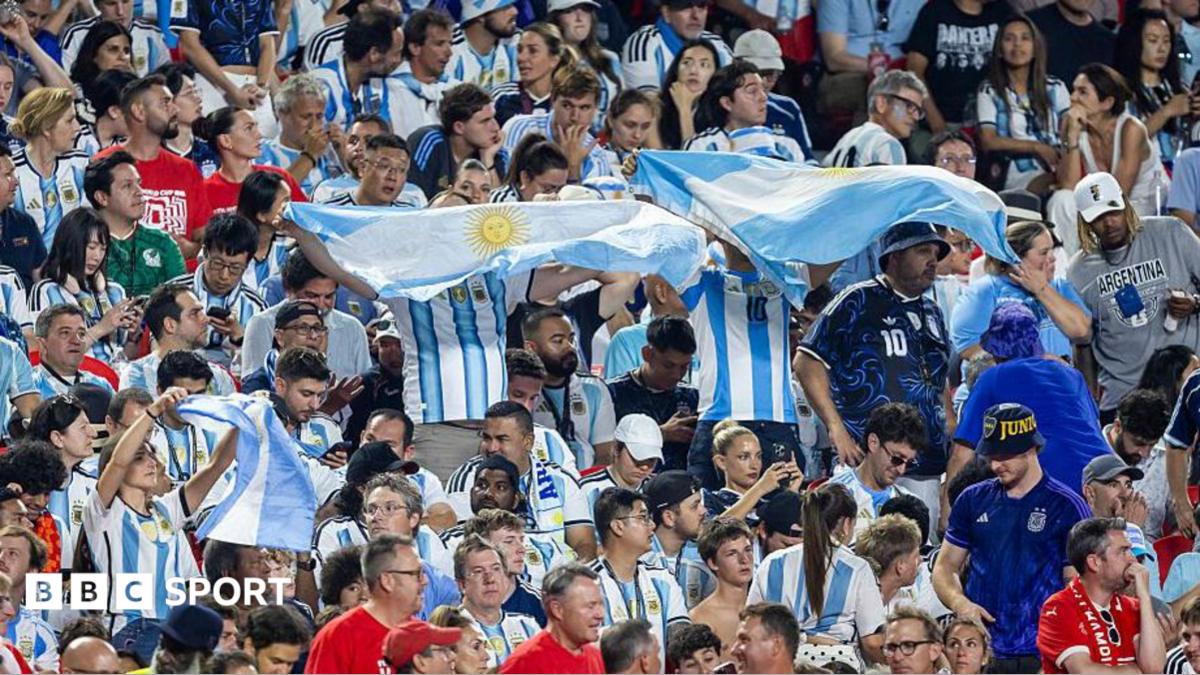
In Argentina, football (soccer) is a huge part of everyday life. The history of the islands (which Argentines call the Malvinas) often shows up at games!
- Before a friendly practice match against Zambia at a huge stadium called La Bombonera in Buenos Aires, old soldiers from the 1982 war walked onto the field with the players to sing the national anthem.
- There is a famous song or chant at football games—and even rock concerts—where everyone bounces up and down singing: "And now you see, and now you see, whoever doesn’t jump is English!"
Argentine journalist Nicolas Rotnitzsky explained this simply:
- "It’s part of Argentine culture. It’s like ‘we are not them – we are us’. So we have to jump to prove that we are not one of them."
- He says that, just like their neighbor Brazil, England is seen as one of Argentina’s greatest football rivals.
- But he adds: "It’s not about hate, not at all." It is about understanding who they are as a country because of what happened with the Malvinas.
What the Players and Politicians Say
Many people try to keep the football and the political arguments separate:
Argentine Player Rodrigo de Paul:
- Says the chants are "very much about our heroes" and not about politics.
- "We have to understand that this is a football match and that the Malvinas issue needs to be discussed elsewhere."
English Goalkeeper Jordan Pickford:
- Says it’s "just a game of football" and believes "football will do its talking."
Argentina’s War Veterans Group:
- They said the match is "not an armed rematch nor historical compensation." (Meaning: we aren’t fighting a real war on the sports field).
Important: Even though everyone says it is just a game, mixing sports and old country arguments is hard to avoid. Because of the historical tensions, there will be increased security measures in place at matches between these two nations.
The Grown-Up Arguments Continue
Even outside of football, the countries’ leaders still disagree:
- Argentina’s foreign minister, Pablo Quirno, said the people living on the Falklands were "artificially implanted by the occupying power" (meaning he believes Britain moved its own people there to take the land).
- The UK government replied by saying the Islanders are "British with a right to determine their own future" (meaning the people who live there get to choose what happens to them).
Even the big football rule-makers (FIFA) cannot totally ignore this. For example:
- A referee named Anthony Taylor was going to be considered to lead the 2022 World Cup final.
- But because Argentina made it to the final, he was ruled out, just to avoid any appearance of taking sides.
Summary
The Falkland Islands are a group of British-run islands near Argentina that Argentina wants to own. They fought a war in 1982, which Argentina lost, and many people died. Today, this history lives on in Argentine culture and football chants where fans jump to show pride in being Argentine, not English. While players and veterans say the football match is just a game and not a war, the political disagreement between the two countries is still very real and even affects things like security at games and which referees are chosen.
FAQ
1. What does "sovereignty" mean in this story?
Sovereignty just means the right to be the boss or owner of a piece of land. Argentina believes it should have sovereignty over the Falkland Islands.
2. Why do Argentine fans jump and chant at football games?
It is a fun but meaningful way to show "we are us, and we are not the English." It comes from their history and helps them feel proud of their country and remember their heroes.
3. Did many people die in the Falklands War?
Yes, sadly 907 people died in the 74-day war in 1982, including soldiers from both sides and three island residents.
4. Is the football match between Argentina and England a real fight?
No! Players like Jordan Pickford and Rodrigo de Paul, and even veterans, say it is just a sport. But because of history, emotions and security are higher than usual.
 1
1