Why the U.S. is Sticking Around in Venezuela After the Earthquakes
A Scary Goodbye and a Moldy Hello
- James Story was the top U.S. diplomat (the main representative) in Venezuela before the embassy closed in 2019.
- He left after getting a stark warning from Venezuela’s foreign minister: if he stayed, he might be murdered.
- In March (of 2026, per the article’s context), American diplomats raised the U.S. flag at the embassy for the first time in seven years.
- The building had been sitting empty in the hot, tropical weather and was covered in black mold (a yucky fungus).
- The two countries were very angry at each other. The Trump administration had sent special military teams to capture President Nicolás Maduro and his wife.
- Many U.S. leaders and staff were working from a hotel (a Marriott) two miles from the embassy.
- They had to quickly get to know one of the toughest ruling groups in the region again—including some people the U.S. had accused of drug crimes or offered money rewards to catch.
Helping Hands After the Big Earthquakes
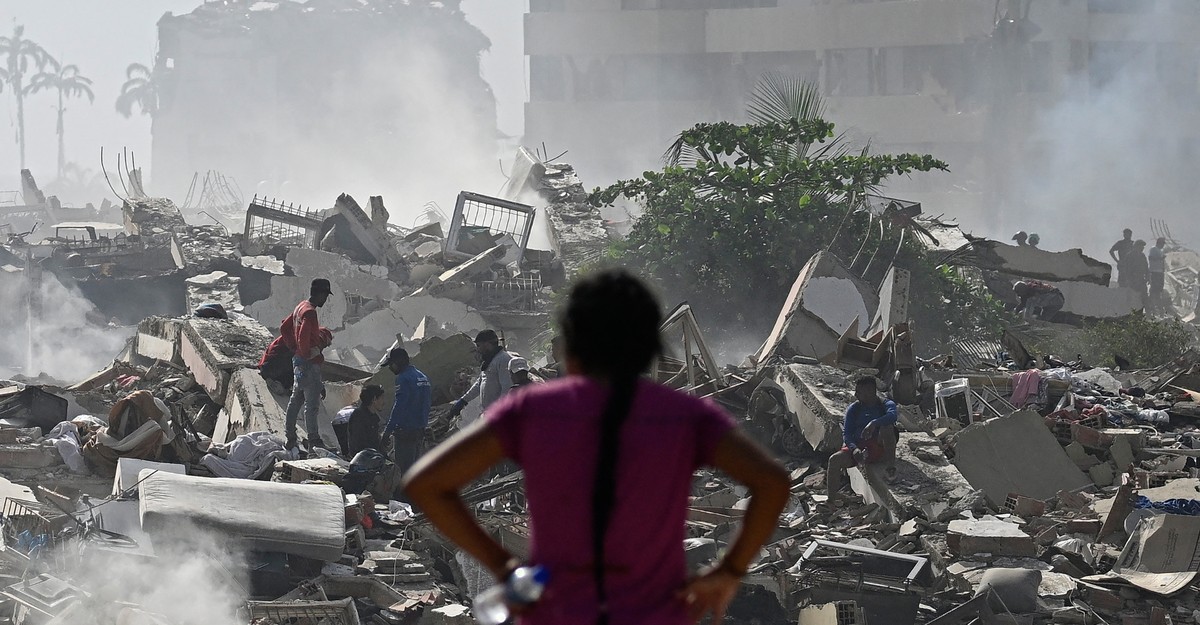
- On June 24, deadly earthquakes hit Venezuela.
- U.S. Marines (soldiers who work at sea and on land) became airplane traffic controllers at Venezuela’s main airport and helped run the port in La Guaira, the hardest-hit coastal state.
- The U.S. disaster-help team is handing out boxes—marked with the American flag—filled with food, water, and other supplies.
- Venezuelans welcomed this life-saving help because the quakes left:
- At least 4,490 people dead.
- Close to 18,000 people homeless (according to Venezuelan authorities).
Photo note: Images from the ground show people displaced by the June 24 earthquakes checking U.S. aid boxes at a shelter in Catia La Mar, La Guaira.
Important Point: The Trump administration is working with Venezuelan officials who treated their own people brutally and are widely hated. Recently, U.S. mission leaders (John Barrett and General Francis Donovan) met with Diosdado Cabello, a security boss who targeted political opponents. The U.S. once offered a $25 million reward for his capture! This made many Venezuelans furious.
How the U.S. Used to Do Things
In the past, across different U.S. presidents (including Trump’s first term and Biden’s term), American diplomats followed simple rules in Venezuela:
- Be friendly with opposition leaders (people who disagreed with the rulers).
- Try to free Americans stuck in prison.
- Push for fair, democratic elections (where people vote for their leaders).
- Story, who worked for both Trump terms and Biden, was told that extreme opposition folks were plotting to kill him and start a war.
- He left a note saying he was “filled with optimism that Democracy is within reach.”
- Now he worries that capturing Maduro without making the country fair will waste any success. He said if democracy is delayed because of the earthquake, frustration in the U.S. will boil over.
- The quiet work the U.S. did is now out in the open, testing the choice to remove the top government bosses without changing much else.
The Official Plan vs. Earthquake Reality
- Barrett says the U.S. government is fully focused on earthquake help, and Venezuela’s temporary government “has been fully compliant” (meaning they do what the U.S. asks).
- He didn’t answer if Cabello is still a wanted enemy but said the three-step plan is still on:
- Make things stable.
- Fix the economy and get people talking peacefully.
- Hold democratic elections.
- But the earthquakes hurt this plan. No election date is set.
- Venezuela’s constitution says a temporary president can only serve 180 days, but Delcy Rodríguez is still in charge after that time passed earlier this month.
- Some U.S. officials are hopeful: Her brother announced new talks with former opposition lawmakers next month, and Delcy posted about “dialogue, cooperation, and mutual respect” with the U.S.
Important Point: A State Department spokesperson said adding political fights right now hurts the rescue effort. Even Secretary of State Marco Rubio admitted last month that the earthquakes were a “setback” for returning to democracy, though he thinks Venezuela will “emerge stronger.”
Why Many Venezuelans Are Upset
- In the nearly three weeks after the quakes, the government was missing during the crucial hours when rescues were still possible (with people sorting through rubble alone).
- Slow paperwork choked the flow of aid, and some soldiers/police stole from the rubble.
- Rodríguez says this is fake news from “media laboratories” (enemies making things up).
- María Corina Machado, the most popular opposition figure, tried to fly back but the Trump administration ordered her plane turned around mid-flight, The Wall Street Journal reported. Her supporters worry the U.S. is too friendly with a government that failed its people.
Important Point: Rebecca Bill Chavez, a former Pentagon official, warned: “There’s a real chance that we’re going to squander this opportunity.” Betting that stability and oil can come first while democracy waits forever is a dangerous bet.
A Look Back at the Tough History
- Maduro took over in 2013 after Hugo Chávez died, and the economy crashed terribly.
- People protested daily; security forces fought back with tear gas, rubber bullets, and beatings.
- In Trump’s first term, he asked for “military options.” Diplomats met opposition leaders in secret and stood up to the regime.
- One diplomat, Todd Robinson, was kicked out after telling Rodríguez her government—not U.S. penalties—left people hungry. He said the idea of treating the leftover regime as the real government “just doesn’t make any sense.”
- A recent State Department report listed horrible acts: killings, torture, unfair arrests. Some prisoners were freed, but ex-diplomat Lee McClenny says the U.S. “bought a big problem” that will cost money and prestige.
Counting the Aid
- The U.S. spent $310 million on earthquake response, delivered over 1 million pounds of relief, and gave 10 freezer containers to store bodies.
- Barrett told reporters: “We are with Venezuela today, and we will be with you tomorrow.”
- This is still less than the billions after Haiti’s 2010 quake.
- The UN says another $300 million is needed for over a million people needing life-saving support.
Life in the Tent Cities
- Search-and-rescue teams went home.
- Thousands live in tents in La Guaira; without clean water, they get skin diseases and diarrhea.
- A Red Cross spokesman said if water and toilets aren’t fixed fast, public health will crash.
Photo note: Other images show displaced people sleeping in tents at a baseball stadium in the La Angustia neighborhood of Catia La Mar, La Guaira.
- Chef José Andrés felt the U.S. helicopters and armed troops made it feel like “they were coming to invade more than they were coming to help.”
- General Donovan (leading ~900 U.S. troops) said: “When we’re done, we will depart Venezuela.”
What Comes Next?
- The embassy will stay open and get repaired.
- Former diplomats want the U.S. to stop sidelining the opposition, free remaining political prisoners, and hurry elections.
- Some opposition leaders are patient; one told The Atlantic that exiled figures returned and believes sanctioned leaders will face justice.
- Just steps from the embassy, 10–20 families of political prisoners hold a vigil (a quiet watch) with a flag reading “libertad” (freedom).
- José Mendoza joined after the government dropped an amnesty law (a rule to forgive prisoners); his son is accused of a 2020 plot against Maduro. No one from the embassy has visited them.
Summary
The U.S. is back in Venezuela helping after deadly earthquakes, but the situation is like a tricky puzzle. They removed the old president, are now working with leaders they used to fight, and must balance saving lives with pushing for fair elections. Many experts worry that if democracy and freedom wait too long, the chance to build a better Venezuela—and keep people’s trust—will be lost.
Reporting contribution by Mariana Zuñiga from Caracas.
FAQ
1. What does "chargé d’affaires" mean in simple words?
It’s a fancy title for the top diplomat or main boss at a country’s embassy when there is no official ambassador.
2. Why are people mad about the U.S. meeting Diosdado Cabello?
Because he helped lead security forces that hurt political opponents, and the U.S. once offered $25 million to catch him. It feels like the U.S. switched sides.
3. What is a "democratic transition"?
It means changing the country so regular people can freely vote for their leaders in fair elections, instead of living under tough rulers.
4. Is the U.S. military going to stay in Venezuela forever?
No. The U.S. commander said the roughly 900 troops will leave when their earthquake help is finished.
5. Why did the U.S. tell María Corina Machado’s plane to turn around?
Reports say the Trump administration ordered her flight back mid-air soon after the earthquakes. Her supporters fear the U.S. is supporting the temporary government for too long.
 1
1