
Over 500 Feared Dead: Myanmar’s Devastating Double Shipwreck Stuns the World
Two Boats, Over 500 Feared Dead: What Happened Off Myanmar’s Coast
What the UN Agencies Told Us
On Thursday, two big UN helper groups spoke up together with a warning:
- The IOM (that’s the UN migration agency — they help people who move from place to place)
- The UNHCR (that’s the UN refugee agency — they help people who had to flee their homes)
They said two boats left from a part of Myanmar called Rakhine state in late June.
Why This Matters
Here are the big reasons this story is important:
- Hundreds more ethnic Rohingya have likely drowned
- Funding cuts leave refugees in Bangladesh with fewer options
- Myanmar conflict encourages perilous sea journeys
One boat had about 250 people on it and disappeared shortly after leaving. A second boat had 280 people and is believed to have sunk near Myanmar’s Ayeyarwady coast on 8 July.
Important: The people on these boats were mostly Rohingya from Rakhine state. The Rohingya have been treated very badly by Myanmar’s leaders for decades.
Some passengers also came from a huge refugee camp called Cox’s Bazar in Bangladesh. Around one million Rohingya live there after running away from violence in 2017.
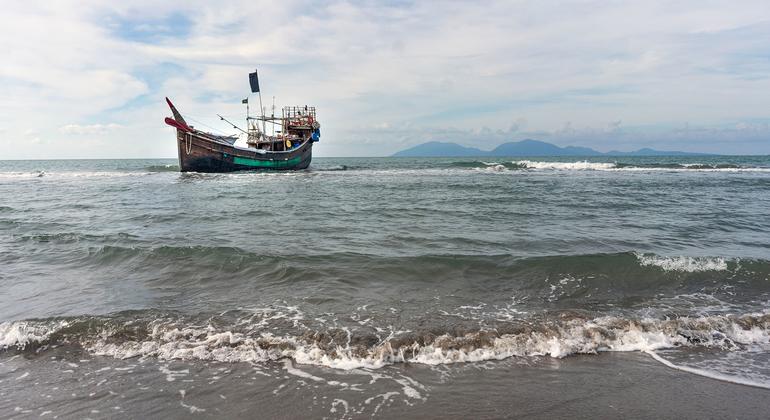
The boats used for these trips are usually not made for big, rough oceans and are packed with too many people.
High Seas
The UN groups said the boats left at the wrong time of year — when the sea is extra dangerous.
UNHCR spokesperson Matthew Saltmarsh said:
“This is part of a worrying trend that’s been going on for some time now. Many people, hundreds of people have already reported to have lost their lives in that same region, in those same seas this year.”
Before these newest tragedies, almost 300 people were already missing or drowned in the Andaman Sea and Bay of Bengal this year. That includes Rohingya refugees and people from Bangladesh.
Heavy rain and flooding lately made the sea crossings even riskier. Mr. Saltmarsh also said life in Cox’s Bazar is getting harder because money to help them is being cut.
The agencies said:
“These reports underscore the devastating impact of protracted conflict and displacement, as well as the continued lack of sustainable solutions for Rohingya communities.”
War’s Repercussions
Myanmar is in a civil war (a fight inside one country) that started after a military takeover in February 2021.
Because of this:
- Help and opportunities in Bangladesh camps are limited.
- More people feel they must risk deadly boat trips to find safety.
A recent UN human rights report said other countries are still sending weapons, fuel, and supplies to Myanmar’s military. The report also warned that cutting foreign aid hurts local groups trying to protect civilians from attacks.
Assisting the Most Vulnerable
UNHCR and IOM help governments in the Asia-Pacific region to:
- Search and rescue people in danger at sea
- Welcome and protect them
- Find long-term solutions
They work together through things like the Bali Process (a team-up to stop smuggling and trafficking and keep migrants safe). This helps refugees, migrants, and stateless people across South and Southeast Asia.
Key Point: The goal is to save lives, protect people, and help countries handle dangerous mixed movements.
Summary
Two boats left Myanmar in June with over 500 Rohingya aboard; one vanished and one likely sank. Bad weather, funding cuts, and war push people to risk the sea. UN agencies are asking the world to help with rescue and long-term safety.
FAQ
1. Who are the Rohingya?
They are an ethnic group from Myanmar’s Rakhine state who have faced decades of persecution and many now live as refugees.
2. Why do people get on dangerous boats?
Because war, lack of help in camps, and cut funding leave them few safe choices.
3. What are IOM and UNHCR?
They are UN groups that help migrants and refugees with protection, rescue, and solutions.
4. What is the Bali Process?
It is a regional agreement to fight smuggling, protect people on the move, and save lives at sea.