 11
11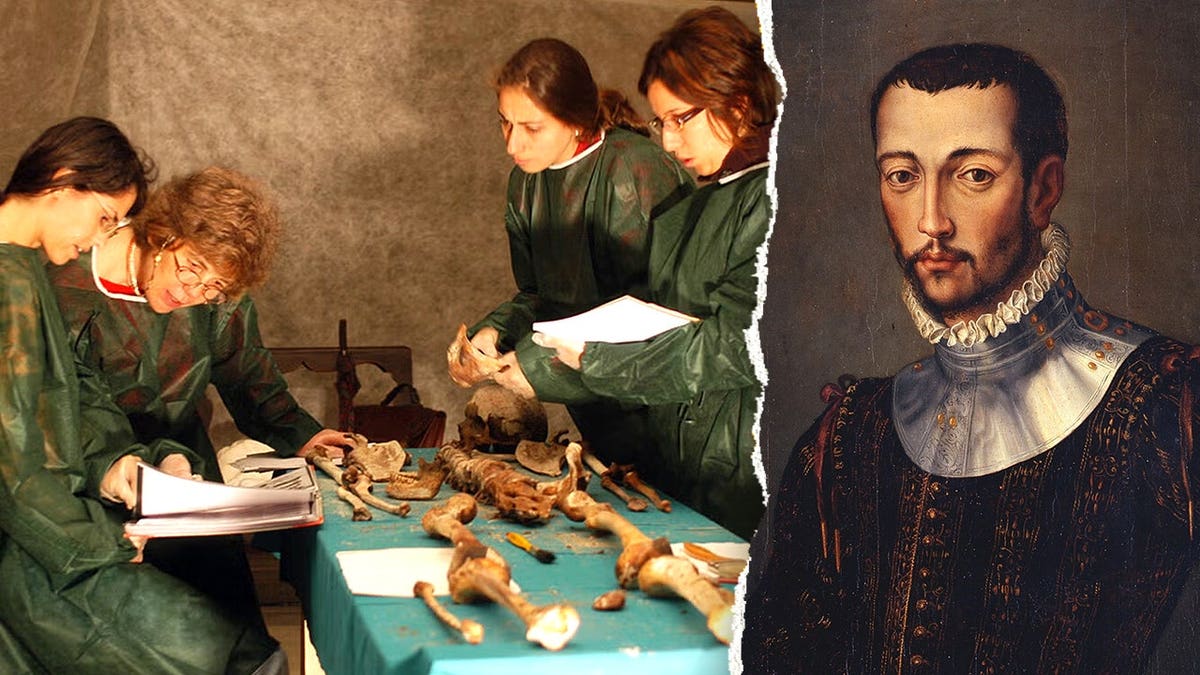
Imagine a real-life detective story that takes over 400 years to solve. That’s exactly what happened with Grand Duke Francesco I de’ Medici, the ruler of Tuscany in Italy during the Renaissance. He died suddenly in 1587, and for centuries, people whispered that he was murdered by poison.
Important Point: This wasn’t just any family — the Medicis were one of the most powerful and famous families in European history. They were like the "royal family" of Florence, controlling banking, politics, and art.
For hundreds of years, the most popular story was murder most foul. Here’s what people believed:
| The Suspect | The Motive | The Weapon |
|---|---|---|
| Cardinal Ferdinando de’ Medici (Francesco’s brother) | Wanted to become Grand Duke himself | Arsenic poison |
It sounded like a perfect Shakespeare play: a powerful brother, a sudden double death, and a convenient path to the throne. But was it true?
Researchers from Yale University and the University of Pisa teamed up to do something never done before: read the ancient DNA from the brothers’ bones.
Important Discovery: The researchers found genetic fingerprints of malaria parasites in both brothers’ bones!
ELI5 Explanation: Think of DNA like a crime scene logbook. The parasites "signed in" when they infected the brothers, and their genetic signatures stayed in the bones for 400+ years. Scientists just had to learn how to read that ancient logbook.
If the evidence was there all along, why did people believe the murder story for centuries?
Professor Serena Tucci (Yale), lead researcher: "We do not know [why rumors persisted]. Probably because it was still plausible, given that up to now, there were no conclusive reports that indeed they had malaria. Our study is the first one to genetically confirm it."
Contemporary court physicians wrote detailed notes that match malaria perfectly:
Important Note: Malaria was common in central Italy during the Renaissance. The region had lots of marshes and wetlands where mosquitoes thrived.
Short answer: No — but it’s extremely unlikely.
This isn’t just about solving a cold case. The research has modern scientific value:
Dr. Gisella Caccone (Yale, co-author): "Using historical specimens can not only help us understand our past better, but also it can help build a better future."
| Question | Answer |
|---|---|
| Did Francesco I de’ Medici die of poison? | Almost certainly not |
| What killed him? | Malaria (two types: P. falciparum and P. malariae) |
| What killed his brother Giovanni? | Malaria (P. falciparum — a novel strain) |
| How do we know? | Ancient DNA from their rib bones |
| Who did it? | Mosquitoes — not Cardinal Ferdinando |
The 400-year-old murder mystery is solved: It wasn’t the brother. It was the bugs.
A: DNA breaks down over time, but teeth and dense bones (like ribs) protect it better than soft tissue. Cold, dry burial conditions also help. Scientists use special "clean rooms" and techniques to extract and amplify the tiny remaining fragments without contamination.
A: It’s a single-celled parasite (not a virus or bacteria) transmitted by Anopheles mosquitoes. It invades red blood cells, causing them to burst — leading to severe anemia, organ failure, and death if untreated. It’s responsible for most malaria deaths worldwide today.
A: Theoretically possible, but no evidence supports it. The parasite DNA is direct proof of malaria infection. Arsenic or other poisons wouldn’t leave genetic traces in bone after this long. Without physical evidence, poisoning remains pure speculation.
A: Malaria destroys red blood cells (causing anemia). Bloodletting removes even more blood, worsening anemia and depriving organs of oxygen. It was a standard but harmful treatment for almost everything in the 1500s.
A: Yes! The researchers say this approach can "certainly" help with other mysteries — if there are well-preserved remains, a clear question, and the right tools. It’s already been used on King Richard III, Ötzi the Iceman, and Revolutionary War soldiers.
Further Reading: The full study appears in iScience (June 2024). Lead author: Serena Tucci, Yale University Department of Anthropology. Co-authors include researchers from Yale and the University of Pisa.