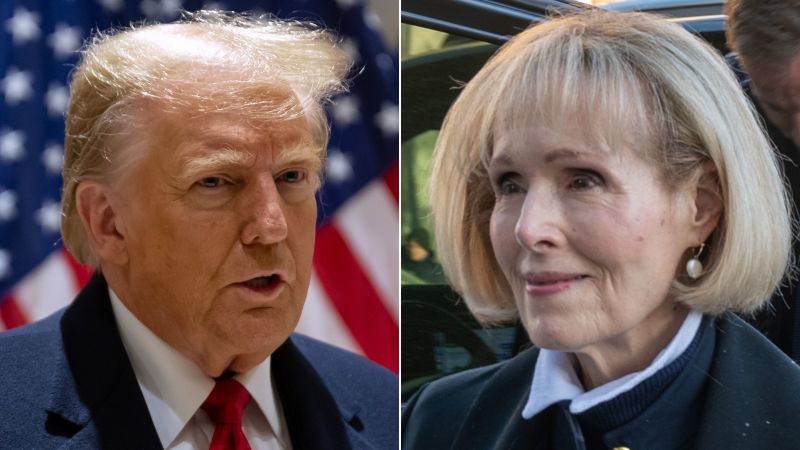
Trump’s Hail Mary: Asks SCOTUS to Overturn $83M Carroll Verdict
Trump Asks Supreme Court to Block $83 Million Defamation Payment Using Presidential Immunity
What’s Happening in Simple Terms
Imagine you’re the class president and you say something mean about a classmate. Now that classmate sues you and wins $83 million. You tell the principal (the Supreme Court): "But I was the class president when I said it! I have special protection!"
That’s basically what’s happening here. Former President Donald Trump is asking the highest court in the land to protect him from paying a massive $83.3 million defamation verdict to writer E. Jean Carroll.
The Backstory: How We Got Here
The Original Incident
- 1990s: Carroll says Trump sexually abused her in a department store dressing room
- 2019: While Trump was president, he publicly denied the allegations, said Carroll "wasn’t his type," and claimed she made it up to sell books
- 2024: A jury said those 2019 statements were defamation (harmful lies) and ordered Trump to pay $83.3 million
The Legal Journey So Far
- Trial court → Jury awards Carroll $83.3 million
- Appeals court → Judges uphold the verdict, say Trump waited too long to claim immunity
- Now → Trump asks the Supreme Court to step in
Trump’s Main Arguments
1. "I Have Presidential Immunity"
Trump’s lawyers say the Supreme Court’s 2024 ruling gives presidents broad protection for actions taken while in office. They argue:
- This is the first time in history a president has been ordered to pay damages for official conduct
- The appeals court never even decided if presidential immunity applies
2. "The Government Should Pay, Not Me"
Trump wants the United States government to be the defendant instead of him personally. His argument:
- He was doing his job as president (defending his fitness for office)
- Under the Westfall Act, federal employees are shielded from lawsuits for official duties
- If this works, taxpayers would foot the bill — and Carroll’s case would likely end
3. "This Hurts Future Presidents"
Trump claims allowing this verdict would:
- Damage the presidency itself
- Make future presidents afraid to speak publicly
- Harm the nation
Why the Lower Courts Said "No"
IMPORTANT POINT
The appeals court rejected Trump’s immunity claim for two big reasons:
- Too late! Trump didn’t raise immunity for the first three years of the case
- Already decided! The Supreme Court’s 2024 immunity ruling doesn’t change this case
Judge Denny Chin wrote: "No other defendant would be permitted to move to substitute the United States in his place, fifteen months after trial and the entry of judgment against him."
The Other Carroll Case: $5 Million Verdict
This isn’t Trump’s only Carroll problem. There’s a separate case where:
- A jury found Trump sexually abused and defamed Carroll (1990s incident)
- Awarded $5 million
- The Supreme Court already refused to hear Trump’s appeal
- A judge has ordered the money released to Carroll
What Happens Next? (Timeline)
| Step | What Happens | When |
|---|---|---|
| 1 | Supreme Court receives appeal | Now (summer 2025) |
| 2 | Court decides whether to hear the case | Fall 2025 |
| 3 | If they take it: arguments & deliberation | Winter/Spring 2026 |
| 4 | Final decision | Likely June 2026 |
KEY FACT: The Supreme Court is on summer break. They won’t even look at this until October at the earliest.
Summary
- Trump owes Carroll $83.3 million for 2019 defamatory statements made while president
- He’s asking the Supreme Court to wipe out the verdict using presidential immunity
- Lower courts said no — he raised the defense too late (3+ years into the case)
- Trump also wants taxpayers to pay via the Westfall Act
- Separate $5 million verdict already stands — Supreme Court won’t touch it
- Decision timeline: Fall 2025 (whether to hear) → June 2026 (if they do)
FAQ
What is "presidential immunity" anyway?
Think of it like a shield. The Supreme Court said in 2024 that presidents can’t be sued or prosecuted for official acts done while in office — things that are part of their job. Trump says denying assault allegations from the White House was part of his job.
What’s the Westfall Act?
It’s a law that says: If a federal employee gets sued for something they did as part of their official duties, the government steps in and becomes the defendant instead. The employee is protected. If this applies here, the U.S. government (taxpayers) would owe Carroll — but the case would likely disappear because the government has sovereign immunity.
Why did the appeals court say Trump waited too long?
Simple fairness. You can’t play the game for three years, lose, and then say "actually, I have a special rule that means I shouldn’t have had to play." Judge Chin called it out: no regular person gets to swap in the government as defendant 15 months after losing at trial.
Could the Supreme Court actually rule for Trump?
It’s possible but uphill. The Court’s conservative majority created the broad immunity rule in 2024. But even they might balk at:
- Rewarding a delay tactic (waiting 3+ years)
- Letting a president dodge a jury verdict for personal denials
- Making taxpayers pay for what looks like personal reputation defense
What happens to the $5 million case?
It’s basically over. The Supreme Court refused to hear it. A federal judge ordered the money paid to Carroll. Trump asked the Court to reconsider (a long shot), but that $5 million is as good as gone.
This article explains a developing legal story in plain language. For the latest updates, check reputable news sources.