11
11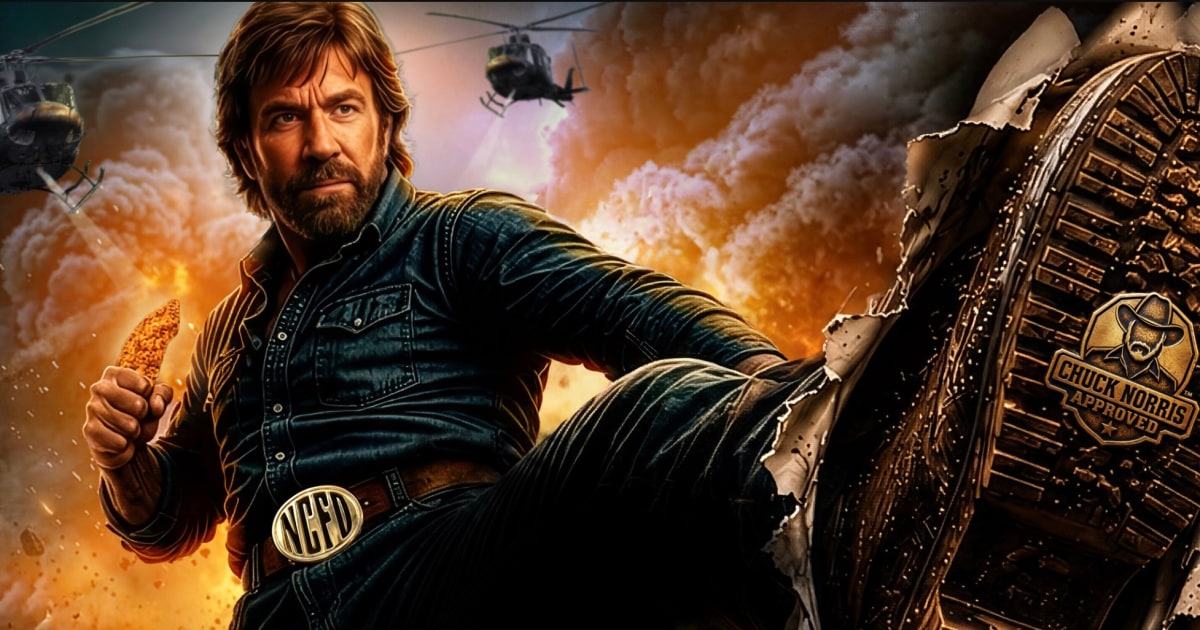
Imagine your favorite action hero from the movies showing up in a chicken finger commercial — years after he passed away. That’s exactly what happened when Raising Cane’s, the popular chicken finger restaurant, launched a special campaign for National Chicken Finger Day (July 27).
But there’s a twist: Chuck Norris isn’t actually in the ads. The restaurant used artificial intelligence (AI) to create a digital version of him.
Important Point: This isn’t just a marketing stunt — it’s for charity!
Raising Cane’s founder Todd Graves and Chuck Norris were close friends. Together, they wanted to help kids. So on National Chicken Finger Day:
| What Happens | Details |
|---|---|
| Donation | $1 from every Box Combo sold goes to charity |
| Maximum | Up to $1 million total |
| Beneficiary | Kickstart Kids — a youth martial arts program co-founded by Chuck Norris |
| Goal | Help young people build confidence and character through karate |
The campaign includes:
Three main types of ads:
Callout: "Chuck and Todd shared a friendship built on mutual respect, generosity and a belief in helping young people become the best versions of themselves."
— Gena Norris, Chuck’s wife
The family:
People on X (formerly Twitter) and Reddit had strong reactions:
| Reaction | Example Comment |
|---|---|
| Confusion | "Why is nobody talking about the fact Raising Cane’s is running AI ads?" |
| Disappointment | "Walked in and was dumbfounded by how bad it was" |
| Anger | "Dystopian" • "Disgraceful tbh" • "This actually breaks my heart" |
| Criticism of the company | "Billionaire can’t pay an artist a decent wage. Embarrassing." |
Yes! This is the confusing part.
After Chuck passed away in March (age 86), fake AI videos started spreading online. They claimed:
The family posted on Instagram:
"These claims are entirely untrue… Do not believe or share any information unless it comes directly from us or an official family representative."
The difference?
Think of it like this:
| Scenario | How You’d Feel |
|---|---|
| A stranger makes a fake video of your grandpa saying things he never said | Mad! That’s not okay. |
| Your grandpa’s best friend makes a cartoon version of him to raise money for kids, with your family’s blessing | Maybe okay? It’s for a good cause. |
The big questions people are asking:
No. Chuck Norris passed away in March 2024 at age 86. The ads were created after his death using AI technology.
The article doesn’t say the family is being paid. They approved the campaign and appear in it, but the donations go to Kickstart Kids — the charity Chuck co-founded to help kids through martial arts.
People have different reasons:
| Fake Funeral Video | Raising Cane’s Campaign |
|---|---|
| Made by strangers | Made with family approval |
| Spread lies about death | Honors legacy for charity |
| No permission | Full permission |
| Family condemned it | Family participated in it |
Almost certainly. As AI gets better and cheaper, more brands will use it to feature:
The Norris family’s dual stance (no to fakes, yes to approved tribute) might become a model for how families manage digital legacies.
What do you think? Is an AI Chuck Norris a cool tribute — or a step too far? The debate is just getting started.