SpaceX Rocket Stage Set to Crash Into the Moon: What You Need to Know
The Big Picture
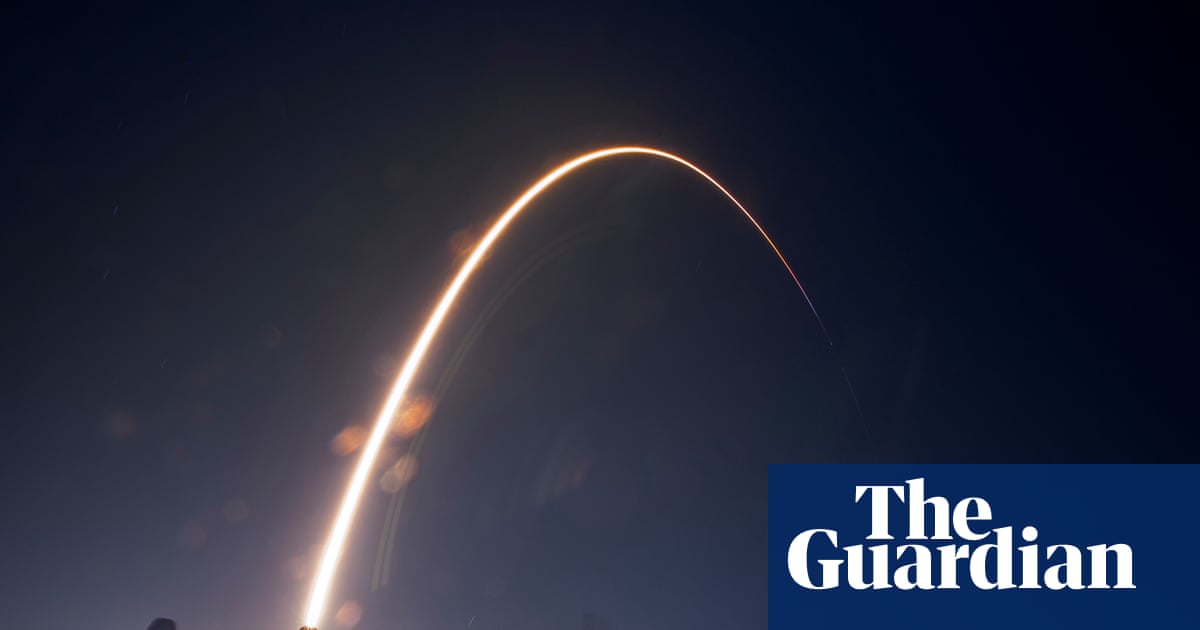
Imagine throwing a ball really, really fast—so fast it leaves Earth and flies all the way to the Moon. Now imagine that ball is actually a giant rocket booster the size of a school bus, and it’s about to slam into the Moon by accident.
That’s exactly what’s happening this Wednesday. A SpaceX rocket part that’s been drifting in space for over a year is on a collision course with our lunar neighbor. Scientists are actually excited about this crash because it gives them a rare chance to study what happens when space junk hits the Moon.
How Did This Happen?
The Mission That Started It All
- February 2024: SpaceX launched a Falcon 9 rocket carrying two lunar landers (robotic spacecraft designed to land on the Moon)
- The upper stage—the top part of the rocket that pushes payloads into deep space—did its job perfectly
- But then… it ran out of fuel and was left drifting in a weird orbit between Earth and the Moon
- Gravity took over: Earth’s and the Moon’s gravity tugged on it for over a year until finally—boom! Collision course locked in.
Important Point: This was never SpaceX’s plan. The rocket stage was supposed to be nudged into a safe orbit around the Sun, but that maneuver wasn’t performed.
Crash Details: When, Where, and How Fast?
| Detail |
What’s Happening |
| When |
Wednesday (early morning hours for US viewers) |
| Where |
Near Einstein Crater on the Moon’s western edge (the side facing Earth) |
| Speed |
5,400 mph (8,700 km/h) — that’s 7 times the speed of sound! |
| Energy |
Equivalent to 3 tons of TNT exploding |
| Best Views |
Eastern US, Canada, and much of South America |
What Will We See?
The Flash (Too Fast for Human Eyes)
- The impact flash lasts less than a second
- Too dim to see from Earth with the naked eye
- But professional telescopes might catch it
The Dust Plume (The Real Show)
- Ejected material could shoot several miles into space
- Visible to telescopes for tens of minutes after impact
- Why so long? The Moon has low gravity and no wind to blow the dust away
Think of it like this: On Earth, if you kick up dust, wind disperses it in seconds. On the Moon, that dust just… hangs there, floating slowly back down.
Why Do Scientists Care?
1. Future Astronaut Safety
"Part of the reason for our interest in this event is to figure out how much of a hazard debris impacts pose to future astronauts."
— Benjamin Fernando, Los Alamos National Laboratory
2. Crater Science
- Predicted crater: ~90 feet (27 meters) across, ~16 feet (5 meters) deep
- Too small to see from Earth, but perfect for lunar orbiters to study
- Fresh craters teach us about the Moon’s surface and history
3. Space Junk Wake-Up Call
- This is the 2nd known accidental rocket crash on the Moon
- 2022: A Chinese rocket stage hit the far side, creating twin craters
- The problem: "Things are getting crowded up there," says space tracker Bill Gray
Who’s Watching?
Robotic Eyes in the Sky
| Spacecraft |
Country |
Mission |
| Lunar Reconnaissance Orbiter (LRO) |
USA (NASA) |
Will take before/after photos |
| Danuri (KPLO) |
South Korea |
Will also capture the crash site |
These orbiters will give us high-resolution images of the fresh crater—something we rarely get to see in real time!
The Bigger Problem: Space Junk
Why This Matters
- Thousands of rockets have launched since the 1950s
- Many upper stages stay in orbit for decades
- No universal rules for disposing of them safely
- Growing risk to satellites, space stations, and future Moon bases
What Should Happen
- Passivation: Vent leftover fuel so tanks don’t explode later
- Disposal burns: Nudge stages into:
- Graveyard orbits (far from operational satellites)
- Heliocentric orbits (around the Sun, like planets)
- Controlled reentry (burn up in Earth’s atmosphere)
- International regulations with teeth
Summary
- A SpaceX Falcon 9 upper stage (launched Feb 2024) will hit the Moon Wednesday
- Impact speed: 5,400 mph near Einstein Crater (Earth-facing side)
- Not intentional—could have been avoided with a disposal burn
- Scientific goldmine: Fresh crater, dust plume, astronaut hazard data
- NASA & South Korea orbiters will photograph before/after
- Wake-up call: Space junk is piling up; we need better rules now
FAQ
Will this crash affect the Moon’s orbit or Earth?
No. The rocket stage weighs about 4 tons. The Moon weighs 73 quintillion tons (that’s 73 followed by 18 zeros!). It’s like a mosquito hitting a freight train.
Can I see the crash from my backyard?
Probably not. The flash is too brief and dim. But if you have a telescope (8+ inches) and live in the eastern Americas, you might spot the dust plume rising for ~30 minutes after impact. Check local astronomy clubs for viewing events!
Has anything human-made hit the Moon before?
Yes! Many times—on purpose. Apollo rocket stages, science probes, and even the LCROSS mission (2009) intentionally crashed to look for water ice. But accidental rocket crashes? Only two known cases: this one and the 2022 Chinese rocket.
Why didn’t SpaceX steer it away?
Great question. After deploying the landers, the stage had very little fuel left. A disposal burn requires precise planning before launch. SpaceX could have reserved fuel for it, but it wasn’t required by regulations at the time.
What happens to the crater now?
It’ll sit there virtually unchanged for millions of years—no wind, rain, or erosion on the Moon. Future astronauts might even visit it as a "space archaeology" site!
Keep looking up!
 1
1