 11
11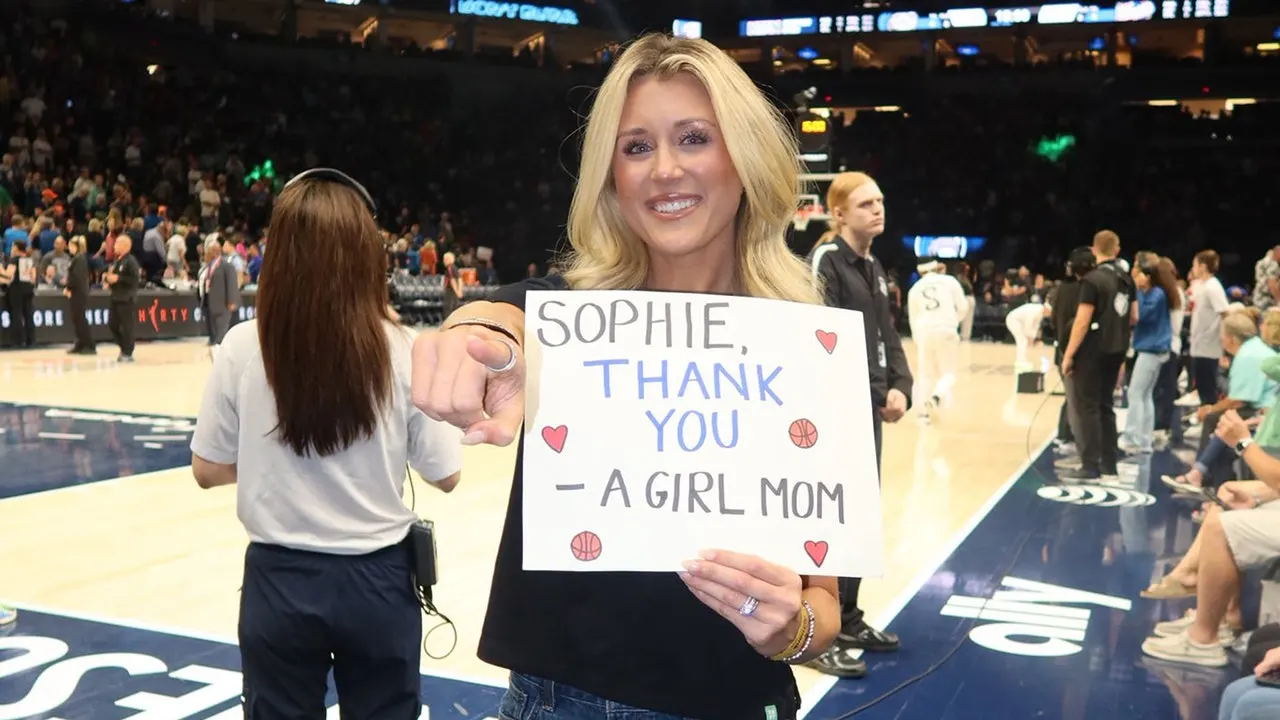
Imagine this: You go to a basketball game to cheer for a player you admire. You make a small, polite sign saying "Thank you." But a stadium worker tells you to put it down — not because it’s too big or rude, but because it has the player’s name on it. Meanwhile, the coach on the sidelines is wearing a political shirt, and thousands of other fans are holding signs with players’ names.
That’s exactly what happened to Riley Gaines at a Minnesota Lynx vs. Indiana Fever game. Here’s the full story, explained simply.
On a Sunday afternoon in Minneapolis, the Indiana Fever played the Minnesota Lynx at Target Center. The game became about more than basketball.
Riley Gaines wanted to show support for Sophie Cunningham. She made a handheld sign that read:
"Sophie, thank you — a girl mom"
Before the game, Gaines checked the arena’s sign policy carefully:
She even used a ruler to measure it!
"You have to take your sign down."
"Because it has her name on it. It has Sophie’s name on it, so you can’t have that."
Target Center’s official policy (publicly posted):
"As a general rule, posters/signage under 11 x 17 inches are allowed in Target Center, pending individual tour/promoter approval. All posters/signage must be handheld, may not be mounted on sticks or poles, may not be lit or constructed using lighting elements, may not contain offensive language or graphics and may not prevent other guests from seeing the stage/event."
| Allowed | Targeted |
|---|---|
| Coach Cheryl Reeve wears "Trans kids belong" shirt on national TV | Fan Riley Gaines holds "Thank you, Sophie" sign |
| Thousands of fans hold signs with player names | One sign with Sophie Cunningham’s name flagged |
| Fans boo loudly every time Cunningham touches the ball | Quiet supporters afraid to speak up |
Despite the loud boos for Cunningham, Gaines noticed something important:
"I absolutely think she had more fans there, or people who at least support her sentiment, than are willing to admit."
Evidence of quiet support:
After the Fever’s 108–100 loss:
"She knew her position was right and remained confident that she could defend it intellectually and morally. Because of that confidence, the reaction did not bother her."
OutKick contacted the Minnesota Lynx to ask:
The Lynx did not respond.
KEY POINT:
A fan’s polite, policy-compliant "thank you" sign was targeted only because it named Sophie Cunningham — while the coach wore a political slogan, thousands held player-name signs, and the arena’s own rules don’t ban names.KEY POINT:
The staffer apologized afterward, suggesting he may have been following orders — but no organization has claimed responsibility.KEY POINT:
Public noise ≠ public opinion. Loud boos got TV attention, but quiet gratitude, photo lines, and a late-game cheer tell a different story.
She attended to support Sophie Cunningham, who faced backlash for saying women’s sports should be reserved for women.
"Sophie, thank you — a girl mom" — a simple message of gratitude from a mother of girls.
No. It was under 11×17 inches, handheld, non-offensive, and didn’t block views — fully compliant with Target Center’s posted policy.
He claimed signs with player names are prohibited — but that rule doesn’t exist in the public policy, and other fans had name signs.
Sophie Cunningham came out, spent time with Gaines and young fans, and posed for a photo holding the sign the staffer tried to ban.
This story raises questions about consistency, free expression, and who gets to decide which messages are welcome in a public arena.

:watermark(https://f.pmo.ee//logos/4157/4f65a0ca1fa521e51f6438e24b2258a6.png,-2p,-2p,0,18,none):format(webp)/nginx/o/2026/08/03/17825322t1hdede.jpg "Жара до +30°: синоптики обещают Латвии лето на новой неделе")

