 11
11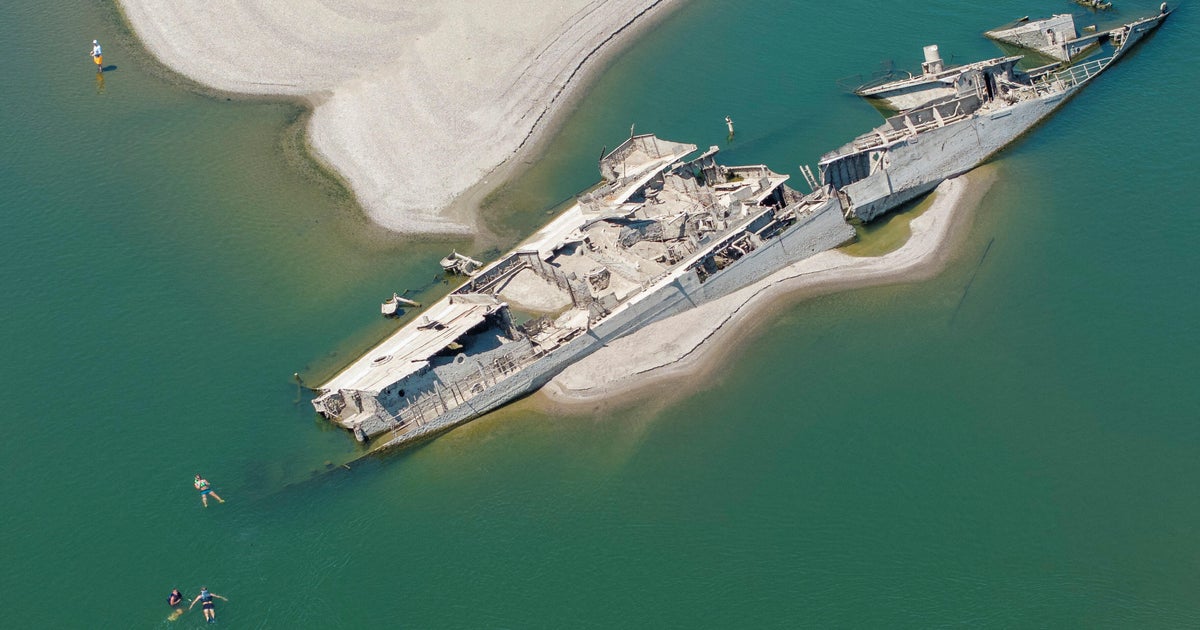
Europe’s second-longest river, the Danube, has dropped to record-low water levels because of a severe drought and extreme summer heat. As the water disappears, surprising things are emerging from the riverbed:
These discoveries are fascinating, but they also signal serious problems for the countries that depend on the river.
In September 1944, as Soviet forces advanced through the Balkans near the end of World War II, Nazi Germany’s Black Sea fleet retreated toward the Danube gorge near Prahovo, Serbia (on the border with Romania).
The Nazis deliberately sank their own ships — a military tactic called "scuttling" — to:
Important Point: Up to 200 German warships were scuttled in this area. Many still carry live explosives and ammunition, making them extremely dangerous.
| Year | Event |
|---|---|
| 2022 | First major emergence of wrecks during record drought |
| 2024 | More ships appear, still loaded with explosives |
| 2026 | At least 20 wrecks visible from riverbanks near Prahovo |
Local resident Ivica Gavrilovic, who has lived beside the Danube his whole life, says people are curious but can’t easily access the ships. Another resident, Krsta Brandic, notes that large commercial ships can no longer pass through this section of the river.
Callout: The Serbian government, with EU funding, has long wanted to remove these wrecks, but the explosive danger makes it incredibly difficult and expensive.
Near the village of Ryahovo, Bulgaria (northeastern city of Ruse), falling water levels revealed well-preserved woolly mammoth bones. Museum director Nikolay Nenov confirmed the find includes:
Important Point: Unlike most mammoth finds where bones are scattered over large areas, these bones were concentrated in one spot — meaning they all came from the same young animal.
The dark color of the bones suggests this mammoth spent lots of time in a marshy, wetland environment — exactly what the Danube region was during the Ice Age.
The low water levels aren’t just revealing history — they’re causing serious crises:
Experts link this extreme drought and heat to global warming. This isn’t a one-time event — it’s becoming a pattern.
The Danube River’s record-low water levels have created a surreal scene where WWII history and Ice Age prehistory are simultaneously emerging from the mud.
What looks like a fascinating archaeological window is actually a warning sign of how climate extremes are disrupting critical infrastructure and revealing dangerous legacies of the past.
They deliberately scuttled (sank) their Black Sea fleet in September 1944 to block the Danube and slow the advancing Soviet army as they retreated from Romania.
Yes, extremely. Many still carry live explosives, ammunition, and weapons. This is why most were never removed after the war.
Historians estimate up to 200 warships were scuttled in 1944. Only about 20 are currently visible, but more emerge each time water levels drop severely.
During the Ice Age, the Danube region was a cold, marshy grassland — perfect habitat for woolly mammoths. When they died, their bones settled in river sediments and were preserved for tens of thousands of years.
Yes. Experts directly link the increasing frequency and severity of European droughts and heatwaves to global warming. The Danube has hit record lows multiple times in just the last few years.
Article based on reporting from CBS News, Reuters, and AFP (July/August 2026)