11
11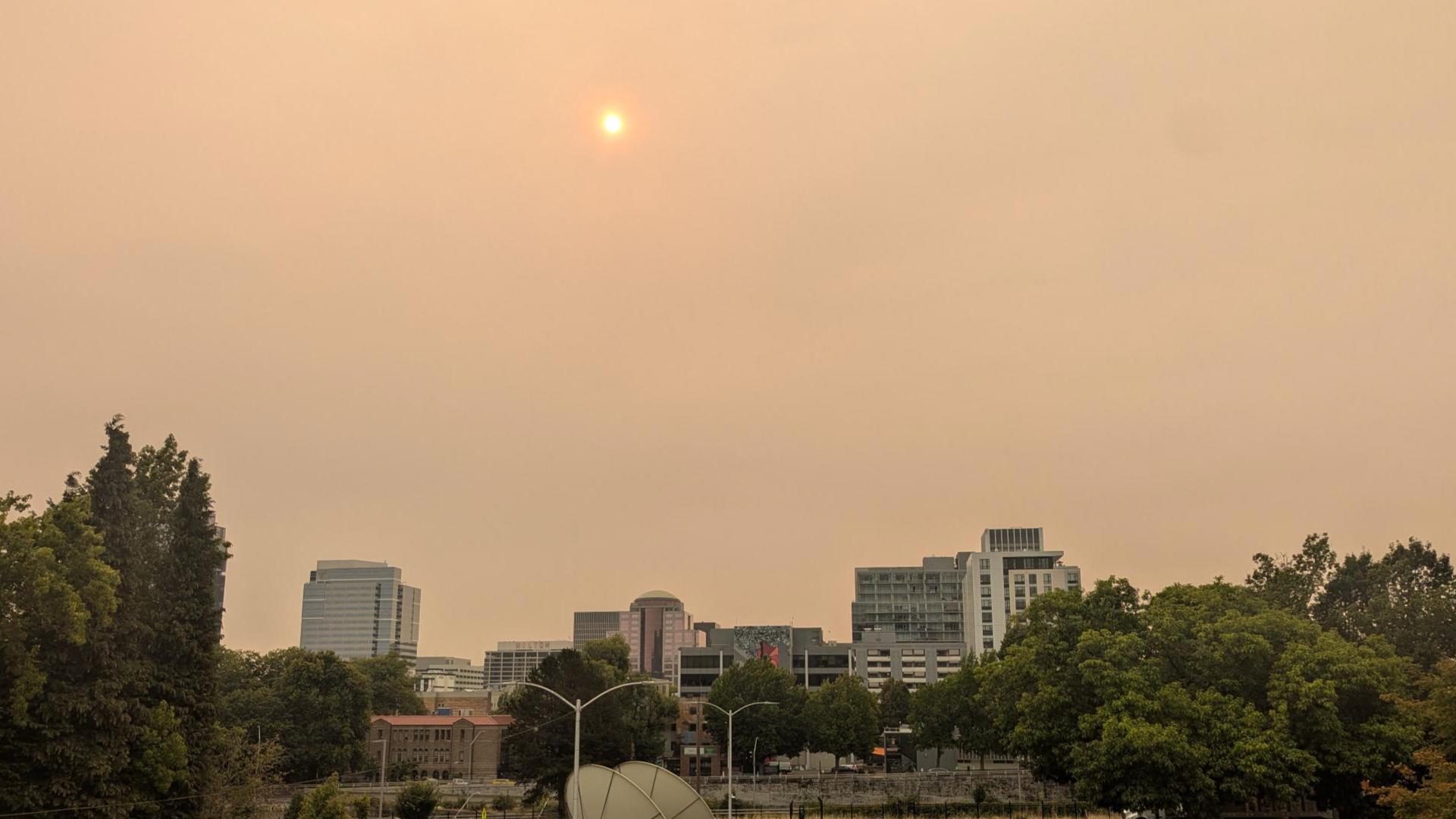
Imagine waking up to find your city wrapped in a thick, smoky blanket. That’s exactly what happened in Portland, Oregon on Tuesday morning. Wildfire smoke—mostly from the Grasshopper Fire burning near Mount Hood—drifted into the metro area and turned the air unhealthy to breathe.
Quick Fact: The Grasshopper Fire has burned roughly 34,000 acres (that’s about 25,000 football fields!) around Mount Hood.
| Region | Air Quality Status |
|---|---|
| Portland-Vancouver Metro | Unhealthy to Unhealthy for Sensitive Groups |
| Most of Western Oregon | Unhealthy |
| Central Oregon | Very Unhealthy to Hazardous |
| Southern Oregon | Moderate (escaped the worst) |
IMPORTANT ALERTS
- Air Quality Advisory → Expanded to cover most of Oregon (in effect until further notice)
- Heat Advisory → In effect until 11 PM Thursday (highs in mid-90s to upper-90s)
According to air quality experts at the Department of Environmental Quality (DEQ):
There is NO "safe" amount of wildfire smoke to breathe.
Wildfire smoke contains tiny particles (called PM2.5) that are so small they can:
| Tool | How It Helps | Best For |
|---|---|---|
| HEPA Filter (in HVAC) | Captures finest smoke particles | Whole-house protection |
| Portable Air Purifier (with HEPA) | Cleans air in one room | Clean air room / bedrooms |
| N95/KN95 Mask | Filters particles when outside | Essential outdoor trips |
PRO TIP: If your HVAC system can handle it, a high-efficiency HEPA filter is the gold standard for whole-home protection.
The smoke and heat combo has caused a wave of closures and canceled events across the metro area. Even the Clark County 911 system has been strained by smoke-related health calls.
A: Thick smoke is expected through Wednesday and into Thursday, with improvement starting late Thursday and continuing into Friday.
A: That helps, but smoke particles are tiny and sneak in. A portable air purifier with a HEPA filter makes a huge difference—especially in a designated "clean air room."
A: No. They don’t filter out the tiny PM2.5 particles in wildfire smoke. You need an N95, KN95, or P100 respirator for real protection.
A: MERV 13 is better than standard filters but true HEPA filters capture even smaller particles. Check your system’s manual—some can’t handle HEPA’s airflow resistance.
A: No. Even healthy people can suffer lung irritation and long-term effects. Move workouts indoors or wait until air quality improves.
Stay safe, Portland! Check OregonSmoke.org and AQI.Oregon.gov for real-time updates.