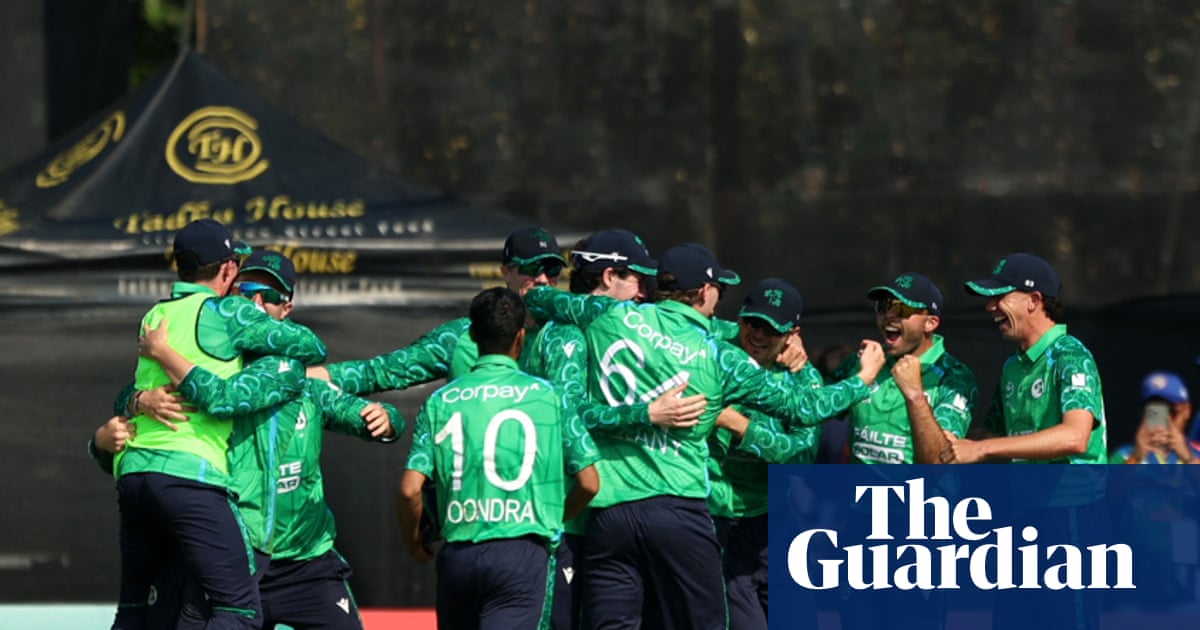
Cricket Diplomacy: Why Ireland Playing Afghanistan Has England Worried
The Big Picture: A Game of Cricket and Politics
Imagine you’re at a playground where most kids have agreed not to play with one particular child because that child’s older sibling won’t let their sister play any games. Now imagine one kid decides to play with that child anyway. That’s basically what’s happening in international cricket right now.
Ireland has decided to host Afghanistan for a full cricket series this summer. But England—the big neighbor with lots of money and influence—is not happy about it.
Why Is England Unhappy?
The Core Issue: Women’s Rights in Afghanistan
- Since the Taliban took control of Afghanistan in 2021, they have banned women and girls from playing sports.
- This means Afghanistan is the only full member of the International Cricket Council (ICC) without a women’s national team.
- The England and Wales Cricket Board (ECB) calls this "gender apartheid"—a system where women are completely excluded.
- The UK government backs the ECB’s stance.
England’s Response: No Bilateral Matches
"Bilateral series" = Two countries agreeing to play each other outside of big tournaments (like the World Cup).
- England refuses to play Afghanistan in bilateral series (just the two of them).
- They will only play Afghanistan in ICC global events (like the World Cup or Champions Trophy) because they have to.
- In 2025, England played Afghanistan in the Champions Trophy—but only after a special board meeting and huge criticism from 160 MPs who wanted them to withdraw.
What Ireland Is Doing Differently
A Full Series, Right on England’s Doorstep
| Detail |
What’s Happening |
| When |
Starts this Wednesday (summer 2025) |
| Where |
Northern Ireland (part of the UK, but Cricket Ireland runs the game there) |
| Format |
5 One-Day Internationals (ODIs) |
| Return Fixture |
Ireland will tour UAE in March 2026 for 1 Test, 3 ODIs, 3 T20s |
Why Ireland Says "Yes"
- Cricket Ireland has built a close relationship with the Afghanistan Cricket Board.
- They believe engagement is better than isolation.
- They’re not alone: West Indies, Zimbabwe, and all four Asian full members (India, Pakistan, Sri Lanka, Bangladesh) also play Afghanistan bilaterally.
The Fallout: England Says "No Thanks" to Ireland
Warm-Up Tests? Not Anymore.
- England used to play a warm-up Test against Ireland at Lord’s before big home series (2019, 2023).
- Next year? They picked Bangladesh instead.
A "Delicate" Relationship
- England declined an invitation to join a new "Euro Nations Cup" with Ireland, Scotland, Netherlands, and Italy.
- Reason given: "Congested calendar" (too busy).
- But the timing suggests the Afghanistan series is the real friction point.
Not All Bad News
- England’s women WILL host Ireland for a 3-match ODI series next month.
- Last September, England’s men played 3 T20s in Ireland—but sent a second-string team (backup players).
- No more men’s fixtures are scheduled after that.
The Bigger Context: Who Else Says No?
| Country |
Stance on Bilateral Cricket vs Afghanistan |
| England |
Refuses (backed by UK govt) |
| Australia |
Refuses |
| South Africa |
Refuses |
| New Zealand |
Refuses |
| Ireland |
Plays them |
| West Indies |
Plays them |
| Zimbabwe |
Plays them |
| India, Pakistan, Sri Lanka, Bangladesh |
Plays them |
Important: The ICC (world governing body) has NOT banned Afghanistan. They’re still a full member. But individual boards make their own choices on bilateral series.
England’s Alternative: Supporting Afghan Women
Since Afghan women fled the country (mostly to Australia) after the Taliban banned female sport:
- The ECB organized a tour of England for the Afghan Refugee Women’s team.
- They invited them to the T20 World Cup Final at Lord’s.
- This is England’s way of saying: "We support Afghan women’s cricket, just not the men’s team under the current regime."
Why This Matters: Money, Power, and Principles
For Ireland: A Financial Lifeline
- Hosting a full series against a top-10 team brings TV money, ticket sales, sponsorship.
- The return tour to UAE gives Ireland rare Test match experience (only 12 countries play Test cricket).
- For a smaller cricket nation, this is huge.
For England: A Line in the Sand
- The ECB fears legitimizing a regime that erases women from sport.
- They worry other boards might follow Ireland’s lead, weakening the collective stance.
- Future fixtures with Ireland could be on the chopping block—especially lucrative ones.
KEY TAKEAWAYS
- Ireland is playing Afghanistan in a 5-match ODI series in Northern Ireland this summer.
- England (ECB) opposes this because the Taliban bans women’s sport—calling it "gender apartheid."
- England only plays Afghanistan in ICC tournaments (where they must), not bilateral series.
- England has already dropped Ireland as a warm-up Test opponent for next year.
- Ireland joins most non-Western boards in engaging with Afghanistan.
- The ICC has not banned Afghanistan, but individual boards choose their own path.
- England supports Afghan refugee women’s cricket as an alternative.
- Money and politics are clashing—and Ireland may pay the price.
Summary: A Test Match of Values vs. Reality
Cricket likes to call itself a "gentleman’s game," but this is a high-stakes diplomatic standoff.
- England is taking a moral stand, backed by its government.
- Ireland is making a pragmatic choice—cricket development, revenue, and Test opportunities.
- Afghanistan’s men’s team keeps playing, while their women’s team exists only in exile.
- The ICC watches from the sidelines, unwilling to ban a full member.
Who’s right? That depends on whether you think sport should lead social change or stay above politics. Either way, Ireland just bowled a googly—and England isn’t happy about it.
FAQ: Your Questions Answered
1. What is a "bilateral series"?
A bilateral series is when two countries agree to play a set of matches against each other, outside of a multi-team tournament like the World Cup. It’s arranged directly between the two cricket boards.
2. Why does the ECB call it "gender apartheid"?
"Apartheid" means a system of institutionalized segregation. The ECB uses this term because the Taliban completely bans women and girls from participating in any sport, which they view as total gender-based exclusion—similar to how racial apartheid excluded Black South Africans.
3. Has the ICC banned Afghanistan?
No. Afghanistan remains a Full Member of the ICC with all voting rights and access to funding. The ICC has not imposed a ban, though it has faced pressure to do so. Individual boards (like England, Australia) make their own bilateral scheduling decisions.
4. Why does Ireland need this series so much?
Ireland is a smaller cricket nation with limited revenue. Playing a top team like Afghanistan brings:
- Broadcast income
- Sponsorship exposure
- Test cricket experience (on the return tour to UAE)
- Player development against high-quality opposition
5. Will England stop playing Ireland completely?
Not necessarily—but lucrative men’s fixtures are at risk. England’s women are still scheduled to play Ireland. However, with no future men’s tours planned and the warm-up Test cancelled, the relationship is clearly strained.
 1
1