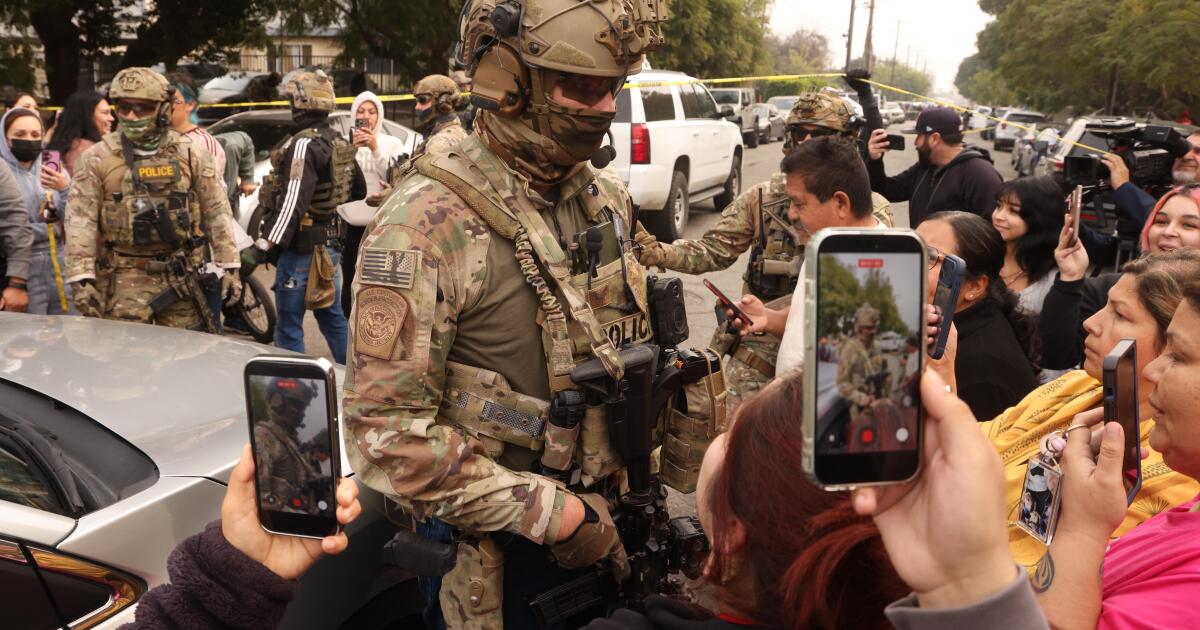
Federal Judge Fines Government $500/Day for Ignoring Court Order on Agent Phones
What Happened? (The Big Picture)
Imagine a teacher tells a student, "Hand in your homework by Friday." Friday comes, then Monday, then the next Friday—and the student still hasn’t turned it in. The teacher gets frustrated and says, "You’re staying after school every day until it’s done."
That’s basically what just happened in a California federal court—except the "student" is the U.S. government, the "homework" is turning over cell phone data from immigration agents, and the "detention" is a $500-per-day fine.
IMPORTANT POINT
A federal judge found the Trump administration in civil contempt—meaning they deliberately ignored a court order. The judge said the government acted "intentionally and not in good faith." Until they comply, the fine keeps adding up.
The Court Order That Started It All
This didn’t happen overnight. Here’s the timeline in simple steps:
- Lawsuit Filed (2024) – The ACLU and other groups sued the government, claiming immigration agents were stopping and arresting people without valid reasons (like racial profiling).
- Magistrate Judge’s Order (January 16, 2025) – Judge Sheri Pym ordered the government to forensically image (make a complete, exact digital copy of) all cell phones—both government-issued and personal—used by agents during 15 specific immigration operations.
- Why? The plaintiffs wanted to see texts, emails, and call logs to prove agents lacked "reasonable suspicion" for the stops.
- Months of Delay – Four months passed. The government sent out a questionnaire. 885 agents admitted using personal phones for work. 88 agents agreed to let their phones be imaged.
- Zero Personal Phones Imaged – By late June, not a single personal phone had been processed.
- Contempt Hearing (June 25) – The plaintiffs asked the judge to hold the government in contempt.
- Judge’s Ruling (July 28, unsealed August 5) – Judge Maame Ewusi-Mensah Frimpong agreed. Civil contempt. $500/day fine. Government must file proof of payment weekly.
Why the Judge Is Angry
Judge Frimpong didn’t buy the government’s excuses. Here’s what she wrote (in plain English):
| Government’s Excuse |
Judge’s Response |
| "It’s too hard/slow." (Only 3 phones every 2 weeks) |
"You knew it was slow, so you should have started earlier." The delay makes the excuse worse, not better. |
| "Personal phones aren’t in our ‘custody and control’." |
Agents admitted using them for work. If they’re used for the job, the government is responsible for the data on them. |
| "Agents are scattered across the country now." |
That’s a logistics problem, not a legal shield. You still have to follow the order. |
| "We’re not trying to ignore the court." |
"Actions speak louder than words." Four months. Zero personal phones. The evidence shows intentional non-compliance. |
KEY TAKEAWAY
The judge explicitly said: "The clear and convincing evidence shows that Defendants have acted intentionally and not in good faith." This is a very strong legal finding.
The Government’s Excuses (And Why They Didn’t Work)
The Department of Justice (DOJ) lawyer, Jonathan Robbins, made several arguments at the hearing. Here’s the breakdown:
- Argument: "Personal phones belong to agents, not us. We can’t force them."
- Reality Check: 885 agents said they use personal phones for official business. 88 voluntarily consented to imaging. The government still didn’t do it.
- Argument: "Forensic imaging is ‘overly intrusive’ and takes forever."
- Reality Check: The judge noted the government never gave a realistic timeline for completion. "We’re not going to wait forever," she said.
- Argument: "We’re aggressively defending the President’s priorities. We already won at the Supreme Court on a related issue."
- Reality Check: The Supreme Court paused a different order (about stopping people based on race). This order is about preserving evidence (phones) for this lawsuit. Different issue. The judge is moving forward.
What This Means for the Lawsuit
This contempt ruling is a major win for the plaintiffs (ACLU, Public Counsel, etc.) in their bigger case alleging unconstitutional immigration stops.
- Evidence Preservation: The phone data is critical evidence. Texts and body camera footage (already revealed by the LA Times) show agents using racial slurs against Latinos. This supports claims of racial profiling.
- Sanctions: The government must also reimburse the plaintiffs for all the lawyer time and money spent just to get the government to follow the first order.
- Pressure: The daily fine ($3,500/week) and public ruling put massive pressure on the government to hurry up and image the phones.
Important Evidence Found So Far
While the fight over personal phones drags on, evidence from other sources has already surfaced:
- Body Camera Footage: Captured agents using slurs.
- Text Messages: Revealed racist language referring to Latinos.
- Racially Insensitive Comments: Found in other materials turned over during the lawsuit.
This evidence bolsters the plaintiffs’ core argument: That stops were not based on legitimate suspicion, but on race/ethnicity.
IMPORTANT POINT
Gregory Bovino, a former high-ranking Border Patrol official, lost his work phone in January 2026 and got a new one. This raises serious questions about whether evidence on that lost phone is gone forever—evidence that was supposed to be preserved.
Summary
- A federal judge ordered the government to copy data from agents’ phones (personal & work) used in 15 immigration ops.
- The government ignored the order for 4+ months. Zero personal phones copied.
- Judge Frimpong found the government in CIVIL CONTEMPT: $500/day fine + pay plaintiffs’ legal fees.
- The judge said the delay was INTENTIONAL and IN BAD FAITH.
- This is part of a lawsuit accusing agents of UNLAWFUL STOPS & RACIAL PROFILING.
- Already-revealed texts & body cam footage show agents USING RACIAL SLURS.
- The fine continues DAILY until every agreed-upon personal phone is imaged.
FAQ
1. What does "forensically image" mean? Is it like taking a picture?
No. It means making a bit-for-bit, exact digital copy of everything on the phone—texts, deleted messages, call logs, emails, location data, apps, everything. It preserves the data in a way that can be used as evidence in court without altering the original phone.
2. Why do the plaintiffs want personal phones? Aren’t those private?
Agents admitted (885 of them) they use personal phones for official government work. If they discuss stops, arrests, or operations on those phones, those communications are government records relevant to the lawsuit. The judge agreed: if used for work, they must be produced.
3. What is "civil contempt" vs. "criminal contempt"?
- Civil Contempt: "You’re not doing what I ordered. Pay a fine / go to jail until you do it." The key is coercion—the penalty stops the moment you comply. (This case: $500/day).
- Criminal Contempt: "You disrespected the court. Here is a fixed punishment (fine/jail time) for what you did." It’s punitive, not conditional.
4. Can the government appeal this?
Yes, they can appeal the contempt finding and the fine to the 9th Circuit Court of Appeals. However, appealing does not automatically pause the fine. They usually have to ask the appeals court for a "stay" (pause) while the appeal is decided. The first $3,500 payment (for the first week) has already been made.
5. What happens if the government never complies?
Theoretically, the fine ($500/day = ~$182,500/year) continues indefinitely. Practically, the judge can escalate sanctions: higher daily fines, holding specific officials in contempt (personal fines/jail), or issuing adverse inference instructions (telling a future jury: "You can assume the missing phone data would have hurt the government’s case"). The judge made clear: "We’re not going to wait forever."
 1
1