11
11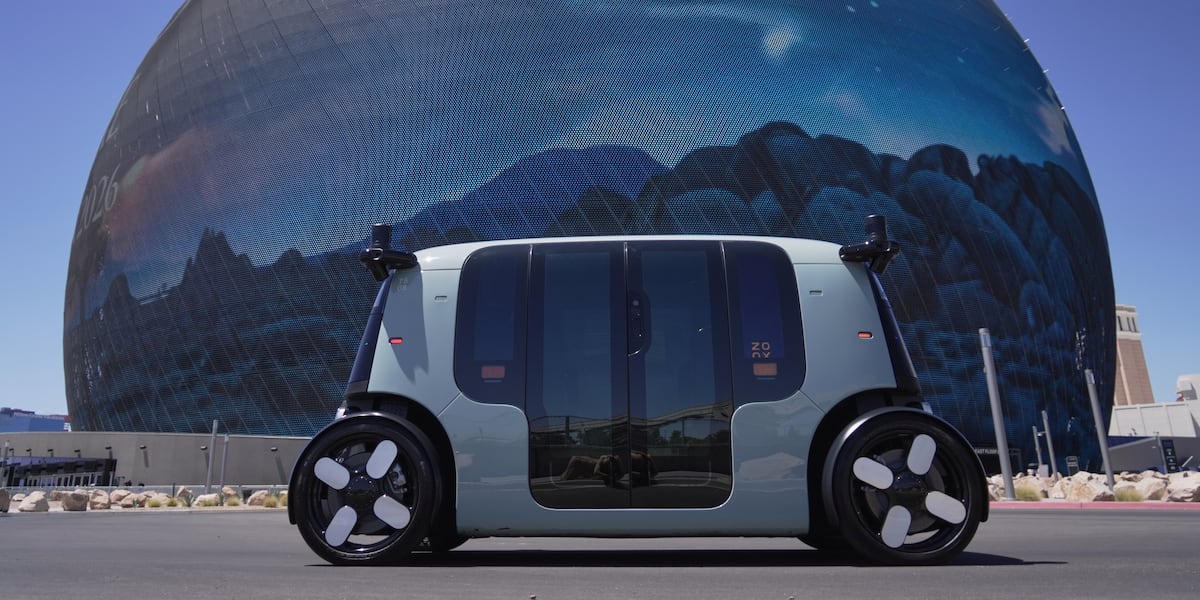
Imagine calling a car to pick you up, and when it arrives, there’s no driver—and no steering wheel. That future is happening right now in cities like Las Vegas and San Francisco. Federal regulators are updating old rules to allow these fully autonomous "robotaxis" to operate without manual controls like steering wheels or brake pedals.
Here’s everything you need to know, explained simply.
Think of a robotaxi like an elevator: you press a button (or tap an app), the doors open, you get in, and it takes you where you want to go—all by itself. No human driver needed.
The big news: The U.S. National Highway Traffic Safety Administration (NHTSA)—the government agency in charge of vehicle safety—has given Amazon’s Zoox permission to start charging passengers for rides in their fully autonomous vehicles. These cars have no steering wheel, no pedals, and no driver’s seat. Instead, they have four seats facing each other, like a moving living room.
Where are they running?
Zoox has been giving free rides in Las Vegas and San Francisco since last year. Now, with federal approval secured, they can start charging fares once they get the final green light from state and local officials.
Zoox isn’t a regular car with a computer added on top. It was built from the ground up to drive itself.
| Feature | Regular Car | Zoox Robotaxi |
|---|---|---|
| Steering wheel | Yes | No |
| Brake / gas pedals | Yes | No |
| Driver’s seat | Yes | No |
| Seats | Forward-facing | Four inward-facing seats |
| Shape | Long hood, trunk | Boxy, symmetrical (looks the same front and back) |
| Extras | Radio, AC | Music, temperature control, mood lighting |
Rider review:
“It’s kind of scary at first, but when I just got used to it, it’s really cool and chilling. I really liked the music and how you can adjust the temperature.”
— Chloe Huu, rider in Las Vegas
One downside: Wait times in the app kept changing, making it hard to plan trips.
Almost all vehicle safety rules were written decades ago—in the 1970s, 80s, and 90s. Back then, every car was assumed to have a human driver. So the rules require things like:
But as NHTSA Administrator Jonathan Morrison puts it:
“If you’re going to be developing a standard in the 1970s… nobody had a crystal ball that you might have technologies that would enable the vehicle to drive itself.”
Not everyone is convinced yet. Here’s the debate:
Advocates for Highway and Auto Safety say Zoox didn’t provide enough detailed safety data to prove its vehicles are safe on public roads.
“Lots of promises, lots of glossy language… Yet there really was no data behind the promises, and that’s really concerning to us.”
— Peter Kurdock, General Counsel, Advocates for Highway and Auto Safety
NHTSA admits there have been some problems:
NHTSA’s response: Investigations, recalls, and formal "calls to action" to fix issues quickly.
“Sometimes we have seen unsafe behaviors, and we jump on that really quickly… By and large we’re really excited about the promise of this technology.”
— Jonathan Morrison, NHTSA Administrator
The Insurance Institute for Highway Safety (IIHS) says it’s hard to judge safety because:
| Company | Owner | Status |
|---|---|---|
| Waymo | Alphabet (Google’s parent) | Industry leader – already operates in multiple U.S. cities |
| Zoox | Amazon | Scaling up – federal approval to charge for rides; plans for 10,000 vehicles/year |
| Tesla | Elon Musk | Developing – working on "Full Self-Driving" for future robotaxi network |
Zoox milestones:
Important Points to Remember
- Robotaxis are real and operating now in select U.S. cities.
- No steering wheel, no pedals, no driver—the car drives itself.
- Federal rules are catching up to allow this new vehicle design.
- Safety is debated: promoters highlight the potential; critics want more public data.
- You can ride in one today (for free in some cities, soon for a fare).
- The industry is growing fast—Waymo leads, Zoox and Tesla are scaling up.
Robotaxis have moved from science fiction to city streets. Amazon’s Zoox just got federal approval to charge for rides in vehicles built without steering wheels or pedals—a first for the industry. While the technology promises safer roads (no drunk or distracted driving), safety advocates say companies aren’t sharing enough data to prove they’re ready. Regulators are updating decades-old rules to allow these new designs, but they’re also investigating incidents like robotaxis blocking emergency vehicles. The race is on: Waymo leads, but Zoox (backed by Amazon’s billions) and Tesla are charging ahead. For now, if you’re in Vegas or San Francisco, you can already hail a ride in a boxy, driverless pod—and soon, you’ll pay for it just like an Uber.
Yes! In Las Vegas and San Francisco, Zoox has been offering free rides since last year. Soon, they’ll start charging fares. Waymo operates paid robotaxi services in several cities including Phoenix, San Francisco, and Los Angeles.
Zoox and other companies have remote support teams monitoring every ride. If the car gets confused, a human operator (not in the car) can guide it. NHTSA also has the power to investigate, issue recalls, or ground vehicles if they find a safety defect.
We don’t fully know yet. In theory, they don’t get drunk, tired, or distracted. But in practice, there isn’t enough public data to compare crash rates fairly. Companies report minor scrapes; humans usually only report big crashes. Better reporting standards are needed.
Because they’re designed from scratch to never need a human driver. A steering wheel takes up space, adds weight, and limits interior design (like Zoox’s face-to-face seating). Regulators are now agreeing: if the car never needs a human to drive, it doesn’t need steering controls.
Not overnight. Right now, they only work in mapped, approved areas with good weather. But companies like Amazon (Zoox), Alphabet (Waymo), and Tesla want to build nationwide networks. Over the next decade, they could significantly reduce the need for human drivers in cities.