11
11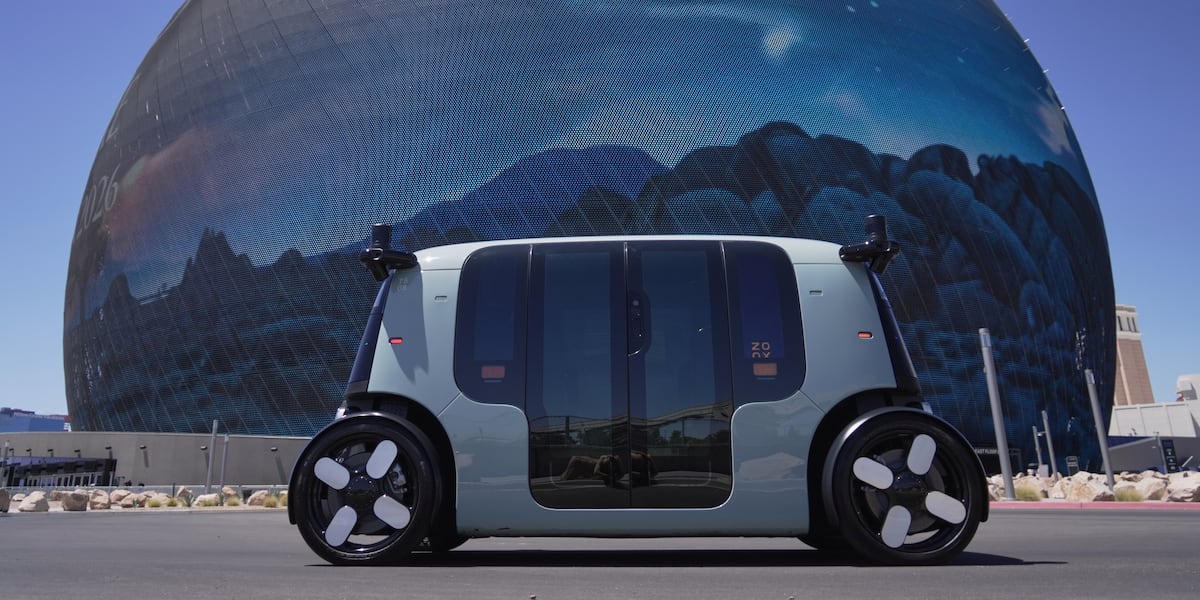
Imagine calling a car, and when it arrives, there’s no driver—and no steering wheel. That future is arriving faster than you might think.
Robotaxis are cars that drive themselves completely. No human driver sits behind the wheel because there is no wheel. Instead, computers, cameras, and sensors do all the work: steering, braking, changing lanes, and navigating traffic.
Think of them like an elevator: you press a button (or tap an app), the doors open, you get in, and it takes you where you want to go—all by itself.
Amazon’s Zoox just hit a major milestone. On Thursday, federal regulators said Zoox can start charging passengers for rides in its fully autonomous vehicles—once they get the final okay from state and local authorities.
What makes Zoox special?
- No steering wheel, no pedals—not even a brake pedal.
- Four seats face each other (like a little living room on wheels).
- Boxy, futuristic shape—you’ve probably seen them cruising the Las Vegas Strip or San Francisco streets.
- Free rides since last year—now they’re ready to turn that into a business.
Rider reaction: Chloe Huu from Michigan tried one in Vegas. Her verdict?
“It’s kind of scary at first, but when I just got used to it, it’s really cool and chilling. I really liked the music and how you can adjust the temperature.”
One downside: the estimated wait time kept changing, making it hard to plan.
You might wonder: How can a car be safe without a human ready to grab the wheel?
The short answer: They use a “brain” made of software that sees everything around the car 360 degrees, 24/7. It never gets tired, distracted, or drunk.
The tech stack (simplified):
For decades, every car safety rule assumed a human driver. That’s why cars must have steering wheels, brake pedals, windshield wipers, and side mirrors.
But robotaxis don’t need those things. So the National Highway Traffic Safety Administration (NHTSA)—the federal agency that sets vehicle safety standards—is rewriting the rulebook.
| Old Rule | New Reality |
|---|---|
| Steering wheel required | No wheel needed—car steers itself |
| Brake pedal required | Computer brakes faster than any human |
| Side mirrors required | 360° sensors see better than mirrors |
| Windshield wipers for driver | Sensors don’t care about rain on glass |
NHTSA Administrator Jonathan Morrison put it this way:
“If you’re going to be developing a standard in the 1970s, 1980s, 1990s, nobody at that time had this imagination… that you might have technologies that would enable the vehicle to drive itself.”
What’s happening now:
While regulators are opening the door, safety advocates are waving red flags.
“Lots of promises, lots of glossy language, lots of ‘We believe, we think we’ll do this.’ Yet there really was no data behind the promises, and that’s really concerning to us.”
— Peter Kurdock, General Counsel
Their worry: Zoox hasn’t shared detailed proof that its vehicles can handle every real-world situation safely—especially without a human fallback.
But Morrison says:
“Sometimes we have seen unsafe behaviors, and we jump on that really quickly… That’s our job at NHTSA.”
He adds Americans “shouldn’t be terribly worried” and that the promise—no drunk, distracted, or tired driving—is worth pursuing.
Here’s a tricky part: We don’t have good apples-to-apples safety data yet.
The Insurance Institute for Highway Safety (IIHS) explains why:
Result: It looks like robotaxis crash more often—but that’s mostly because they’re reporting everything, while humans only report the big stuff.
| Company | Owner | Status |
|---|---|---|
| Waymo | Alphabet (Google’s parent) | Industry leader – Already operating paid rides in multiple U.S. cities (Phoenix, SF, LA, Austin). |
| Zoox | Amazon | Newly approved to charge – Focus on purpose-built, symmetric vehicles. |
| Tesla | Elon Musk | Promising “Robotaxi” network – Still uses cars with steering wheels; full autonomy not yet proven. |
Amazon’s big bet:
Zoox CEO Aicha Evans calls the exemption:
“An important milestone… reflecting a shared commitment to enabling innovation while maintaining the highest standards of safety.”
Step-by-step roadmap:
Key Takeaways
- Robotaxis without steering wheels are now legally allowed (with limits) on U.S. roads.
- Zoox is the first purpose-built, wheel-less robotaxi cleared to charge passengers.
- Safety data is still thin—advocates want more transparency before mass deployment.
- NHTSA is updating 50-year-old rules to match the new technology.
- The race is heating up: Waymo leads, Zoox is accelerating, Tesla is promising.
Federal regulators have given Amazon’s Zoox the green light to start charging for rides in its steering-wheel-free, pedal-free robotaxis—a first for a purpose-built autonomous vehicle in the U.S. While the technology promises a future with no drunk, distracted, or tired driving, safety advocates warn that real-world proof is still lacking. NHTSA is rewriting decades-old safety standards to accommodate these new vehicles, but insists it will police the industry closely. Meanwhile, Waymo remains the leader in deployed robotaxis, and Tesla looms as a wildcard. The next two years will be critical as Zoox puts up to 2,500 vehicles on the road to prove the dream of fully autonomous ride-hailing is both safe and scalable.
They’re generally safe in the areas they operate, but they’ve had strange behaviors (random stops, confusing parking lots) and a few serious incidents (blocking emergency vehicles). Regulators are watching closely, but we don’t yet have standardized crash-rate data to compare them directly with human drivers.
Yes, in Las Vegas and San Francisco—but currently only if you’re part of their rider program. Once they get local permits, they’ll open paid rides to the public via their app.
These vehicles have multiple redundant systems (backup brakes, steering, power, and computing). They’re designed to pull over safely if something fails. Cybersecurity is a top priority for both companies and regulators.
Not anytime soon. Current exemptions are only for fleet-operated robotaxis (like Zoox and Waymo) in limited numbers. Personal cars still need to meet all existing safety standards—including a steering wheel.
Tesla’s system still requires a human driver to supervise and be ready to take over at any moment. Zoox and Waymo vehicles have no human driver at all—they’re designed to operate 100% autonomously in their service areas.