 11
11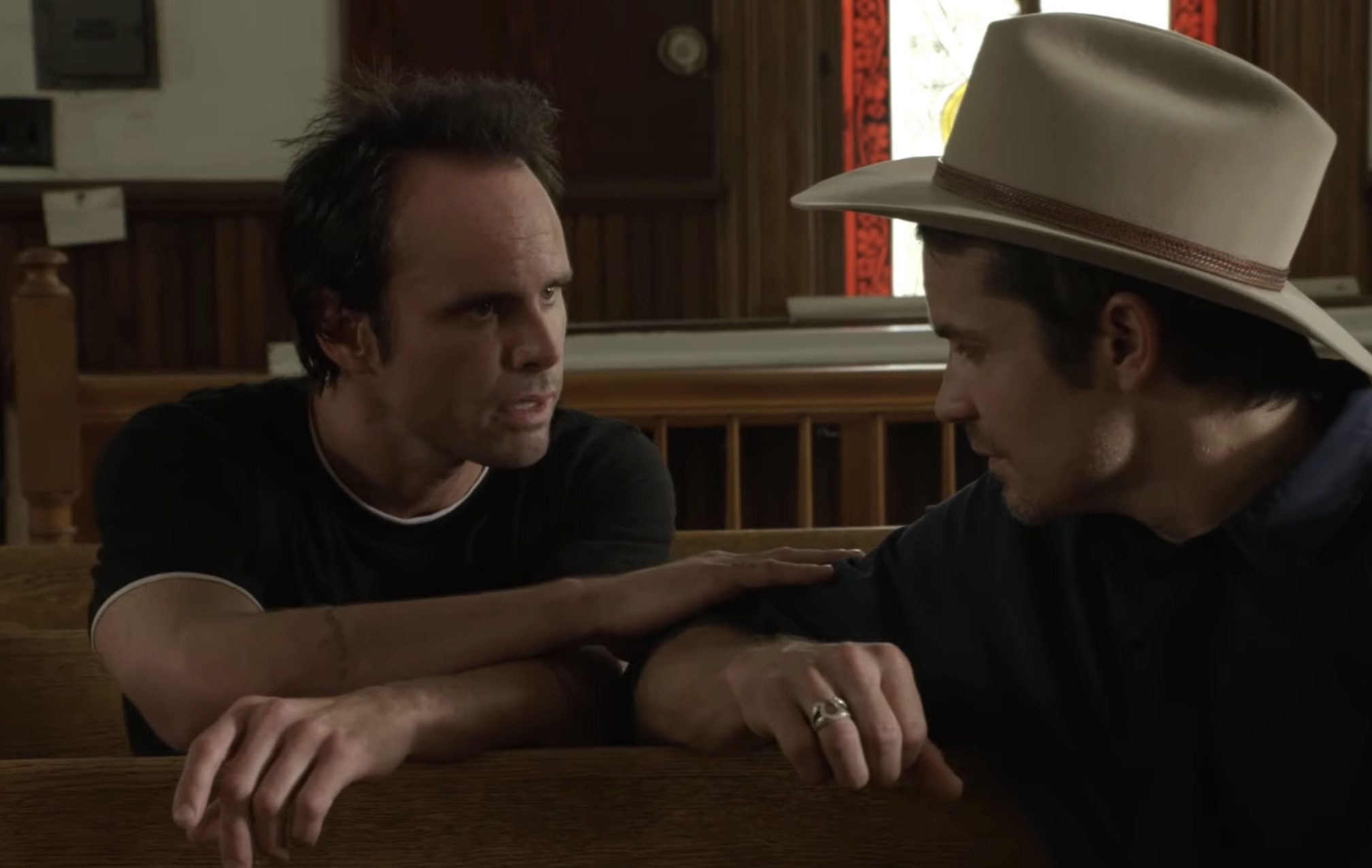
Important Point: For decades, movies and TV shows have painted the American South with a broad, negative brush. Characters from the South are often shown as:
- Backwards or uneducated
- Racist "rednecks"
- One-dimensional villains
But anyone who has actually lived in or visited the South knows this isn’t true. Just ask the World Cup tourists who came to the region and found warm, welcoming, kind people—even to visitors from other countries.
Walton Goggins isn’t just an actor playing a role. He is from the South—born and raised in Birmingham, Alabama. When Hollywood came calling with a major role, he saw a chance to make a difference.
In 2010, Goggins was offered the part of Boyd Crowder in the new FX crime drama Justified.
Here’s the Problem: The original script didn’t make this clear. It looked like Boyd was genuinely a hateful racist. For Goggins, this felt like "selling Southern culture down the river."
Goggins turned down the role two separate times. Here’s why, in his own words from a GQ interview:
"I read it, extremely well-written … I turned it down twice because of a speech that Boyd Crowder made in the middle of the show, and just a feeling that, they’re just selling southern culture down the river. This is just a one-dimensional interpretation, or perpetuating a stereotype if you will, of a southern character that I no longer needed to play. And I don’t believe in that. I’ve never believed in that. The south is way more complicated than it has been depicted in movies and TV, and I didn’t want to participate in selling out my culture anymore. Some of the most interesting people I’ve ever met in my life are from the south. Some of the funniest people I’ve ever met in my life are from the south."
After the second "no," something unexpected happened:
Goggins had two non-negotiable requirements before he’d sign on:
"I need for Boyd Crowder to be the smartest person in the room. That’s the only way that I would play him."
No "dumb redneck" tropes. Boyd would be calculating, intelligent, and always three steps ahead.
"I need, whenever he’s going on this racial rant, I need you to say to me that I know you don’t believe half the s–t that’s coming outta your mouth. That it’s performative."
Olyphant’s character had to explicitly state that Boyd’s hate speech was an act—a performance to cover his real criminal motives.
The producers agreed to both conditions.
The Result: A win for authentic Southern representation—and for Goggins’ integrity.
| Before Goggins Spoke Up | After Goggins Stood Firm |
|---|---|
| One-dimensional racist villain | Complex, intelligent character |
| Stereotype reinforced | Stereotype challenged |
| Southern culture "sold down the river" | Southern culture treated with nuance |
| Actor compromises values | Actor keeps integrity + gets acclaim |
One actor’s refusal to accept a lazy script forced Hollywood to do better—and gave us one of TV’s most memorable characters.
The first script made Boyd a genuine white supremacist who bombs a Black church out of racial hatred. It didn’t reveal he was faking it for criminal reasons. This reinforced the "racist Southern redneck" stereotype Hollywood has used for decades.
It means Boyd’s racist speeches were an act—a performance he put on to hide his real motives (money, power, criminal enterprise). He didn’t believe the ideology; he used it as a tool.
Yes! After Goggins declined twice, Olyphant personally called him and asked, "What do you need in order for it to be a yes?" That conversation—and a talk with producer Graham Yost—led to the two conditions that changed the character.
It was completely dropped by Season 2. Once the show established Boyd’s racism was fake, the writers moved on to make him a multi-layered crime boss—smart, charming, ruthless, and deeply human.
It shows that actors have power to push back against lazy writing. When Goggins refused to play a stereotype, the creators listened and improved the show—giving audiences a better character and the South a fairer portrayal.