Giants Hit the Reset Button: A Beginner’s Guide to San Francisco’s Trade Deadline Overhaul
What Happened at the Trade Deadline?
Imagine your favorite baseball team is having a terrible season. They spent lots of money on famous players, but nothing worked. So, right before the trade deadline (the last day teams can swap players), they decide to sell.
That’s exactly what the San Francisco Giants did. They traded away several current players—some with expiring contracts, some young and controllable—to stock up on prospects (young, talented players still in the minor leagues).
Important Point: Selling at the deadline isn’t fun. It means your season failed. But it can set you up for future success if you get good young talent in return.
Why Did the Giants Sell?
The Plan That Didn’t Work
- Big Spending: The Giants gave big contracts to veteran players.
- The "Big Three": They built a core around stars like Logan Webb and Matt Chapman.
- Fill the Gaps: They signed free agents to patch holes.
- Result: The team was one of baseball’s worst from Opening Day.
The Front Office’s New Philosophy
Buster Posey (the legendary catcher, now President of Baseball Operations) and General Manager Zack Minasian decided to pivot. They want to become an organization that:
- Drafts or acquires young talent
- Develops them in their minor league system
- Watches them succeed in the major leagues
Key Quote from Minasian: "Until it translates to the big league field, it’s not something we’re going to outwardly celebrate."
The New Strategy: Building a Pitching & Defense Factory
The Giants’ farm system (their collection of minor league teams) was already improving:
- Baseball America rank: 10th best
- MLB Pipeline rank: 19th (up 9 spots from last year)
But they had a weak spot: Pitching. Their major league bullpen struggled, and beyond stars Logan Webb and Landen Roupp, they couldn’t keep homegrown starters healthy.
So at the deadline, they went all-in on pitching.
Director of Player Development Kyle Haines: "We for sure needed to raise the ceiling and depth of our pitching group on every team in the organization."
The Big Gets: Meet the New Pitching Prospects
Here are the arms the Giants acquired, explained simply:
1. Ramon Marquez (RHP) — The Crown Jewel
- From: Philadelphia Phillies
- Cost: Luis Arraez (All-Star hitter) + Caleb Kilian
- Why he’s special: Discovered at a tryout! At 20 years old, he has rare control (throws strikes) and a devastating changeup (a slow pitch that fools hitters).
- Stats: 1.68 ERA, 93 strikeouts, only 19 walks in 59 innings.
- Concern: Slightly undersized (6’2", 182 lbs).
- Projection: Mid-rotation starter, but Giants dream bigger.
- Assigned to: High-A Eugene Emeralds
2. Henry Lalane (LHP) — The Comeback Kid
- From: New York Yankees
- Cost: Heliot Ramos (fan favorite, controllable outfielder)
- Backstory: Dominated as an 18-year-old (high-90s fastball), then had shoulder surgery in 2025. Velocity dropped, breaking ball changed.
- Good News: Healthy in 2026! Fastball back to 94-95 mph.
- Risk: High — coming back from major surgery.
- Assigned to: High-A Eugene Emeralds
3. Miguel Mendez (RHP) — The Strikeout Machine
- From: San Diego Padres
- Cost: Robbie Ray (rental pitcher, expiring contract)
- Arsenal: Mid-to-upper 90s fastball that "rides" (looks faster), hard slider, whiffable changeup.
- Assigned to: High-A Eugene Emeralds
4. Anthony Molina (RHP) — The Experienced Reliever
- From: Atlanta Braves
- Cost: Tyler Mahle (starter)
- Background: 99⅓ MLB innings (Rockies & Braves), but 6.89 ERA.
- Stuff: Fastball ~97 mph + changeup, curve, slider.
- Role: Likely middle reliever.
- Assigned to: Triple-A Sacramento (closest to majors)
5. Marty Gair (RHP) — The Future Reliever
- From: Philadelphia Phillies (part of second deal)
- Profile: 23 years old, projects as a reliever — exactly what Giants need.
- Assigned to: High-A Eugene Emeralds
Expert Take (JJ Cooper, Baseball America): "They all have risk, but when you add an array of prospects like this, it gives you more chances that one will really pop."
Position Player Additions: Not Just Pitchers
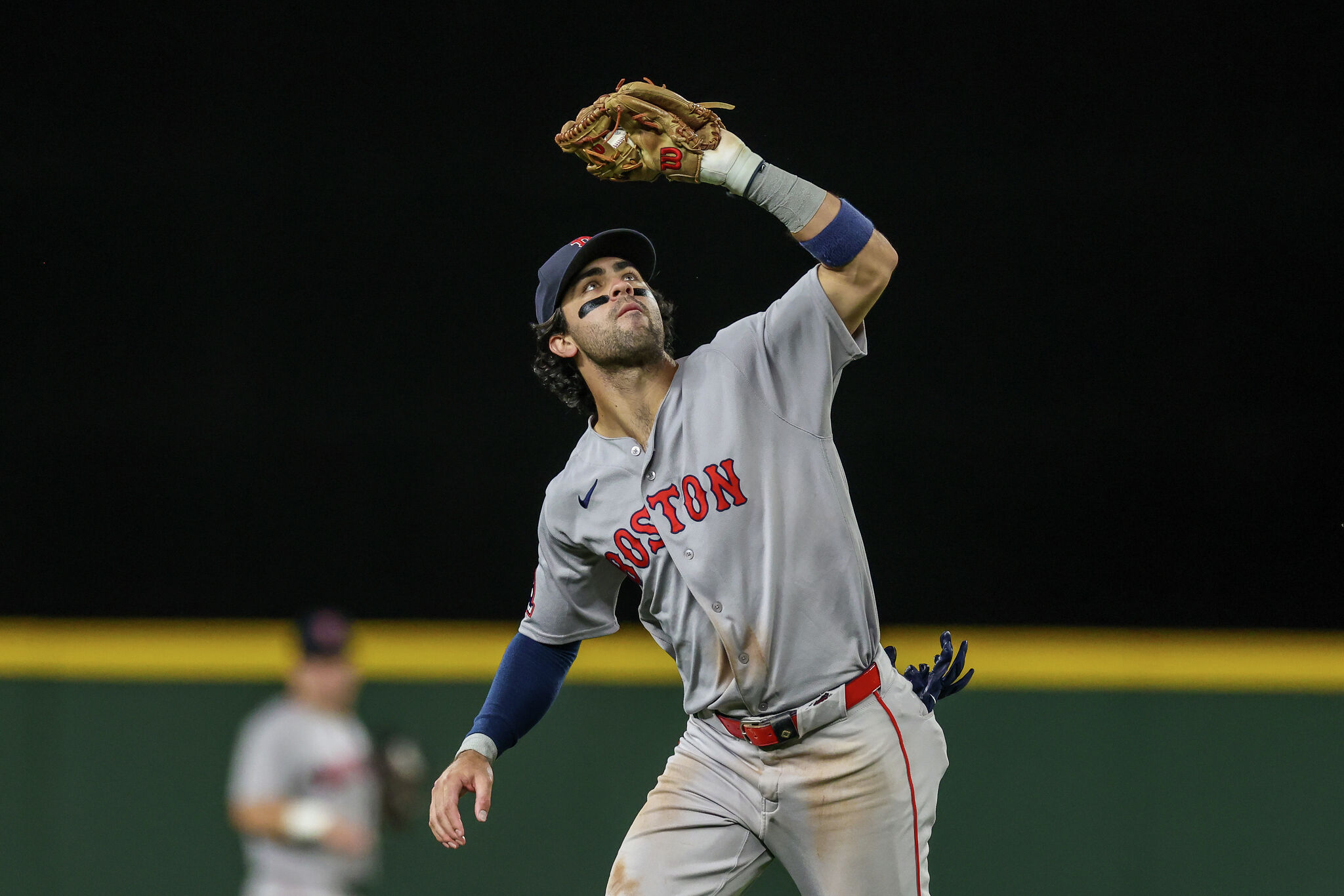
Marcelo Mayer (IF) — The Former "Future of the Red Sox"
- From: Boston Red Sox
- Cost: Erik Miller (promising lefty reliever, 3 years control)
- Pedigree: #4 overall pick 2021, dominated minors.
- Struggles: Couldn’t hit MLB offspeed pitches/power in 2025 (364 plate appearances).
- Injury: Bone stress reaction in forearm (out since June).
- Why Giants like him: California kid (Chula Vista), change of scenery, still elite contact skills and strike zone control.
- Likely Role: Second base (vacated by Arraez) if healthy.
Joniel Hernandez (SS) — The 17-Year-Old Lottery Ticket
- From: San Diego Padres (part of Robbie Ray deal)
- Stats: .317 AVG, 4 HR, 16 2B, 2 3B in 42 Dominican Summer League games.
- Why Giants took him: Scouts loved him all summer. "Worth the shot" for a rental pitcher.
Kaeden Kent (IF) — Hall of Fame Bloodlines
- From: New York Yankees (part of Heliot Ramos deal)
- Profile: Solid shortstop, good bat-to-ball, limited power.
- Fun Fact: Son of Jeff Kent (Giants Hall of Famer, 2000 NL MVP).
- Giants insist: Traded for the player, not the name.
The Risk and Reward: All Eggs in the Lower-Level Basket
Biggest Concern: Every single prospect the Giants acquired is in the lower levels of the minors (A-ball or rookie ball). None are ready for the majors tomorrow.
How this works out depends entirely on:
- Development: Can the Giants’ coaches turn tools into skills?
- Health: Especially for Lalane (shoulder) and Mayer (forearm).
- Time: This is a 2-4 year plan, not a quick fix.
Fun Fact: The Bonds-Kent Reunion
Baseball history nerds will love this: The Giants now have two famous sons/nephews in their system:
- Peyton Bonds — Nephew of Barry Bonds (drafted 2024 out of Rutgers)
- Kaeden Kent — Son of Jeff Kent (acquired 2024 from Yankees)
The original Bonds & Kent led the Giants to the 2002 World Series. Now their relatives are in the same organization again!
Summary
| What Happened |
Why It Matters |
| Giants had disastrous 2024 season |
Forced to become "sellers" at deadline |
| Traded veterans (Arraez, Ray, Mahle) + young stars (Ramos, Miller) |
Painful but necessary for long-term build |
| Acquired 8 prospects (5 pitchers, 3 position players) |
Addressed organizational weakness: pitching depth |
| All prospects in Low-A / High-A / Rookie ball |
High risk, high reward — development will decide everything |
| Farm system jumps in rankings |
Foundation laid for next competitive window |
Bottom Line: The Giants tore down a failing present to build a potentially dominant future. It’s a bold, pitching-centric gamble led by Buster Posey and Zack Minasian. Now, we wait and watch the minor leagues.
FAQ: Your Questions Answered
What is the "trade deadline"?
It’s the last day during the season (usually July 31) when MLB teams can trade players. After this, rosters are mostly set for the playoffs.
What’s a "rental player"?
A player on an expiring contract (becomes a free agent after the season). Teams trade for them to help right now, knowing they’ll leave in winter. Robbie Ray and Tyler Mahle were rentals.
What does "controllable" mean?
A player the team has rights to for several more years at below-market cost (via arbitration or pre-arbitration). Trading these away (like Ramos and Miller) hurts more because you lose cheap, good talent.
What are "Low-A," "High-A," "AA," "AAA"?
Minor league levels from lowest to highest:
- Rookie / DSL (Dominican Summer League) — Teenagers, first pro experience
- Low-A — Young players learning full-season ball
- High-A — Advanced young players (where most Giants prospects went)
- Double-A (AA) — Top prospects, close to majors
- Triple-A (AAA) — One step from MLB (where Molina went)
Why trade Heliot Ramos? He was good and cheap!
Because the Yankees demanded him for Henry Lalane. The Giants believed Lalane’s upside (lefty starter with 95 mph fastball) was worth more than Ramos’s proven but limited production. It was a "swing for the fences" move.
Article based on reporting by Susan Slusser and the San Francisco Chronicle.
 1
1