The Great UK Solar Eclipse of 2026: Your Complete Guide to Watching Safely
What Is Happening and Why Is It Special?
Imagine the Moon sliding right in front of the Sun, like a coin covering a flashlight. That is a solar eclipse. On Wednesday evening, people across the UK will get a front-row seat to an almost total solar eclipse—the first time this has happened this century!
Why this is a big deal
- The last time the UK saw this much of the Sun covered was 1999.
- The next chance won’t come until 2081—that’s 55 years from now!
- In the UK and Ireland, 90% to 96% of the Sun will be hidden.
- Lucky viewers in parts of Greenland, Iceland, and northern Spain will see a total eclipse (100% coverage) for up to 2 minutes and 18 seconds.
How Much of the Sun Will Be Covered Where You Live?
The further west you are, the better the show. Here’s a quick rundown of the maximum coverage for major UK cities:
| City |
Percentage of Sun Covered |
| Plymouth |
95% |
| Cardiff |
93.2% |
| Belfast |
93.1% |
| Manchester |
91.9% |
| London |
91.4% |
| Edinburgh |
90.7% |
| Newcastle |
90.2% |
| Shetland |
88% |
Expert tip: Astronomer Jess Lee from the Royal Observatory Greenwich says these small differences don’t matter much—everywhere will still be impressive.
When Exactly Should You Look Up?
The eclipse rolls across the UK from north to south. Here’s the timeline for key cities (all times are local):
- Starts: Between 6:08 pm (Edinburgh/Glasgow) and 6:18 pm (Cornwall)
- Maximum eclipse: Roughly one hour after start
- Ends: Around 8:00 pm everywhere
Pro tip: Do a “dress rehearsal” a few days before. Stand in your chosen spot at 7:30 pm—if you can’t see the Sun because a hill or building blocks it, pick a new location.
Where Is the Best Place to Watch?
1. Get High & Face West
- Hills with clear western horizons are ideal.
- London examples: Parliament Hill, Alexandra Palace, Primrose Hill, or any rooftop venue.
2. Chase Clear Skies
- Met Office meteorologist Tom Morgan says summer weather gives a decent shot at clear skies.
- Current forecast: South and east England look clearest; Scotland and Northern Ireland have a higher risk of cloud and rain.
- Astronomer Royal for Scotland Catherine Heymans plans to check the Met Office cloud-cover forecast daily and is ready to hop on a train to find a cloud-free hole.
IMPORTANT: Protect Your Eyes!
Never look directly at the Sun without proper protection. Even when 95% covered, the remaining sliver is bright enough to permanently burn your retina—and you won’t feel pain until it’s too late.
After the 1999 eclipse, ~70 people reported vision damage. (Source: Royal College of Ophthalmologists)
Two Safe Ways to Watch
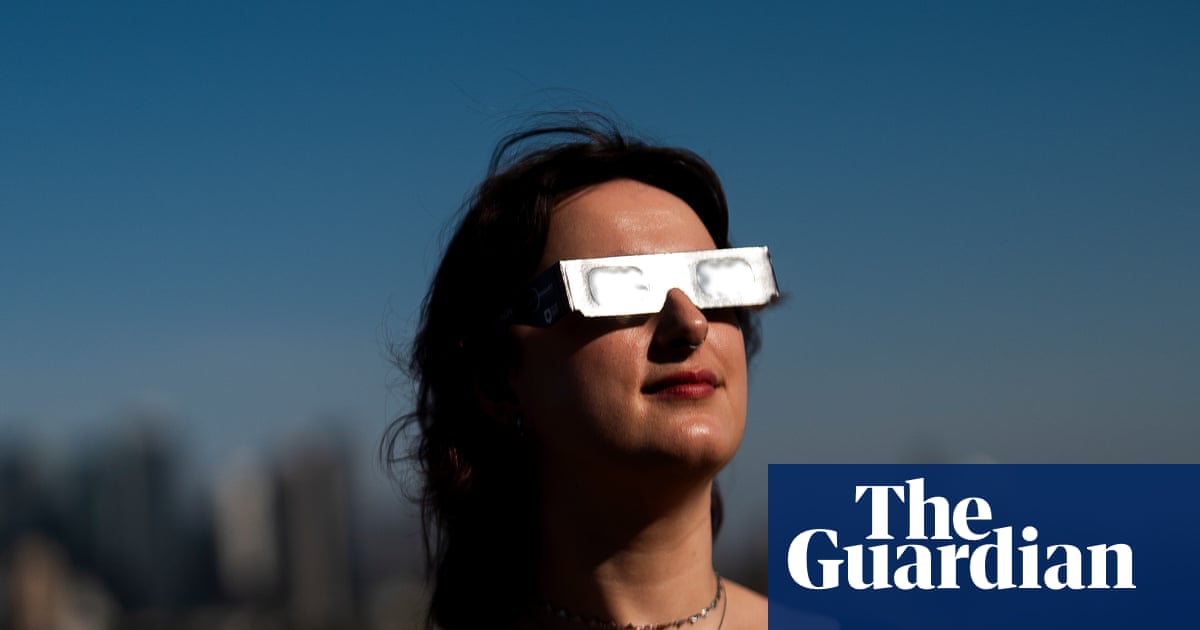
Option 1: Certified Eclipse Glasses / Solar Viewers
- Must meet ISO 12312-2:2015(E) standard.
- Buy from a reputable retailer (not random online sellers).
- No scratches, tears, or damage on the lenses.
- Old glasses may not be safe—check the expiry date.
- Regular sunglasses are NOT safe, no matter how dark.
Option 2: Indirect Viewing (No Glasses Needed)
- Colander method: Hold a kitchen colander up; each hole projects a tiny crescent Sun onto the ground or white paper.
- Tree leaves: Gaps between leaves act like pinholes—look at the dappled shadows on pavement.
- DIY pinhole projector: Poke a tiny hole in a piece of card, let sunlight shine through onto a second card held behind it.
What Might You Notice Around You?
- Animals get confused: Birds may go quiet (thinking it’s night), then burst into a “dawn chorus” when light returns.
- Temperature drops: It can feel noticeably cooler.
- Shadows get weird: Look at shadows of leaves or your hands—they’ll show tiny crescents.
- A sense of awe: As University of Manchester astronomer Sarah Crowther says, “It puts the vast scales of the solar system into perspective.”
Summary Checklist: Be Eclipse-Ready
- [ ] Know your city’s start time (see table above).
- [ ] Pick a high, west-facing spot with no buildings/hills blocking the Sun at ~7:30 pm.
- [ ] Check the Met Office cloud forecast the morning of the eclipse; be ready to travel locally for clear skies.
- [ ] Get certified eclipse glasses (ISO 12312-2) NOW—don’t wait until the last minute.
- [ ] Prepare an indirect viewer (colander, pinhole card) as a backup or for kids.
- [ ] Set a timer for maximum eclipse so you don’t miss the peak.
- [ ] Enjoy the moment—this won’t happen again in the UK until 2081!
Frequently Asked Questions (FAQ)
1. Can I use my phone camera to photograph the eclipse?
Only with a proper solar filter on the lens. Pointing an unfiltered phone at the Sun can damage the sensor. For safe photos, hold eclipse glasses over the phone lens or use the indirect projection methods.
2. Is it safe to look during the few seconds of totality (100% coverage)?
In the UK there is NO totality—the Sun is never 100% covered. You must keep protection on the entire time. Only viewers in the narrow path of totality (Greenland, Iceland, northern Spain) can remove glasses during the brief total phase.
3. My eclipse glasses from 1999/2015/2021 are still in a drawer. Can I use them?
Check three things: (a) They meet ISO 12312-2:2015(E), (b) no scratches/pinholes/creases, (c) not past any printed expiry date. If in doubt, buy new ones—they’re inexpensive.
4. What if it’s completely cloudy where I am?
You’ll still notice the daylight dimming dramatically and the temperature dropping. Many astronomy societies and the Royal Observatory will livestream the event—have a backup plan to watch online.
5. Why does the eclipse start at different times across the UK?
The Moon’s shadow sweeps across Earth from north-west to south-east. Northern/western locations enter the shadow first, so the eclipse begins earlier there.
Final thought: A solar eclipse is one of nature’s most humbling shows. With a little preparation and the right eye protection, you’ll walk away with a memory—and maybe a sense of wonder—that lasts a lifetime. Happy (safe) viewing!
 1
1