Catch Summer’s Best Light Show: How to Spot the Perseids Tonight
The Perseid Meteor Shower: Your Guide to Summer’s Best Light Show
What Is the Perseid Meteor Shower?
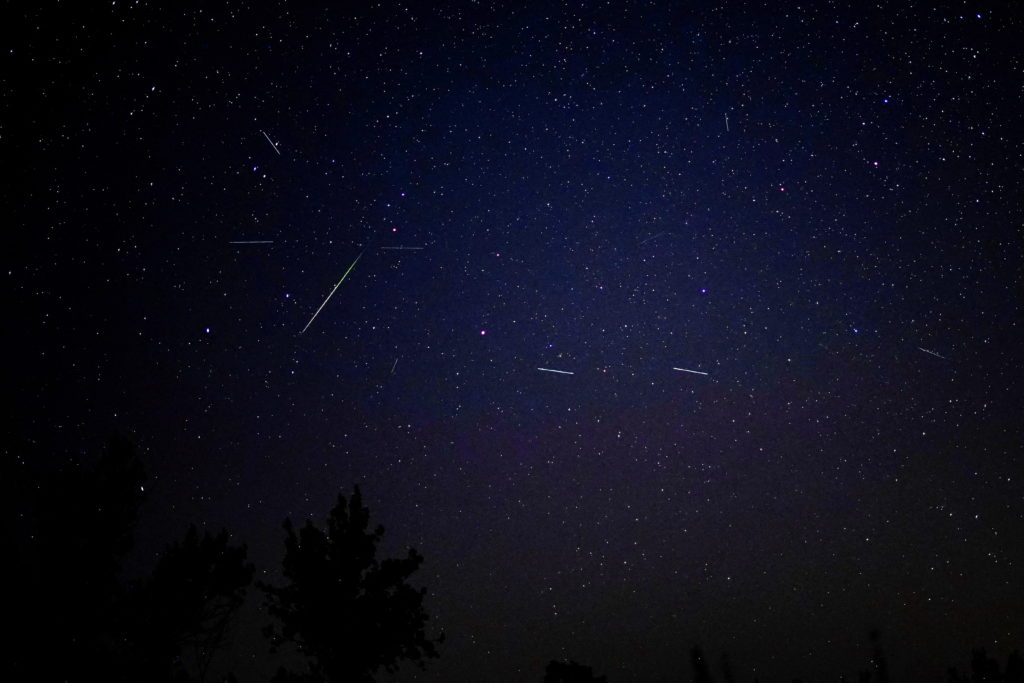
Imagine Earth driving through a cosmic dust cloud left behind by a comet. That’s exactly what happens every August! The Perseids are one of the most famous and reliable meteor showers of the year.
Important Point: A "meteor" is just a fancy word for a shooting star — a tiny piece of space dust burning up in our atmosphere.
Why This Year Is Special
Perfect Timing
- Peak nights: Wednesday night into Thursday morning
- Moon phase: New Moon (completely dark!)
- Bonus events: Total solar eclipse in Spain, Iceland & Greenland + six-planet parade
Why the New Moon Matters
Astronomer Aparna Venkatesan says: "The moon is beautiful, but it’s such a diva. New moon means we don’t have moonlight flooding the sky, and you tend to see way more meteors as a result."
Where Do These "Shooting Stars" Come From?
The Comet Connection
- Comet 109P/Swift-Tuttle orbits the Sun every 133 years
- As it gets close to the Sun, ice melts and releases trapped dust and dirt
- This debris spreads along the comet’s path like a glitter trail
- Every August, Earth plows through this trail at 67,000 mph!
- Tiny particles (mostly sand-grain sized) hit our atmosphere and burn up = shooting stars!
Fun Fact
- This comet won’t visit again until 2125
- People have watched this shower for over 2,000 years!
What Makes the Perseids Awesome?
| Feature | Why It’s Cool |
|---|---|
| Fireballs | Extra-bright meteors that leave glowing trails |
| Summer weather | No freezing winter nights required! |
| High rates | 50–100 per hour (NASA) from dark sites |
| Reliability | Shows up every single August like clockwork |
How to Watch: Step-by-Step Guide
1. Pick the Right Time
- Best window: Midnight → Dawn
- Why? The constellation Perseus (the shower’s namesake) is highest in the sky
2. Find a Dark Spot
- Get away from city lights
- Avoid clouds
- Rural areas = 30–50 meteors/hour (American Meteor Society)
3. Get Comfortable
- Bring a blanket or reclining chair
- Dress warmly (even summer nights get chilly)
- Snacks and bug spray recommended!
4. Let Your Eyes Adjust
- Critical step: Give eyes 30 minutes in total darkness
- No phones! Screen light ruins night vision instantly
5. Look Up & Relax
- Face northeast (where Perseus rises)
- Pick one patch of sky to watch
- Use peripheral vision — it’s more sensitive to motion
- Be patient — meteors come in bursts with lulls in between
Pro Tips from the Experts
Astronomer Zach Vanderbosch (McDonald Observatory): "There’s just something magical about it. We don’t have to suffer through a cold winter night to get a good view of meteors."
Vanderbosch’s #1 rule: Put the phone away. Even a quick glance resets your night vision!
Summary
The Perseid meteor shower peaks Wednesday night into Thursday morning with near-perfect conditions:
- New Moon = ultra-dark skies
- Summer warmth = comfortable viewing
- 50–100 meteors/hour possible
- Famous for bright fireballs
Your mission: Find darkness, allow 30 minutes for eye adjustment, look northeast after midnight, and enjoy the show!
Frequently Asked Questions
Do I need a telescope or binoculars?
Nope! In fact, don’t use them. Meteors zip across huge swaths of sky — you need wide-eyed, naked-eye viewing to catch them.
What if it’s cloudy on peak night?
The shower is active weeks before and after peak. Try the nights around August 11–13 for nearly as good rates.
Can I see it from the city?
You’ll see some (maybe 10–20/hour), but dark rural skies give 3–5x more meteors. Even a park on the city’s edge helps!
Why are they called "Perseids"?
They appear to radiate from the constellation Perseus (the hero from Greek mythology). It’s an optical illusion — like snowflakes seeming to come from a point ahead when you drive through a storm.
Is it dangerous?
Not at all! These are tiny particles (mostly sand-grain size) burning up 60+ miles up. Nothing reaches the ground. Just pure cosmic beauty!
Happy meteor hunting!