 11
11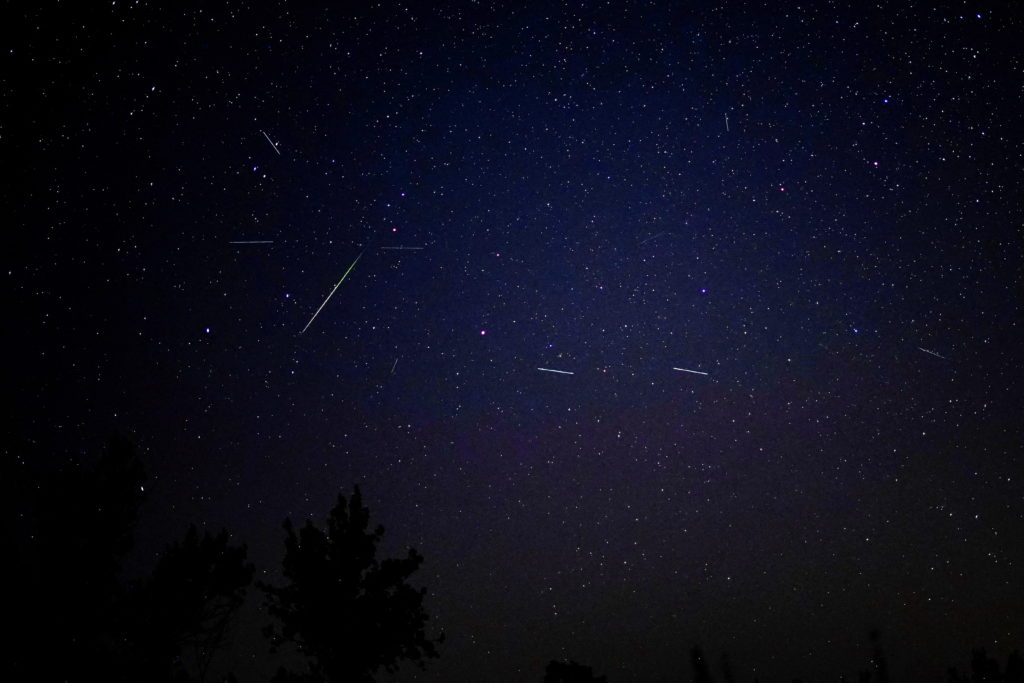
Imagine Earth driving through a cosmic dust cloud left behind by a comet. That’s exactly what happens every August! The Perseids are one of the most famous and reliable meteor showers of the year.
Important Point: A "meteor" is just a fancy word for a shooting star — a tiny piece of space dust burning up in our atmosphere.
Astronomer Aparna Venkatesan says: "The moon is beautiful, but it’s such a diva. New moon means we don’t have moonlight flooding the sky, and you tend to see way more meteors as a result."
| Feature | Why It’s Cool |
|---|---|
| Fireballs | Extra-bright meteors that leave glowing trails |
| Summer weather | No freezing winter nights required! |
| High rates | 50–100 per hour (NASA) from dark sites |
| Reliability | Shows up every single August like clockwork |
Astronomer Zach Vanderbosch (McDonald Observatory): "There’s just something magical about it. We don’t have to suffer through a cold winter night to get a good view of meteors."
Vanderbosch’s #1 rule: Put the phone away. Even a quick glance resets your night vision!
The Perseid meteor shower peaks Wednesday night into Thursday morning with near-perfect conditions:
Your mission: Find darkness, allow 30 minutes for eye adjustment, look northeast after midnight, and enjoy the show!
Nope! In fact, don’t use them. Meteors zip across huge swaths of sky — you need wide-eyed, naked-eye viewing to catch them.
The shower is active weeks before and after peak. Try the nights around August 11–13 for nearly as good rates.
You’ll see some (maybe 10–20/hour), but dark rural skies give 3–5x more meteors. Even a park on the city’s edge helps!
They appear to radiate from the constellation Perseus (the hero from Greek mythology). It’s an optical illusion — like snowflakes seeming to come from a point ahead when you drive through a storm.
Not at all! These are tiny particles (mostly sand-grain size) burning up 60+ miles up. Nothing reaches the ground. Just pure cosmic beauty!
Happy meteor hunting!