11
11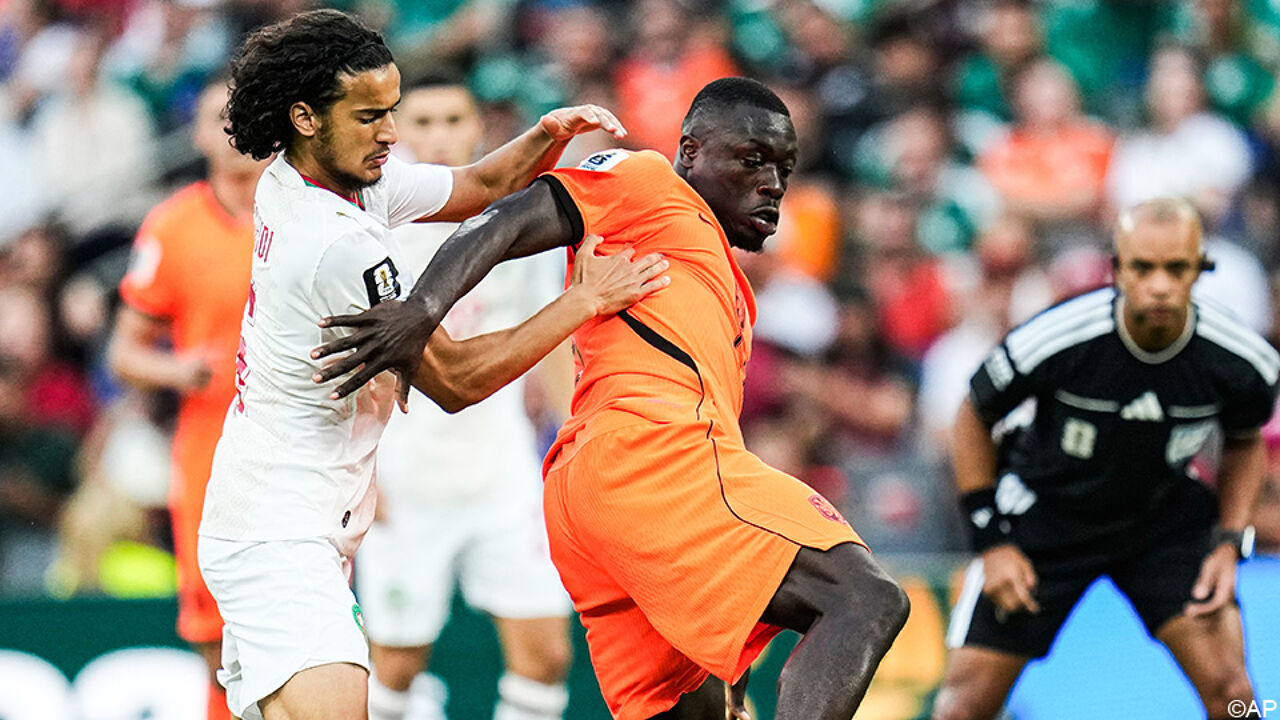
Welcome to the exciting world of soccer! Let’s talk about a big, important game that was happening: the Netherlands playing against Morocco in the 2026 FIFA World Cup. Think of the World Cup like the biggest championship in all of soccer, where countries play against each other to see who is the best team in the whole world.
This game was a special one. It was just for the "1/16 finals." What does that mean? Imagine a giant tournament bracket with 32 teams. They play, and half of them go home, then half again, and again, until only two teams are left for the final game. The 1/16 finals were the very first round of these knockout games.
The article calls this a "bloedhete topaffiche." That’s a Dutch phrase that means a "red-hot top match" – a super exciting, super important game! It showed that both teams are very good:
Both teams wanted to win badly to move on to the next round and get "a hoop eer," which means a lot of pride and honor.
Here’s a really interesting part: players on both teams had connections to each other’s countries! Some Moroccan players had a background or roots in the Netherlands, and some Dutch players had roots in Morocco. For them, it was a special match, because they had a personal link to the other team.
The game was played in Guadalupe, and it was very hot! The article describes some early moments that show the game was a tough, slow battle at first.
The game wasn’t about lots of goals; it was a tactical battle.
Even before the first whistle, the game looked very close to call.
The games weren’t just about the players. In the city of Monterrey, Dutch fans were partying between matches, celebrating Dutch style with "links-rechts" (left-right) coordinated celebrations. They hoped to have another big party after this important game.
Morocco’s coach, Mohamed Ouahbi, who is 49 years old, has a special connection too. He lives in Belgium and has both Belgian and Moroccan nationality. He understood exactly what the players with a Dutch background were feeling. He told them that it was a special game, but that they shouldn’t overthink it. Their job was to play well, win for Morocco, and handle their responsibility. He said the Moroccan team knew the Netherlands was a great footballing nation and they respected them.
Important Point: This was a game between two elite teams (ranked 7th and 8th in the world) where pride and history played a big role. The extreme heat made it a slow, tough battle, and both teams had players facing their ancestral country, adding a very personal story to an already high-stakes World Cup match.
The 2026 World Cup match between the Netherlands and Morocco was a tense, tactical, and scorching hot battle. Ranked 7th and 8th in the world, both teams fought hard in the early stages of the knockout round. Key moments included an early Dutch chance blocked, mutual respect between the teams, a small on-field scuffle, and the constant battling of the brutal heat. The game was also special for players and the coaches on both sides who had personal connections to the opponent’s country, making it a complex but respectful duel.
1. Why was the Netherlands vs Morocco game so special?
It was a game between two top-10 world teams in a do-or-die World Cup round. The extra special part was that many players had family roots in the other’s country, making it a personal as well as a professional battle for them.
2. Why did the article say the game looked more like a chess match?
Because it was so tactical and slow. Both teams were very careful, constantly passing the ball to look for a gap in the other’s defense. There weren’t lots of wild attacks or shots on goal right away.
3. Did the Netherlands play well before this game?
They were in a bit of a slump! They hadn’t won a World Cup game in the regular 90 minutes since the year 2006, which was a long streak.
4. What did the Moroccan coach tell his players?
Coach Mohamed Ouahbi told the players with Dutch backgrounds that the game was special but to not overthink it. He said their job was to focus on winning the match for Morocco and not to let their heritage be a distraction.
5. What does "links-rechts" mean for the Dutch fans?
It refers to a classic Dutch style of celebration where fans in the stadium do a coordinated cheer, usually stomping or jumping left and right together. It’s a fun, energetic thing they do to support their team!