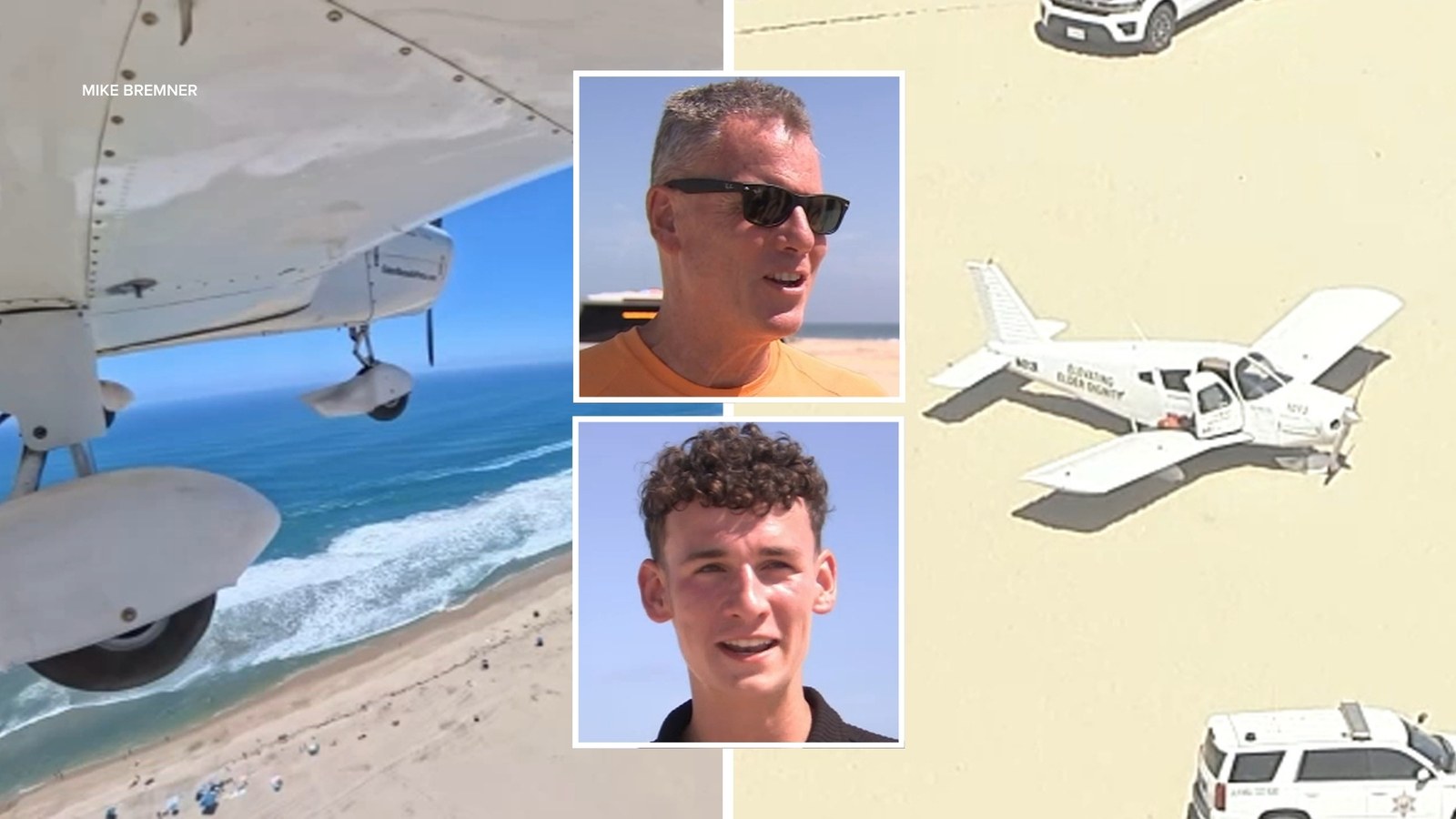
Miracle on Sand: Pilot & Nephew Survive Emergency Landing
Small Plane Makes Emergency Landing on Huntington Beach: Everyone Walks Away Safe
What Happened?
On Monday afternoon, a small airplane made a surprise landing on the sand at Huntington State Beach in California. The plane didn’t land on a runway—it landed right on the beach where people were swimming and sunbathing!
The amazing news: Nobody was hurt. Not the pilot, not his passenger, and not any of the beachgoers watching it happen.
The Plane and the People
The Aircraft
- Type: Piper PA-28 Cherokee (a small, single-engine airplane)
- Call sign: Cherokee 4521 Romeo
- Special feature: Had a camera onboard that recorded the whole event
The People Onboard
| Person | Role | Details |
|---|---|---|
| Mike Bremner | Pilot | Experienced flyer, uncle to passenger |
| Griffin Bremner | Passenger | 16 years old, visiting from Canada, first time flying with his uncle |
Important Point: Griffin was on his very first flight with his uncle when the emergency happened. Talk about a memorable first flight!
The Flight Plan vs. Reality
What Was Supposed to Happen
- Take off from John Wayne Airport in Santa Ana
- Fly to Van Nuys Airport
- Normal, routine flight
What Actually Happened
- Time: Just after 2:00 PM
- Location: About 2 miles south of Huntington Beach Pier
- Altitude when trouble started: Only 1,000 feet up (that’s really low for an airplane!)
- Time from takeoff to emergency: Just 5 minutes
The Emergency: Step by Step
When the engine stopped working, the pilot had to act fast. Here’s what he did, in order:
- Called "Mayday, Mayday, Mayday" — This is the international distress call that means "I need help right now!"
- Told the control tower: "We’ve lost our engine… we will be putting it down on the beach."
- Ran through emergency checklist from memory:
- Tried to restart the engine (like turning the key in a car that stalled)
- Checked the ignition
- Switched fuel tanks
- Set the plane to "best glide speed" — This special speed lets the plane fly the farthest without an engine
- Looked for a place to land — Spotted the wide, open beach with light winds
- Landed smoothly on the sand — Right in front of the power plant stacks
ELI5 Explanation: "Best glide speed" is like coasting on a bicycle downhill—you find the perfect speed to go the farthest without pedaling. The pilot set the plane to this speed so they could reach the beach.
What It Felt Like Inside the Plane
Pilot Mike Bremner said:
"When that happens, we run by memory… Given that we were only at 1,000 feet, we immediately made sure the plane was flying at such a speed that it would glide the farthest."
16-year-old Griffin described it:
"He’s like, ‘Griffin, we’re going down.’ The plane starts to stutter a little bit, and the propeller slows down… and then he starts steering towards the beach."
Why This Could Have Been Much Worse
Lucky Factors That Day
- Wide open beach — Plenty of room to land
- Light winds — Made the landing easier
- Low altitude — Meant they were already close to the ground
- Busy beach but no one hit — The U.S. Open of Surfing was happening nearby, drawing crowds, but the landing zone was clear
- Pilot training kicked in — Mike did exactly what he’d practiced
Pilot’s Perspective
"All pilots train for a forced landing… But you never really know what you’re going to do until it happens. Grateful is the word for it."
A Souvenir to Remember
Griffin grabbed a rock from under the plane’s wheel as a keepsake. His uncle joked:
"That’s my nephew. I still have to tell his father what happened today, my brother. And his mother."
What Happens Next?
The Investigation
The FAA (Federal Aviation Administration) — the government agency in charge of aviation safety — will investigate:
- What caused the engine to fail
- Whether maintenance was up to date
- If any parts were defective
- The full sequence of events
This is standard procedure after any aircraft incident.
Summary
| Key Fact | Details |
|---|---|
| What | Emergency beach landing |
| Where | Huntington State Beach, near Magnolia St & PCH |
| When | Monday, just after 2 PM |
| Who | Pilot Mike Bremner & nephew Griffin (16) |
| Plane | Piper PA-28 Cherokee |
| Cause | Engine failure at 1,000 feet, 5 mins after takeoff |
| Injuries | ZERO — everyone walked away |
| Investigation | FAA will determine engine failure cause |
Bottom line: A scary situation turned out okay because of good training, quick thinking, and a little bit of luck. Pilot Mike Bremner followed his emergency training perfectly, found the best possible landing spot, and brought his nephew home safely.
FAQ: Your Questions Answered
What does "Mayday" mean?
Mayday is the international radio distress call used by pilots and sailors. It comes from the French "m’aider" meaning "help me." Saying it three times ("Mayday, Mayday, Mayday") signals a life-threatening emergency.
How can a plane land without an engine?
Airplanes don’t fall like rocks when the engine stops—they become gliders. The wings still generate lift as air flows over them. Pilots train extensively for "engine-out" landings and practice finding the "best glide speed" to cover maximum distance.
Why was the plane so low (only 1,000 feet)?
Small planes leaving John Wayne Airport stay low initially due to noise abatement procedures (rules to keep neighborhoods quiet) and airspace restrictions. They climb higher once over the ocean.
Is landing on a beach legal?
Normally no—planes must land at airports. But in an emergency, the pilot has authority to land anywhere necessary to save lives. The FAA investigates afterward to confirm it was a true emergency.
How common are small plane engine failures?
Very rare. Modern aircraft engines are extremely reliable. Most pilots fly their entire careers without one. But that’s exactly why pilots train for it constantly—so they’re ready for the "one in a million" moment.