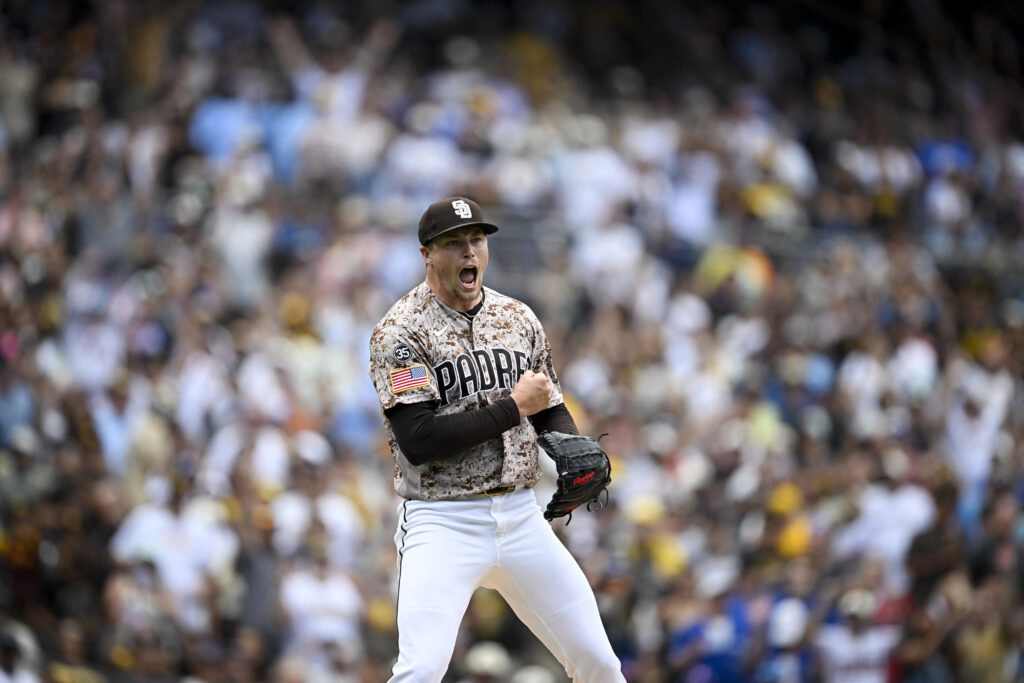
Padres’ Stunning Asking Price for Miller, Morejón Leaks
Why the Padres Probably Won’t Trade Their Unhittable Closer Mason Miller
The Big Picture: A Blockbuster That Likely Won’t Happen
Imagine you have the most dominant video game character ever created. Everyone wants to trade for them, but you set the price so high—"give me your entire collection of rare cards"—that nobody can actually afford it. That’s basically what’s happening with the San Diego Padres and their closer, Mason Miller.
As the MLB trade deadline approaches, multiple reports confirm: a Miller trade is looking extremely unlikely. The Padres’ front office, led by President of Baseball Operations A.J. Preller, has set an asking price that has rival teams stunned.
Why Is Everyone Obsessed with Mason Miller?
Before we dive into the trade talks, let’s understand why Miller is the hottest name in baseball. He’s not just good—he’s having one of the greatest relief pitching seasons in history.
Miller’s 2026 Numbers (Through 45⅔ Innings)
| Stat | Number | Why It’s Crazy |
|---|---|---|
| ERA | 0.79 | Near-perfect; league average is ~4.00 |
| Strikeout Rate | 49.4% | He strikes out half of all batters he faces |
| Opponent Batting Average | .136 | Hitters essentially look like Little Leaguers against him |
| Opponent OPS | .357 | For context, a great hitter has an OPS around .900 |
| Extra-Base Hits Allowed | 1 (a single double) | In nearly 46 innings! |
| Walks | 15 | Incredible control for a power pitcher |
ELI5 Moment: ERA (Earned Run Average) measures how many runs a pitcher gives up per 9 innings. 0.79 is microscopic. OPS combines on-base percentage and slugging—.357 means opponents basically never reach base, let alone hit for power.
The "Bobby Witt Jr." Game: A Perfect Microcosm
On July 17, Miller gave up his only extra-base hit all year—a double. The next batter singled. The Padres intentionally walked superstar Bobby Witt Jr. to load the bases (putting the winning run on base on purpose!). Miller responded by striking out the next three batters in a row. Game over.
The "Juan Soto" Price Tag: What the Padres Are Asking For
According to ESPN’s Jeff Passan and The Athletic’s Jim Bowden, Preller has told inquiring teams: "If you want Miller, every top prospect in your farm system must be available."
The Historical Comparison: The Juan Soto Trade (2022)
When the Padres acquired superstar Juan Soto from the Nationals, they gave up a massive package headlined by:
- James Wood (Top outfield prospect)
- CJ Abrams (Top shortstop prospect)
- MacKenzie Gore (Top pitching prospect)
- Plus several other quality players
Preller wants a similar haul for Miller. That means 3+ elite, team-controlled prospects—the kind of players who become franchise cornerstones.
Which Teams Have Checked In? (And Why They Walked Away)
1. Milwaukee Brewers
- Interest Level: Real
- Sticking Point: Would need to include Jesús Made — the #1 overall prospect in baseball
- Status: Unlikely to pay that price for a reliever
2. Pittsburgh Pirates
- Interest Level: Real
- Sticking Point: Refuse to trade Seth Hernandez — a 20-year-old phenom drafted 6th overall in 2025, already considered by some the best pitching prospect in baseball
- Status: Even after Hernandez suffered a season-ending oblique injury, Pittsburgh said no
IMPORTANT POINT: Multiple teams who’ve inquired "would be shocked" if Miller is actually traded. The price is deliberately set at "franchise-altering" levels.
The Contract Factor: Why Miller Is Extra Valuable
Miller isn’t just dominant now—he’s incredibly affordable for years to come.
| Year | Salary Status |
|---|---|
| 2026 | $4 million (current season) |
| 2027 | Arbitration Year 1 |
| 2028 | Arbitration Year 2 |
| 2029 | Arbitration Year 3 |
| 2030 | Free Agency |
Translation: The Padres control him for three more full seasons after this one at below-market rates. Even when he hits arbitration (where salaries rise based on performance), he’ll be a bargain for a pitcher this dominant.
ELI5 Moment: Arbitration is like a salary court hearing. The player and team argue what he’s worth, and a panel decides. Elite relievers usually get paid $10M–$15M+ in later arbitration years—still a steal for Miller’s production.
The "Plan B": Adrián Morejón Is Also Available (But Expensive)
Miller’s bullpen partner, Adrián Morejón, is also drawing massive interest. He’s not quite Miller-level dominant, but he’s elite:
- 2.64 ERA over 194⅔ innings (2024–2026)
- 55% ground-ball rate (hitters pound the ball into the dirt)
- Average sinker: 99+ mph (up from 97.7 mph last year)
- Free agent after 2026 — so only a "rental" for the playoffs
The Asking Price: Multiple top-10 prospects from the interested team’s system.
Reality: More likely to be traded than Miller, but still very expensive.
The Padres’ Secret Weapon: A Historically Deep Bullpen
Even without Miller and Morejón, San Diego’s relief corps is stacked:
| Pitcher | Role | Control Through | Key Stat |
|---|---|---|---|
| Jeremiah Estrada | High-leverage | 2029 | Elite strikeout stuff |
| Jason Adam | Setup/Closer | 2026 | Veteran reliability |
| Bradgley Rodriguez | Middle/Setup | 2031 | 6+ years of control! |
| Yuki Matsui | Left-handed specialist | 2027 | Unique delivery, tough on lefties |
Estrada just returned from a 7-week knee injury. Rodriguez has six full years of team control remaining—an almost unheard-of asset for a reliever.
The Strategic Angle: Could the Padres Flip Relievers for Starting Pitching?
Here’s where it gets interesting. The Padres desperately need starting pitching. Their rotation has been shaky.
Theoretical Path:
- Trade Morejón (or Estrada/Rodríguez) for a haul of prospects
- Flip those prospects to a team with surplus starting pitching
- Acquire a controllable starter for 2027 and beyond
Think of it like a three-team trade chain: Padres trade reliever → get prospects → trade prospects → get starter.
Summary: What Happens Next?
| Player | Likelihood of Trade | Reason |
|---|---|---|
| Mason Miller | Very Low (<10%) | Asking price = "give us your entire farm system" |
| Adrián Morejón | Moderate (30–40%) | High price, but rental relievers often move at deadline |
| Estrada / Rodriguez | Possible (20–30%) | If Padres pivot to "prospects for starter" strategy |
| Jason Adam | Low | Veteran rental, less return |
Bottom Line: Don’t hold your breath for a Mason Miller blockbuster. The Padres have the leverage (dominance + control), they know it, and they’re pricing him like a franchise-altering superstar—because right now, he is one.
FAQ: Your Burning Questions Answered
Why would the Padres not trade Miller if the return is so huge?
Because he’s worth more to them than prospects. A dominant closer with 3+ years of control is a championship-building block. Prospects are lottery tickets; Miller is a sure thing. Unless a team offers a guaranteed superstar in return (like the Soto haul), keeping him makes more sense.
What does "team control" mean exactly?
It means the Padres own his rights for the listed years. He can’t leave as a free agent until after 2029. They decide his salary (via arbitration) for 2027–2029. This is gold for small- and mid-market teams.
Could a team just wait and sign him in free agency?
Technically yes—but by 2030, he’ll be 31–32 and likely commanding $15M–$20M+ per year on a long deal. Trading for him now locks in prime years at a discount.
Why are relievers with only ~50 innings so valuable in the playoffs?
In October, teams have more off-days. This means your best reliever can pitch every other game (or even back-to-back). A dominant 50-inning regular-season reliever becomes a 70–80-inning playoff weapon. That changes series.
What’s the difference between a "prospect" and a "major leaguer"?
A prospect is a minor-league player not yet established in the majors. They’re ranked (Top 100, Top 10 in system, etc.). Jesús Made (#1 overall) and Seth Hernandez (top pitching prospect) are the crown jewels of their organizations—trading them is like trading your first-round draft pick before they’ve played a pro game.
Article based on reports from ESPN (Jeff Passan, Alden Gonzalez), The Athletic (Jim Bowden, Ken Rosenthal, Will Sammon, Katie Woo), and MLB Trade Rumors as of July 31, 2026.