Wildfire Smoke Across Midwest and Northeast This Weekend
Imagine big campfires that got out of control up in Canada and Minnesota. The smoky air from those fires is now traveling like a foggy cloud over parts of the U.S. This weekend, that smoke is sweeping over the Midwest and the East, and the air is getting dangerous to breathe. And guess what? Another batch of smoke may drift down toward the South next week.
Let’s break it all down in a super simple way.
Here Are the Latest Smoke Forecasts
- Air quality alerts (which are like warning signs for dirty air) have been issued for parts of the Midwest and parts of Upstate New York.
- The map below shows air quality markers across the Northern Tier. Darker shades of red and purple mean the air is really not good to breathe.
- The dots are air quality forecasts for Sunday, July 19, colored by how bad the air is. (Source: EPA AirNow)
This Weekend
There’s a tiny bit of good news!
- Showers and thunderstorms (rain and lightning storms) moved through the Ohio Valley and Northeast on Saturday. They acted like a car wash and temporarily cleaned some of the smoke out of the air.
- But another round of smoke will move southward into the western Great Lakes on Sunday, then sweep into the Ohio Valley, and could reach at least parts of the Northeast and mid-Atlantic.
- A forecast map from the HRRR model shows smoke near the ground. Areas in orange, red, and purple might have a lot of unhealthy wildfire smoke close to where people walk and breathe.
The Week Ahead
Unfortunately, the computer weather models say a third round of smoke could:
- Push southward through the upper Midwest starting Tuesday.
- Sweep into the Northeast around Wednesday.
- Also dive down into parts of the South on Wednesday and Thursday.
Important Point: Smoke may keep coming back in waves through the weekend and into next week. Always check your local air quality before going outside.
When It Started
This smoke problem didn’t just pop up today.
- It began on Wednesday, moving from the northern Great Lakes into the Northeast, including Boston, New York City, and Toronto.
- On Thursday it spread and stuck around into Friday over much of the Great Lakes and mid-Atlantic.
- Cities like Cleveland, Columbus, Detroit, Pittsburgh, and Washington, D.C. reported “code purple” (very unhealthy) air on Friday, according to the EPA’s air quality index (a color chart that tells you how safe the air is).
- On late Thursday morning, Detroit, Minneapolis, and Chicago were ranked as the three most polluted major cities in the world by IQAir.
- By Friday, the smoke thinned out and air got better in parts of the upper Midwest, including the Twin Cities (Minneapolis–St. Paul).
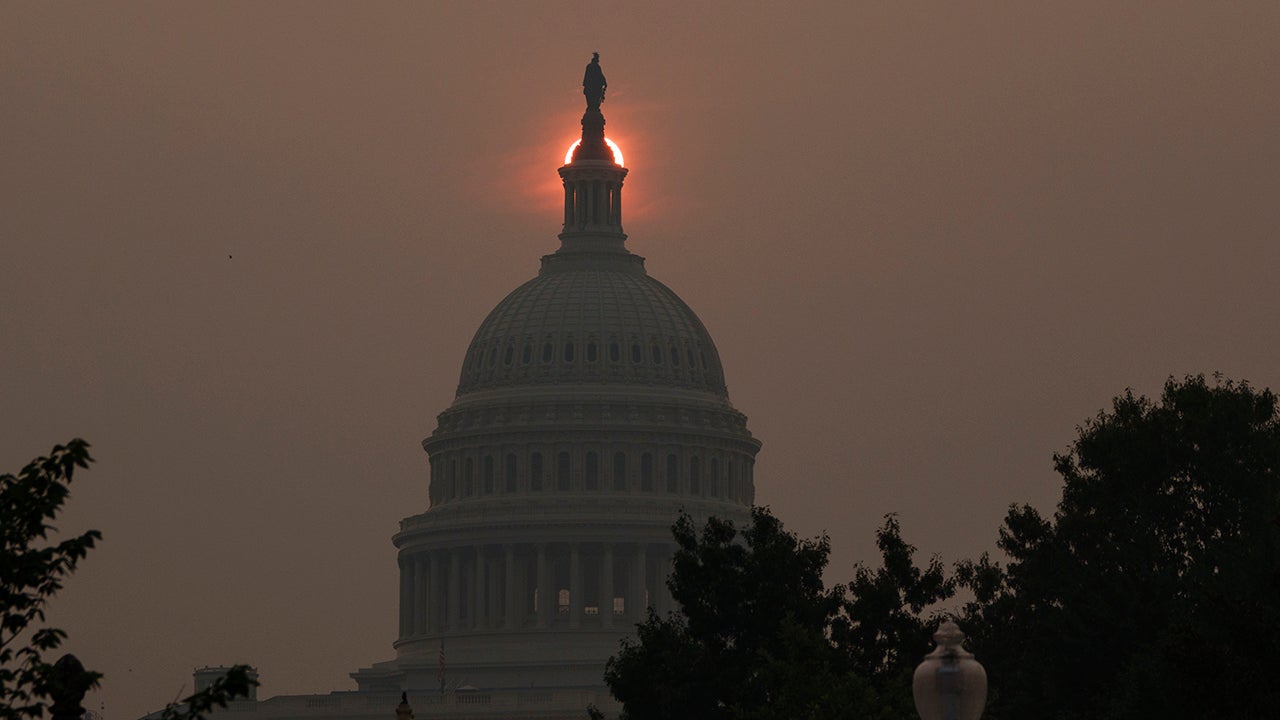
- A photo shows the sun rising behind the Statue of Freedom on the U.S. Capitol as smoke from Canadian wildfires filled the air on July 17, 2026, in Washington, D.C. (Photo: Kevin Carter/Getty Images)
What You Need to Know to Stay Safe
Wildfire smoke is not good to breathe, and here is why:
- It has tiny particles (called particulate matter) that are way smaller than a hair on your head.
- These tiny bits can go deep into your lungs and even slip into your blood.
- Short-term problems include coughing, trouble breathing, scratchy throat, runny nose, and burning eyes.
- Breathing dense smoke for a long time can cause lasting lung problems and even raise the risk of heart attacks and strokes.
If you live in the affected Midwest or Northeast areas, check your air quality forecast before going out. You can do this easily:
- Open The Weather Channel app.
- Go to your local forecast.
- Tap the “Breathing” button.
OR
- On weather.com’s local forecast page, click the “Air Quality” button at the top.
The index uses colors:
- Green = good
- Maroon = hazardous (worst)
What to do based on the forecast:
- At least code orange: People who are more sensitive (those with lung or heart problems, older adults, kids, and pregnant people) should avoid being outside more than needed.
- Code red, purple, or maroon: Everyone should spend less time outside. Exercise indoors. If you must walk your pet, do it quickly.
Important Point: If the air is code red or worse, everybody should stay inside as much as possible.
Why the Smoke?
Why is all this smoke visiting us? Think of it like this:
- Big wildfires make smoke plumes (like giant smoky rivers in the sky).
- Winds push those plumes from the ground all the way up high.
- Last Monday, super hot temperatures (over 100°F), wind, and dry air caused a big flare-up of fires that had been burning since May in northeast Minnesota. This led to a temporary closure of the Boundary Waters Canoe Area and an emergency declaration by Minnesota’s governor.
- Canada has about 800 active wildfires, mostly from the Northwest Territories to northern Saskatchewan, Manitoba, western Ontario, northern Quebec, and Labrador.
- A “heat dome” (a big bubble of hot air stuck in one place) that cooked the northern U.S. got pushed down toward the Carolinas. That set up winds blowing from the northwest high in the sky.
- Those winds will help two cold fronts (lines of cooler air) slide into the Midwest and Northeast.
- Behind those fronts, northwest winds will grab smoke from western Ontario, northeast Minnesota, and even some smoke from northern Canada.
- So while those fronts cool things off, they also bring smoke near the ground and up high. This has happened in past summers and was expected this year during a strengthening El Niño (a warming pattern in the ocean that changes weather).
Important Point: The same cooler air fronts that bring relief from heat can also deliver wildfire smoke.
Summary
Wildfire smoke from Canada and Minnesota is moving across the Midwest and Northeast this weekend, with unsafe air in many places. Rain helped a little, but more smoke is coming Sunday and again midweek, possibly reaching the South. The smoke started Wednesday and has already made several U.S. cities among the most polluted in the world. Tiny smoke particles can hurt your lungs and heart, so check your air quality color code and stay inside when it’s orange or worse. The smoke is pushed by northwest winds behind cold fronts linked to a heat dome and many active Canadian fires.
FAQ
1. What does “code purple” air quality mean?
It means the air is “very unhealthy” on the EPA’s color scale. Everyone should try to stay indoors and avoid outdoor activity.
2. How can I check my local air quality?
Use The Weather Channel app: go to your local forecast and tap “Breathing.” Or visit weather.com, open your local forecast, and click “Air Quality” at the top.
3. Why is smoke coming from Canada to the U.S.?
Winds high in the atmosphere are blowing from the northwest, carrying smoke from Canadian and Minnesota wildfires southward into the U.S.
4. Is the smoke dangerous for healthy adults?
Yes. Even healthy people should limit time outside when air is code red, purple, or maroon, because the tiny particles can enter the lungs and bloodstream.
5. Will the smoke go away soon?
Some rain cleared it briefly, but models show more smoke waves through the weekend and into next week, so it may stick around on and off.
 1
1