 11
11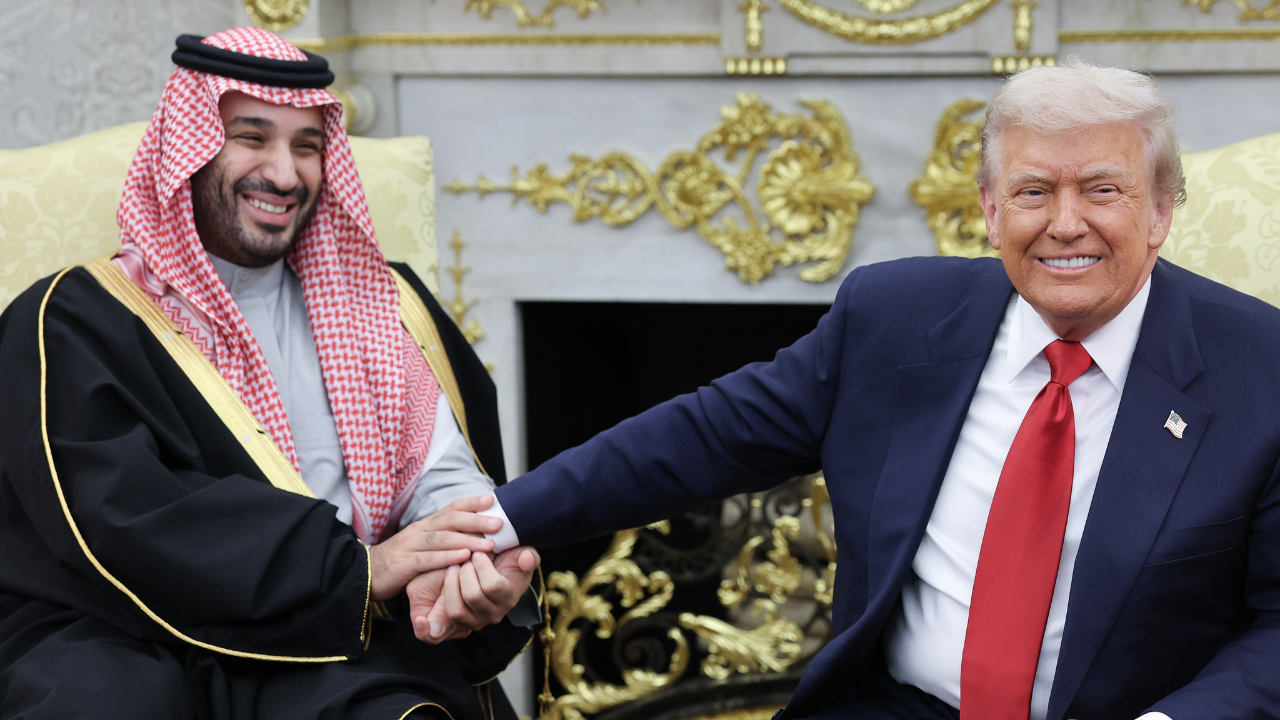
NEW: You can now listen to Fox News articles!
Imagine two kids on a playground who really don’t get along—let’s call them America and Iran. They’re arguing over a very important slide (the Strait of Hormuz, a narrow waterway where a huge amount of the world’s oil passes through) and a dangerous toy (Iran’s nuclear program).
Because they won’t talk directly, they ask some other kids—Pakistan, Qatar, and Saudi Arabia—to pass messages back and forth. These kids are the mediators.
But here is the problem: A very experienced hall monitor, Retired General Jack Keane, thinks some of these mediators might be secretly taking Iran’s side.
General Keane went on TV ("America’s Newsroom") and said something shocking. He claimed that Pakistan and Qatar are "compromised."
IMPORTANT POINT
"Compromised" here doesn’t mean they got hacked. It means General Keane believes their loyalty is split—they say they are neutral referees, but he thinks they actually favor Iran over the United States.
It’s not just General Keane talking. The politicians have a very different view.
On June 22, Pakistan and Qatar released a joint statement. They said they were mediating under the Islamabad Memorandum of Understanding. This set up working groups for four big topics:
NOTE: Reports say they are now working on a second MOU just for the Strait of Hormuz, trying to separate the "waterway crisis" from the "nuclear crisis."
Raza Rumi, a Pakistani journalist and editor, strongly disagreed with General Keane.
| General Keane’s View | Rumi’s Rebuttal |
|---|---|
| Pakistan favors Iran. | Good mediators must talk to both sides. Pakistan has a "working relationship" with Iran because they are neighbors (they share a long border). |
| Pakistan misled the US. | Geography forces them to talk. Pakistan wants to prevent instability on its border. They also have strong ties to the US, Saudi Arabia, and the UAE. |
| Pakistan is "compromised." | Proof they aren’t best friends: Pakistan and Iran exchanged missile strikes in January 2024. Neighbors who fight aren’t secretly allied. |
Rumi’s Quote: "The suggestion that Pakistan somehow caused Washington to misunderstand Tehran’s intentions is difficult to substantiate."
General Keane saved his sharpest criticism for Saudi Arabia.
"The Saudis are not willing to sacrifice to rid the Middle East region of Iran’s aggression… They’re willing for us to make that sacrifice, for sure. They’re willing for Israel to make that sacrifice, for sure."
Salman Al-Ansari, a Saudi geopolitical analyst, pushed back hard.
An unnamed Gulf expert (who asked to stay anonymous because it’s sensitive) offered a darker take:
Richard Goldberg (Former National Security Council official, now at a think tank) reminded everyone of a practical fact:
"We are relying on Saudi Arabia with their overland pipelines to keep us in the game here."
This narrow strip of water is the jugular vein of the global oil supply.
| Player | Role | The Conflict |
|---|---|---|
| USA & Israel | Want Iran to stop nukes & stop threatening ships. | Prefer military pressure as leverage. |
| Iran | Wants sanctions gone; wants to keep nukes & control the Strait. | Uses mediators to delay and split the opposition. |
| Pakistan & Qatar | The Messengers. | Keane: Secretly on Iran’s team. Rumi: Just doing the hard job of talking to neighbors. |
| Saudi Arabia | The Rich Neighbor with the Airbase & Pipelines. | Keane: Selfish, won’t fight, stops US from fighting. Al-Ansari: Smart, avoids WWIII. Analyst: Scared of Iranian missiles. |
| General Keane | The Hall Monitor. | Thinks the mediators are fooling the Teacher (Trump). |
The Big Question: Can diplomats create a paper agreement that actually stops Iran from controlling the waterway and building a bomb? Or are the mediators just helping Iran buy time?
A: It’s a narrow channel between Iran and Oman. About 20-30% of the world’s oil passes through it every day. If Iran blocks it (mines, missiles, boats), gas prices spike globally and economies crash. It is the ultimate leverage point.
A: No, it’s not a binding treaty. Think of it as a formal handshake agreement. It says: "We agree to set up teams to talk about these specific problems." It’s a framework for future negotiations, not a final solution.
A: Countries don’t get to choose their neighbors. Pakistan shares a 900+ km border with Iran. They have to talk to manage border security, trade, and refugees. Talking ≠ Agreeing. As Rumi said, good mediators need channels to both sides.
A: Two main reasons:
A: Because the US has no direct line to Iran. Since 1979, the US and Iran have had no diplomatic relations. The US needs someone to pass notes. Even if the messengers aren’t perfect, they are the only post office available. Plus, the US needs Saudi pipelines to keep oil flowing during the pressure campaign.
CLICK HERE TO DOWNLOAD THE FOX NEWS APP (Original article link preserved)
Reporting by Efrat (Effie) Lachter, Fox News Digital. Lachter has 15+ years covering conflict, global affairs, and human rights across 40+ countries.


/AI%20(artificial%20intelligence)/AI%20Data%20Center%20by%20Gorodenkoff%20via%20Shutterstock.jpg "Dell & Super Micro Soar: Market Signals The ONLY AI Stock to Buy")