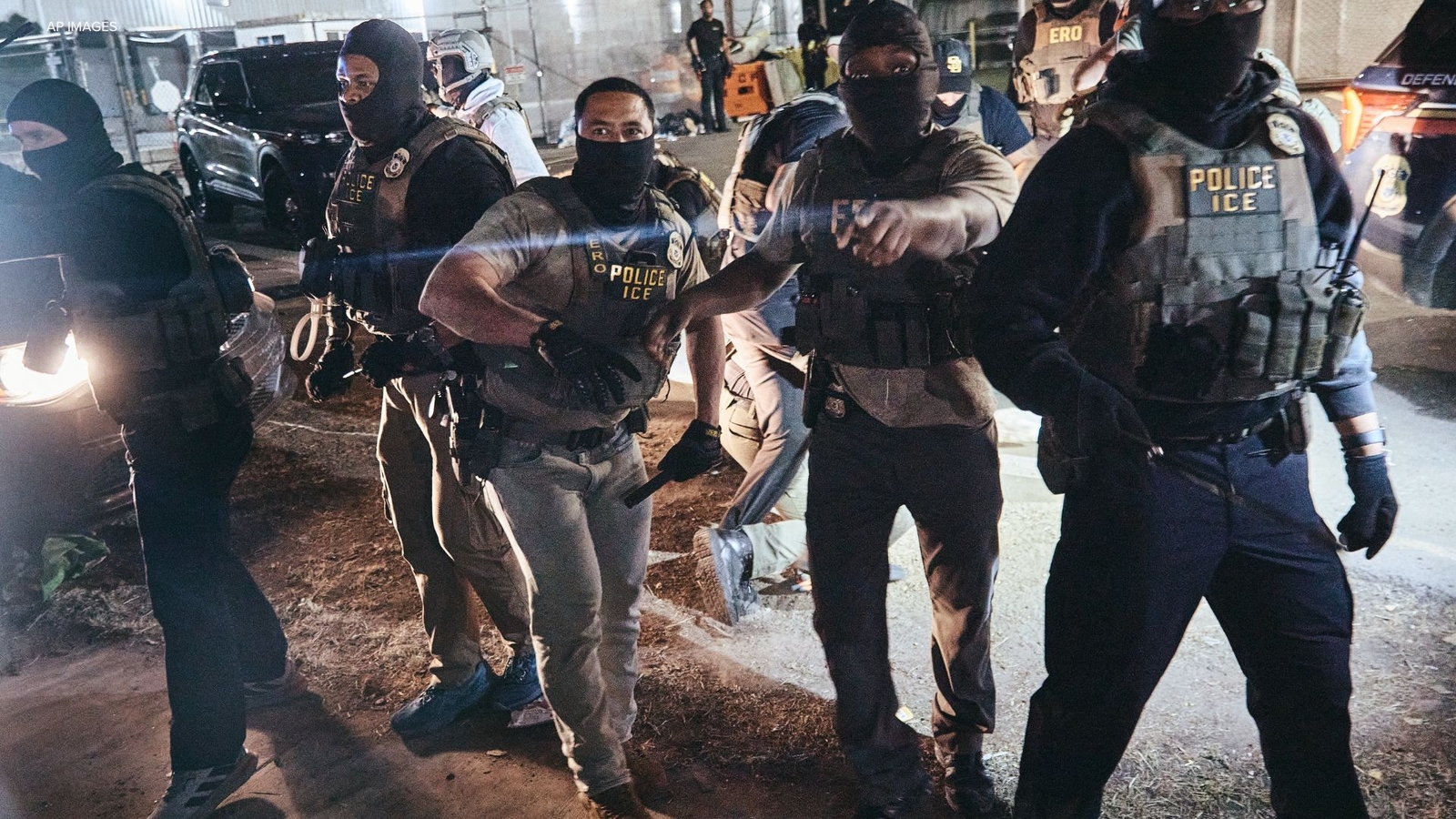
Judge Blocks NY Mask Ban for ICE Agents in Major Ruling
Federal Judge Blocks New York’s Mask Ban for Immigration Agents: What You Need to Know
The Big Picture
A federal judge in New York has partially blocked a state law that tried to control how federal immigration officers do their jobs. Think of it like a referee stepping in when a state tries to make rules for federal employees — the judge said "not so fast!"
What Happened? (In Simple Terms)
The Law New York Passed
New York State created a law with two main rules for federal immigration agents (like ICE officers):
- No masks allowed — Agents couldn’t wear face coverings
- Must show ID — Agents had to display identification at all times
What the Judge Decided
Judge Mae D’Agostino (from the Northern District of New York) issued a preliminary injunction — that’s a fancy legal term for a "temporary stop order" while the case continues.
IMPORTANT POINT: The Supremacy Clause
The judge ruled that New York’s mask and ID rules "directly regulate federal officers in violation of the Supremacy Clause."ELI5 Translation: The U.S. Constitution says federal law beats state law when they conflict. Since immigration is a federal job, only the federal government gets to make the rules for its own officers — not individual states.
What Was NOT Blocked
The judge refused to stop a different New York law that bans "287(g) agreements."
What Are 287(g) Agreements?
- These are partnerships where local police agree to help federal immigration enforcement
- Named after Section 287(g) of the Immigration and Nationality Act
- New York’s law says: "No thanks, we won’t sign these agreements"
The Judge’s Take
The judge said this ban is legal because states get to decide how their own local police operate. New York can choose not to use its tax dollars or police time for federal immigration work.
Reactions from Both Sides
New York Officials (AG Letitia James & Gov. Kathy Hochul)
"New York’s ban on 287(g) agreements is legal and will keep our communities safe. Local law enforcement should be focused on local matters, and New York taxpayers should not have to foot the bill for any collaboration with ICE. While the court enjoined enforcement of New York’s mask ban, we stand firm in our belief that masked agents do not make New York safer and our offices are reviewing all legal options at this time."
Translation: They’re happy the 287(g) ban stands, but disagree with the mask ruling and may appeal.
The Federal Government
They sued to block both laws and won on the mask/ID issue — for now.
Why This Matters (Broken Down)
| Issue | Who Wins (For Now) | Why It Matters |
|---|---|---|
| Masks & ID for federal agents | Federal government | States can’t dress-code federal officers |
| 287(g) agreements (local police helping ICE) | New York State | States control their own police resources |
Key Takeaways
- Federal supremacy wins on rules for federal officers
- States’ rights win on deciding how local police operate
- This isn’t over — "preliminary injunction" means temporary; final decision comes later
- Money matters — New York doesn’t want to pay for federal immigration enforcement
- Local vs. Federal — The core tension: who controls what police do?
Summary
A federal judge hit "pause" on New York’s attempt to make immigration agents show their faces and IDs, saying the Constitution gives that rule-making power to the federal government, not states. However, the judge upheld New York’s right to refuse partnerships between local police and ICE. Both sides claim partial victory, and the legal battle continues.
FAQ
1. What is a "preliminary injunction"?
It’s a temporary court order that stops a law from being enforced while the lawsuit plays out. It’s not the final verdict — just a "time out" until the judge hears the full case.
2. What’s the "Supremacy Clause"?
It’s in Article VI of the U.S. Constitution. It says federal law is the "supreme law of the land" — when state and federal laws clash, federal wins.
3. What are 287(g) agreements?
Deals where local police get trained to act like immigration agents — they can question, arrest, and detain people for immigration violations. New York banned these.
4. Why does New York care about masks on federal agents?
State officials argued masked agents undermine trust and transparency in communities. The federal side likely argues masks protect officer safety and operational security.
5. Can New York appeal the mask ruling?
Yes! The Attorney General’s statement says they’re "reviewing all legal options" — that means an appeal is very likely.
This article explains a developing legal story in plain language. For the latest updates, check official court records or reputable news sources.