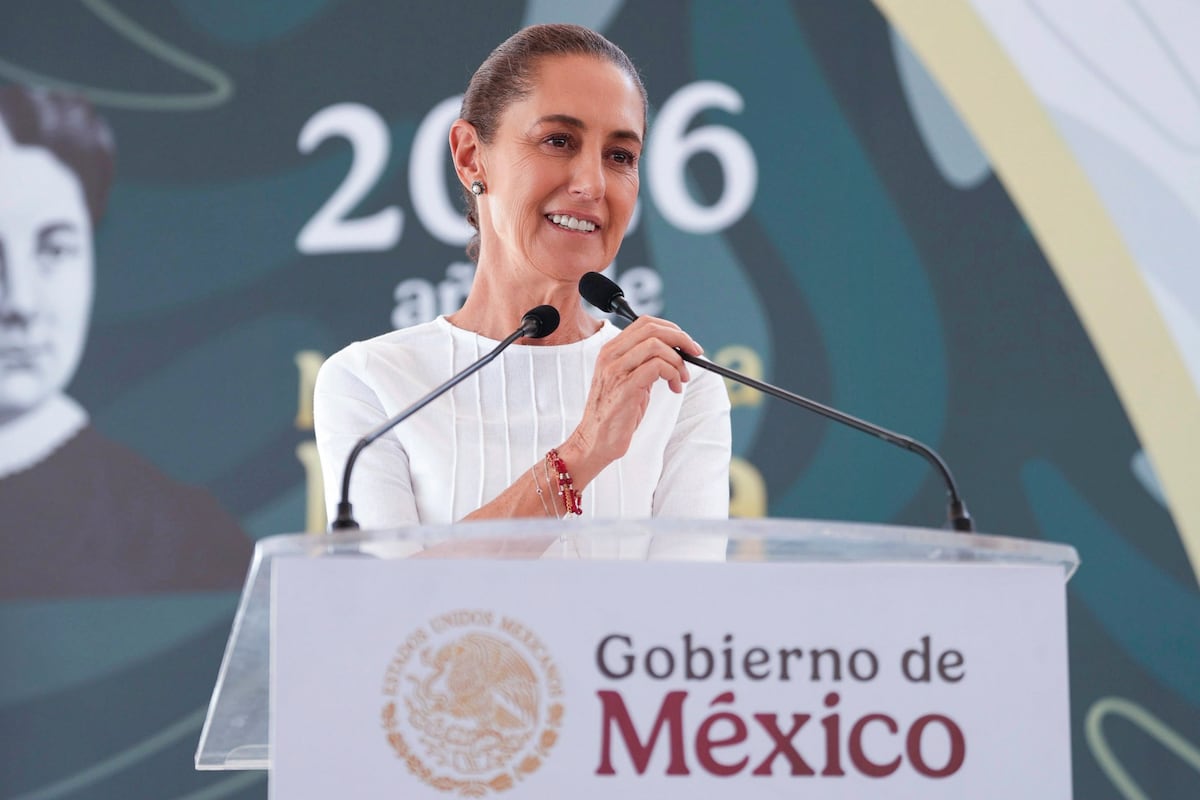
Sheinbaum frena a Trump: “México no se subordina, es amigo de todos”
Mexico Stands Firm: President Sheinbaum Tells Trump "Our Sovereignty Is Not for Sale"
Quick Summary: Mexican President Claudia Sheinbaum pushed back against pressure from U.S. President Donald Trump this weekend. Trump shared an article suggesting the U.S. military should enter Mexico to fight drug cartels. Sheinbaum said "No"—Mexico makes its own decisions.
What Happened?
On Sunday, President Claudia Sheinbaum finished a trip to the state of Oaxaca and answered questions about a social media post from President Donald Trump.
- Trump’s Move: Earlier that morning, Trump reposted an opinion article by conservative commentator Bill O’Reilly on his platform, Truth Social.
- The Article’s Argument: The piece, titled "The Problem with Mexico," argued that Mexico is not a true friend to the U.S. It claimed corruption has allowed cartels to grow and criticized Sheinbaum for refusing to let U.S. troops operate inside Mexico.
- Sheinbaum’s Answer: She drew a hard line. She stated that sovereignty (the right of a country to govern itself) comes from the Mexican people. "No one comes from abroad to tell us how to run our country," she said.
Why Is This a Big Deal? (Key Points)
Important Callout: Sovereignty vs. Intervention
- Sovereignty = A country’s supreme authority over its own territory. Think of it like the rules of your own house: you decide who comes in and what happens inside.
- Intervention = When a foreign power sends military or police forces into another country.
- The Conflict: Trump wants intervention; Sheinbaum insists on sovereignty.
The Backstory: A Year of Pressure
- Since Day One: Since starting his second term, Trump has repeatedly said the best way to fix security in Mexico is sending U.S. troops there.
- Repeated "No": Sheinbaum has said "no" every single time.
- Action vs. Words: While refusing foreign troops, Sheinbaum has launched major operations to arrest top cartel leaders and has extradited (legally handed over) several kingpins to U.S. justice.
What Did the Critic (Bill O’Reilly) Say?
The article Trump shared was originally published in March but got new attention because the President reposted it. Here are the main claims:
- "Mexico is not a friend" to the U.S. due to 40 years of corruption.
- Homicides and drug trafficking have grown unchecked.
- Sheinbaum "easily could" allow U.S. intervention but refuses.
- Labels Sheinbaum a "socialist" and calls her security strategy "insufficient."
- Direct quote: "Stop making excuses, madam."
The Relationship: "Frenemies" with a Packed Agenda
Despite the public clash, the two leaders actually talk often and describe their calls as positive and cordial.
Recent High-Profile Meeting
- Where: New York City.
- When: Less than a month ago (July 2026).
- Event: The 2026 World Cup Final (hosted by Mexico, USA, and Canada).
- Topics Discussed: Security AND Trade.
The "Two-Track" Negotiation
Mexico and the U.S. are currently linking two massive issues:
| Mexico Wants… | The U.S. Wants… |
|---|---|
| Review of the TMEC (USMCA) – The free trade agreement between Mexico, USA, and Canada. | Review of Security Strategies – Specifically, how Mexico handles cartels and migration. |
Think of it like a trade: "We will talk about updating the trade deal if you show results on security," and vice versa.
Summary: The Bottom Line
- Trump amplified a critic (Bill O’Reilly) who wants U.S. boots on the ground in Mexico.
- Sheinbaum said "Absolutely not," framing it as a defense of Mexican independence and the will of the people.
- Sheinbaum highlights her own record: Arresting capos and extraditing them to the U.S. as proof she takes security seriously—just on Mexico’s terms.
- Behind the scenes: The relationship is functional. They talk, they met at the World Cup, and they are bargaining Trade for Security.
FAQ: Your Questions Answered
What does "Sovereignty" mean in simple terms?
It means self-rule. Imagine your bedroom: you decide the rules, who enters, and how you clean it. If your neighbor kicked down your door and said, "I’m cleaning this my way," that violates your sovereignty. Mexico is saying: "This is our house; we make the rules."
Why does Trump want U.S. troops in Mexico?
He believes the Mexican government cannot (or will not) stop the drug cartels on its own. He thinks U.S. military power is the only solution to stop drugs flowing north.
Has Mexico done nothing about cartels?
No. The article makes clear Sheinbaum has ordered major operations to capture cartel bosses ("capos") and has extradited (sent) several high-profile criminals to face trial in U.S. courts. She just refuses to let foreign soldiers do the job.
What is the TMEC / USMCA?
It stands for United States-Mexico-Canada Agreement. It is the trade deal (replacing NAFTA) that sets the rules for buying and selling goods between the three countries without extra taxes (tariffs). It comes up for review in 2026.
Are Mexico and the U.S. enemies?
Not at all. The article describes the relationship as cordial with dialogue. They are major trading partners and neighbors. They disagree loudly on how to handle security, but they cooperate on trade, migration, and extraditions daily.