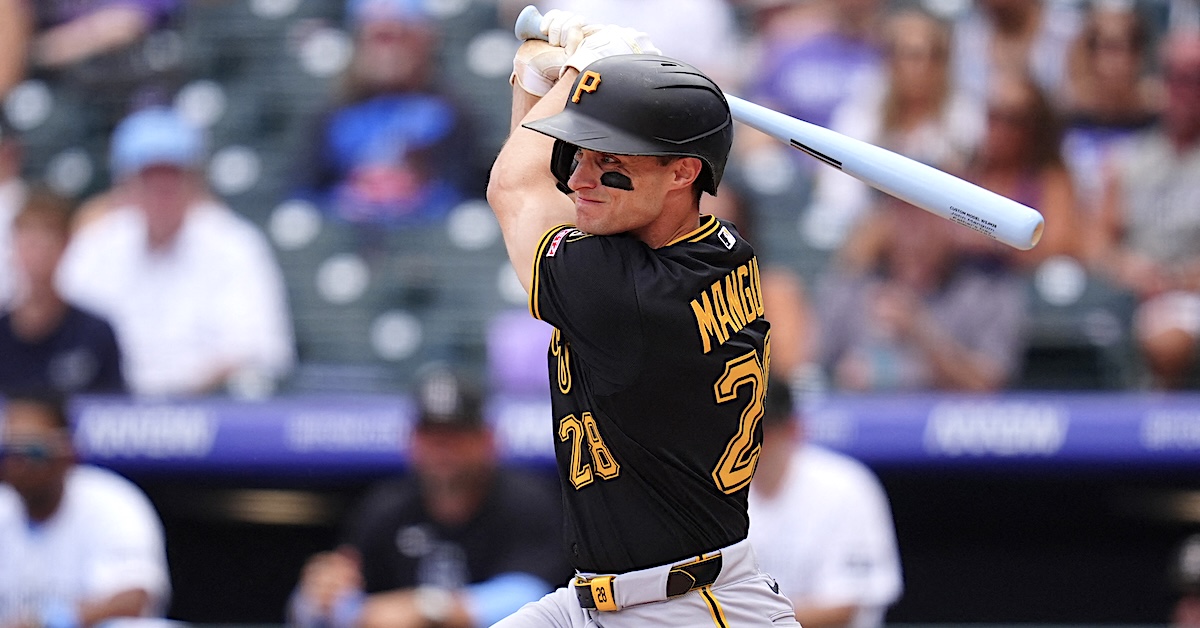
How Jake Mangum Flipped the Script & Won Big
Jake Mangum: The "Old School" Player Helping the Pirates Chase the Playoffs
Who Is Jake Mangum?
Imagine a baseball player who plays like it’s 1985. That’s Jake Mangum.
- College legend: He was a star at Mississippi State University
- Playing style: "Old school" — he tries to hit the ball where they ain’t instead of swinging for the fences
- Skills: He can hit from both sides of the plate (switch-hitter), runs fast, and plays center field well
- The problem: Modern baseball thinks this style is "inefficient" — like using a flip phone in the smartphone era
Important Point: "Old school" in baseball means focusing on contact, speed, and putting the ball in play — not home runs and strikeouts.
The Long Road to Pittsburgh
Mangum’s journey to becoming a key player for a playoff contender took several detours:
- Drafted by the New York Mets — started in their minor league system
- Traded to the Miami Marlins — as a "player to be named later" (a minor trade piece)
- Traded to the Tampa Bay Rays — again as a minor trade piece
- Got his big chance with the Rays — their outfield was historically bad (worst in baseball in several categories)
- Traded to the Pittsburgh Pirates — part of a three-team deal sending Brandon Lowe to Pittsburgh
Important Point: A "player to be named later" is like a placeholder in a trade — the teams agree on a player later, usually someone not considered a top prospect.
Why Experts Said His Style Wouldn’t Work
Modern baseball is built on "Three True Outcomes":
- Home runs (best)
- Walks (good)
- Strikeouts (accepted as the cost of doing business)
Mangum does almost none of these things well:
| What Modern Teams Want | What Mangum Does |
|---|---|
| Hit the ball hard | Swings one of the slowest bats in MLB (3rd percentile) |
| Hit home runs | Only 3 "barreled" balls all season (Christian Yelich had 3 in one game) |
| Draw walks | Walks only 4.8% of the time (209th out of 226 qualified hitters) |
| Avoid strikeouts | Strikes out 17.4% — same as power hitters like Yordan Álvarez & Bobby Witt Jr. |
The analytics say: If you don’t hit the ball hard, don’t walk, and still strike out — you shouldn’t succeed.
The Surprising Pittsburgh Opportunity
Then Oneil Cruz (Pirates’ starting center fielder) broke his hand in the first inning of the season.
Mangum’s stats since taking over (40 of 42 games):
- Batting average: .308
- On-base percentage: .345
- Slugging: .385
- wRC+: 102 (2% better than league average)
- Role: Leadoff hitter for the past 13 games
Important Point: wRC+ (Weighted Runs Created Plus) measures overall offensive value. 100 is league average. Mangum’s 102 means he’s been slightly above average — despite his "bad" underlying stats.
Mangum’s Weird Stat Profile (Through July 27)
Among 226 players with at least 250 plate appearances this season
| Stat | Mangum’s Number | League Rank | What It Means (Simple) |
|---|---|---|---|
| Walk Rate (BB%) | 4.8% | 209th | Rarely walks — swings at almost everything |
| Strikeout Rate (K%) | 17.4% | 65th | Doesn’t strike out much (good!) |
| On-Base % (OBP) | .348 | 61st | Gets on base over 1/3 of the time |
| wRC+ | 98 | 142nd | Slightly below average overall offense |
| Hard Hit % | 25.2% | 217th | Almost never hits the ball hard |
| Avg Exit Velocity | 89.2 mph | 221st | Ball comes off bat slowly |
| Bat Speed | 67.3 mph | 219th | One of the slowest swings in MLB |
| Contact % | 81.8% | 60th | Makes contact when he swings (good!) |
| Chase Rate | 46.9% | 226th (LAST) | Swings at more bad pitches than anyone |
The Good, The Bad, & The Misleading
What He Does Well
- Gets on base (.348 OBP — 61st in MLB)
- Makes contact (81.8% contact rate — 60th)
- Runs fast (19 stolen bases)
- Plays average center field (tied for 17th among 44 qualifiers)
What He Doesn’t Do Well
- Zero power (bottom 5% in bat speed & hard-hit rate)
- Zero patience (highest chase rate in baseball — swings at everything)
- Doesn’t work counts (only 3.68 pitches per plate appearance — 186th)
The "Good" Stats That Are Misleading
| Stat | Looks Good | Reality |
|---|---|---|
| 19 Stolen Bases | Fast! | Caught stealing 6 times — only 55th in success rate |
| Foul Balls (43.5%) | Battles! | Doesn’t lead to walks — just long at-bats that end in outs |
| Low Strikeout Rate | Disciplined! | Same K% as elite power hitters who choose to swing hard |
Why He’s Actually Valuable to the Pirates
The Pirates are 55-52 and tied for the last NL Wild Card spot (48.6% playoff odds — their best since 2015).
They’ve succeeded through:
- Star prospects: Paul Skenes, Oneil Cruz, Nick Gonzales
- Smart depth moves: Turning weaknesses into "okay" spots
Mangum is Exhibit A for #2:
- He doesn’t do many things well
- But he does the most important thing well: gets on base
- A leadoff hitter with a .348 OBP keeps the lineup moving
- He’s "sprinkled enough detritus into the outfield" to be a genuinely important player on a playoff contender
Important Point: OBP (On-Base Percentage) is arguably the single most important offensive stat. It measures how often a player doesn’t make an out. Mangum’s .348 OBP means he reaches base ~35% of the time — that’s valuable even without power.
Summary
Jake Mangum breaks all the modern rules — and it’s working.
- No power (bottom 5% in bat speed, exit velocity, hard-hit rate)
- No patience (highest chase rate in MLB, almost never walks)
- Below-average basestealing efficiency
- Average defense
BUT He gets on base (.348 OBP) → Keeps innings alive → Helps a playoff contender
Sometimes baseball is simple: The player who doesn’t make outs helps his team win — even if he does it "the wrong way."
FAQ
Is Jake Mangum actually good, or just lucky?
He’s sustainable-good at one specific thing: not making outs. His .348 OBP is backed by a high contact rate (81.8%) and batting average (.308 since Cruz’s injury). He’s not "lucky" — he’s extremely specialized.
What does "player to be named later" mean?
It’s a trade placeholder. Teams agree on a deal but delay naming the final player (usually a minor leaguer). Mangum was this twice — showing how little he was valued initially.
Why do teams hate his playing style?
Modern analytics prove that hitting the ball hard + drawing walks = more runs. Mangum does neither. Teams prefer a .220 hitter with 30 HRs over a .300 hitter with 3 HRs — the math says the first player creates more runs.
Can he keep this up all season?
Probably not at this exact level — his BABIP (batting average on balls in play) is likely inflated. But his approach (contact + speed) will keep his OBP respectable. He’ll remain a useful leadoff hitter.
What happens when Oneil Cruz comes back?
Great question! Cruz is a superstar talent. Mangum likely moves to a super-utility role (playing all three outfield spots, spelling starters). His versatility makes him more valuable as a bench piece than a starter.