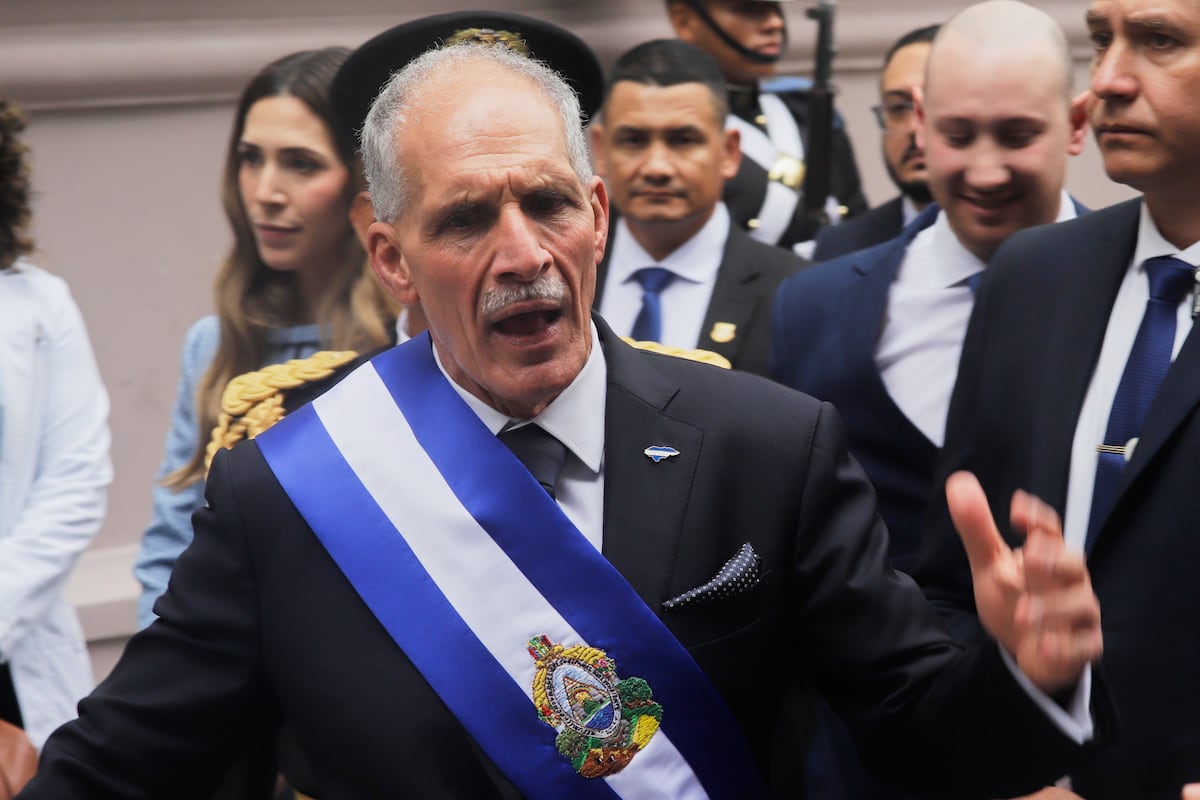
Honduras Crisis: Asfura Slashes State, Violence Soars Under JOH’s Shadow
Honduras President Nasry Asfura’s First Six Months: Promises, Problems, and a Powerful Shadow
ELI5 Note: This article explains what’s been happening in Honduras since a new president took office in January 2026. We’ll break down the big promises, what actually happened, and why many people are worried.
The Big Promise: A Leaner, More Efficient Government
When Nasry Asfura became president of Honduras on January 27, 2026, he made a clear pledge: shrink the government to make it work better for the country’s 11 million people.
- Backed by: U.S. President Donald Trump
- Context: Elections were marred by allegations of irregularities
- His ask: "Judge me by my actions"
- Six months later: Record tarnished by inefficiency and public dissatisfaction
Important Callout: Asfura took office promising to fight corruption and crime. But critics say his actions have helped private businesses more than ordinary people—and a powerful former president is now back in the picture.
The Austerity Drive: Cutting Deep and Fast
Within less than a month, the new administration took drastic steps:
| Action | Details |
|---|---|
| Staff cuts | At 113 institutions |
| Agencies abolished | 10 entirely |
| Key agencies eliminated | • National Housing and Human Settlements Commission (Convivienda) • Secretariat for Transparency and the Fight Against Corruption • Program for Memory, Truth, Reparation, Justice and Non-Repetition (for victims of human rights violations) |
Why this matters: The agencies removed were focused on housing, fighting corruption, and helping victims of past government abuses. Their removal raised immediate red flags.
Healthcare: The First Big Test — And a Stumble
What Asfura Did
- Appointed himself Minister of Health
- Declared a state of emergency
- Created a trust fund of 500 million lempiras (~$18.7 million)
- Goals: Fix medicine shortages, clear surgical backlog (13,000–20,000 patients), restore hospital capacity
What Critics Said
- The emergency plan favored private contracts through the trust fund
- Opened the door to privatization of healthcare
- Agresio Girón (political analyst): "Public healthcare has been at the core of corruption… but so far, the public perception remains that the fundamental problems persist."
The Results After 4 Months
- Hospitals still report shortages and operational problems
- Only 227 surgeries performed (backlog: 13,000+)
- Fund disbursement delays acknowledged by government
- Spent 10 million lempiras (~$372,000) on 154 surgeries = $2,400 per procedure
Important Callout: Asfura’s governing style emerged clearly: rely on states of emergency, trust funds, and extraordinary executive powers — bypassing normal checks and balances.
Who Is Asfura Governing For? The Private Sector Gets a Boost
While healthcare stalled, other moves happened fast:
1. Agro-Industrial Law Forced Evictions
- Law passed: Requires police/prosecutors to act immediately against land occupations affecting agribusiness
- Result: Three communities evicted, including a Garífuna community on the Caribbean coast
- Problem: Their land rights are protected by the Inter-American Court of Human Rights (IACHR)
2. Energy Law Changes Privatization Push
- Congress considering amendments to privatize electricity distribution
3. Expert Take
Lucía Avilés (CESPAD researcher): "These three facts tell us who Asfura is governing for: he is governing for the private sector. By contrast, he has shown himself incapable and negligent toward the rest of the population."
Israel Melo (Jesuit priest, ERIC-Radio Progreso): "One of Asfura’s biggest mistakes… his only interlocutors have been big business, Donald Trump, Javier Milei and Benjamin Netanyahu. He has remained disconnected from the population."
A Dramatic Foreign Policy Shift: Closer to Israel
- Before inauguration: Asfura traveled to Jerusalem to meet PM Benjamin Netanyahu
- Called Israel: A "true friend" of Honduras
- Result: A "new era" in bilateral relations — close political and strategic alliance
Important Callout: This marked a sharp break from previous Honduran foreign policy and aligned Asfura tightly with right-wing leaders like Trump, Argentina’s Milei, and Israel’s Netanyahu.
Anti-Corruption Efforts: Stalled and Replaced
| Promise | Reality |
|---|---|
| CICIH (International Commission against Corruption and Impunity in Honduras) — flagship campaign pledge | Stalled. Asfura admitted launching it in Year 1 would be "very difficult" |
| Replacement | A national anti-corruption policy — no visible results yet |
| Transparency Secretariat | Abolished immediately — functions moved to Attorney General’s Office |
| New AG Head | Dagoberto Aspra — Asfura’s former lawyer in corruption cases |
Red Flag: The anti-corruption watchdog was replaced by an office led by the president’s own former defense attorney.
Security: The Unraveling Promise
The Numbers Don’t Lie
- Homicides up 5.65% (Q1 2026 vs. Q1 2025)
- At least 18 massacres reported in 2026 so far
- Homicide rate: 26.6 per 100,000 → Most violent in Central America, 3rd in Latin America (behind Haiti & Ecuador)
- No National Security Plan presented after 6 months
Major Incidents
- Mid-May: Two massacres in Caribbean region → 24 dead, including 5 police officers
- Government response: Fired two senior police chiefs, created emergency task force
- Result after 2+ months: No significant progress in investigations
Extortion Crisis
- ~300,000 households pay "war tax" (criminal extortion)
- Government claim (no evidence): "80% of extortion complaints are false"
Femicides: A Silent Epidemic
- 150 femicides as of July 16 = 1 every 31 hours
- 95% unsolved (Visitación Padilla Women’s Movement for Peace)
Important Callout: Violence against women is rising, almost no cases are solved, and the government has no comprehensive plan to address it.
The Shadow of Juan Orlando Hernández (JOH)
Who Is JOH?
- Former president (2014–2022)
- Convicted in the U.S. on drug trafficking charges
- Pardoned by Donald Trump
- Key figure in the ruling National Party
Why His Return Matters
- Returned Sunday after a local court quashed his arrest warrant
- Nationwide welcome organized by supporters
- Analysts warn: Threatens Asfura’s ability to govern
Eugenio Moreno (sociopolitical analyst): "In Honduras, there is a ‘deep state’… a structure entrenched within government and in organized-crime networks that answers to Juan Orlando Hernández."
Geopolitical Complications
- U.S. Congress: Concerns over security, human rights, reforms
- China relations: Cooled
- Honduras signaling: Willingness to strengthen ties with Russia
Summary: Six Months In — What’s the Verdict?
| Area | Promise | Reality |
|---|---|---|
| Government size | Leaner, efficient | Key watchdogs abolished; emergency powers expanded |
| Healthcare | Fix shortages, clear backlog | Few surgeries, high cost, privatization fears |
| Economy/Private sector | Not a stated focus | Laws fast-tracked for agribusiness & energy privatization |
| Corruption | CICIH + transparency | CICIH stalled; transparency office closed; AG = ex-lawyer |
| Security | Zero tolerance | Homicides up, massacres rising, no plan, femicides soaring |
| Foreign policy | Not emphasized | Sharp pivot to Israel, Trump, Milei; away from China |
| Legitimacy | "Judge me by actions" | Election irregularity allegations + JOH’s return = weakened mandate |
Bottom line: Asfura came in promising efficiency and security. Six months later, the state is smaller but not more effective, violence is worse, and the ghost of a convicted former president looms large over his presidency.
FAQ: Your Questions Answered
1. Why did Asfura abolish the anti-corruption and transparency agencies?
He said it was to make government "leaner and more efficient." Critics say it removed the only independent checks on his power — and replaced them with an office run by his former personal lawyer.
2. What is the "war tax" mentioned in the article?
It’s a form of extortion where criminal groups force households and businesses to pay regular "protection" money. Nearly 300,000 Honduran families reportedly pay it.
3. Who are the Garífuna people, and why does their eviction matter?
The Garífuna are an Afro-Indigenous community with legally recognized land rights protected by the Inter-American Court of Human Rights. Their eviction for agribusiness projects violates international law.
4. How does Juan Orlando Hernández still have power if he was convicted and pardoned?
The U.S. conviction was for drug trafficking. The pardon removed U.S. penalties, but in Honduras, he remains a powerful political operator with allies in Congress, the courts, and — analysts say — organized crime networks. His party still controls key institutions.
5. What does Honduras’ pivot to Israel and Russia mean for regular people?
Foreign policy shifts don’t immediately change daily life. But they signal who the government listens to: right-wing leaders and business elites, not unions, Indigenous groups, or human rights advocates. It may also affect aid, trade, and diplomatic support.
This article is based on reporting from EL PAÍS. For more English-language news from Latin America, consider subscribing to their weekly newsletter.