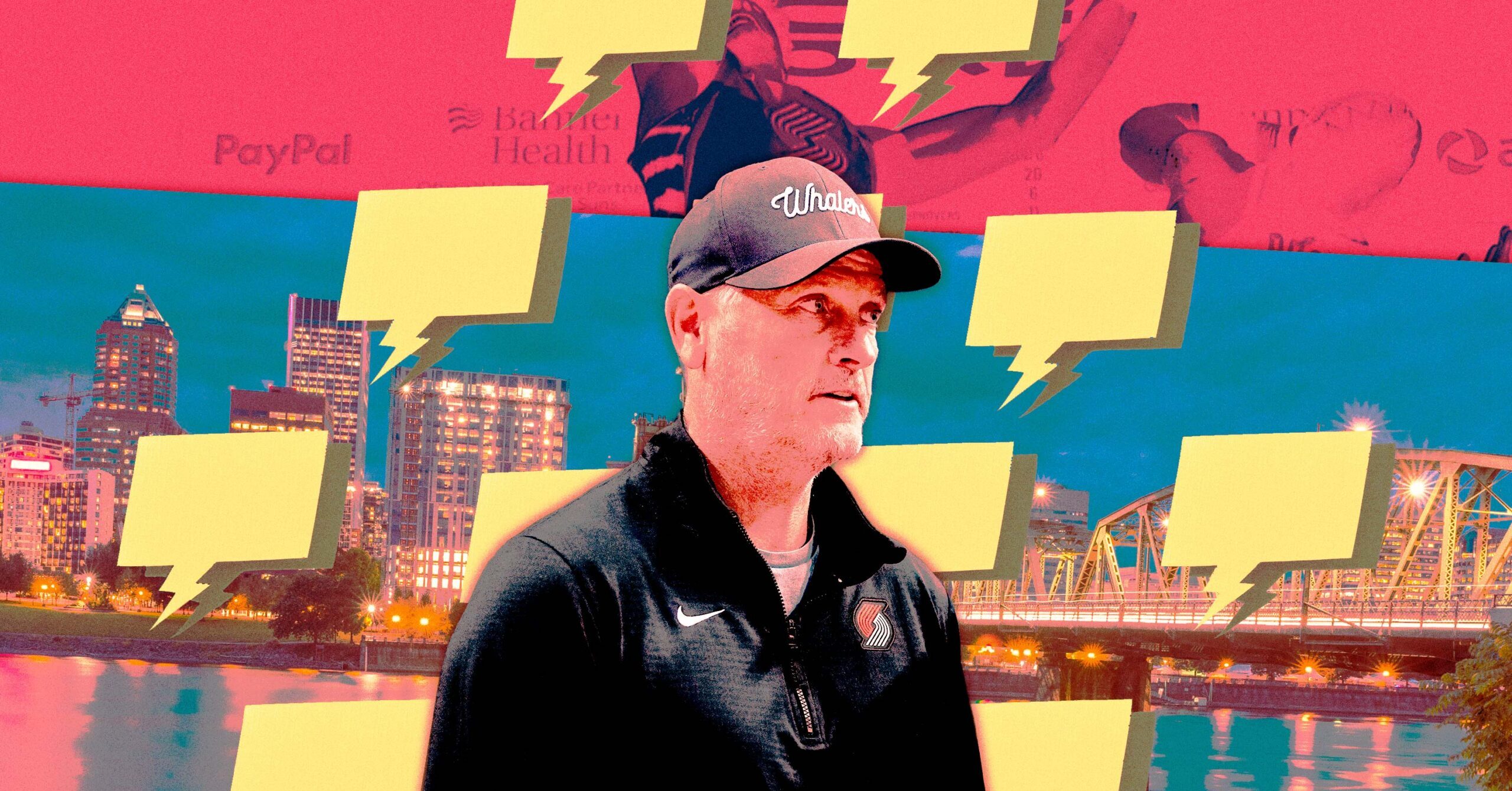
Tom Dundon’s Ruthless Blueprint to Bankrupt the Blazers
Tom Dundon’s "Rules for Success": A Satirical Guide to Extreme Cost-Cutting
What’s This All About?
Imagine if the grumpiest cartoon crab Mr. Krabs from SpongeBob SquarePants bought a professional basketball team. That’s basically what happened when Tom Dundon became owner of the Portland Trail Blazers.
This article from The Ringer uses heavy sarcasm to show how Dundon’s real-life penny-pinching looks like a "masterclass" in terrible leadership. Think of it like a "How NOT to Run a Business" guide written as if it were serious advice.
Important Note: This is satire — the author is making fun of Dundon by pretending his awful behavior is actually good business strategy. Don’t actually follow these rules!
Who Is Tom Dundon?
- Current jobs: Owns the NHL’s Carolina Hurricanes AND the NBA’s Portland Trail Blazers
- How he got rich: High-interest loans to people with poor credit (critics call this "predatory lending")
- Purchase price: $4.25 billion for the Blazers (approved 2025)
- Reputation: Making Mr. Krabs look generous by comparison
The Real-Life "Highlights" (Lowlights?)
Before the fake rules, here’s what Dundon actually did in his first months:
| Action | What Happened |
|---|---|
| Fired front office staff | Cut experienced basketball people to save money |
| Gutted broadcasting crew | Let go beloved local announcers |
| Lowballed coach Tiago Splitter | Didn’t make fair offer after successful interim stint |
| Banned two-way players from playoff travel | Young players watched games from home |
| Refused late hotel checkout | Staff had to hang out in lobbies during play-in tournament |
| Cancelled free playoff T-shirts | Every other team gives them away; Portland didn’t |
| Demands $600M from taxpayers | Wants public to fund arena renovations, threatens to move team |
Dundon’s "7 Rules for Success"
Remember: These are satirical. The author is mocking each behavior.
Rule 1: The Hotel Lobby Is a Fine Bedroom
The "Strategy": Why pay for enough hotel rooms when you can just… not?
Implementation Steps:
- Book one room with two beds for four people
- Run "Sleep Shifts": Team A sleeps 9 PM–3 AM, Team B sleeps 3 AM–9 PM
- Non-sleepers hang out in lobby, breakfast area, or business center playing Minesweeper
- Only stay at hotels with free breakfast buffets
- Bring a Yeti cooler backpack to smuggle out scrambled eggs, muffins, and parfaits for later meals
Pro Tip (Satire): "A chair is a chair. Everyone’s just looking at their phones anyway."
Rule 2: Commitment Is Death
The "Philosophy": Never lock yourself in. Keep every escape route open.
Real-world example: Coach Micah Nori got a 3-year deal where only Year 1 is guaranteed — unique in the entire NBA.
How to Apply This:
- Friend invites you to dinner? Say "probably", not "yes"
- Demand full guest list, itinerary, and RSVP deadline — then ask for more time
- Text one hour before to confirm plans haven’t changed
- Ask if they’ll pay for your meal
- Keep the option to bail at the last minute if a "better lever" appears
Rule 3: Free Is Evil
The "Logic": Giving things away "undermines your merchandise."
Real-world example: Cancelling free playoff T-shirts while selling $30 versions at the arena.
Daily Application:
- Venmo/Zelle = extraction tools, not payment apps
- Buy friend a $8 beer → Venmo them $12 ($2 "tip" you don’t leave + $2 "labor fee")
- If they complain? Call them a diva and ghost for a month
- Charge for everything: rides, advice, emotional support, existing near you
Rule 4: Experience Is Bullsh*t
The "Transitive Property of Wealth":
More Money = More Knowledge
Success in One Thing = Success in Everything
Therefore: Owner = Smartest Person in Building
Practical Takeaway:
- Ignore employees who’ve worked there 20 years
- Your net worth equals your expertise level
- First time running a basketball team? You still know best.
Rule 5: Never Turn Down a Deal
The "Distressed Asset" Strategy: Buy low on damaged goods — it’s a "high-reward shot at little cost."
Examples:
- Wash-up star who doesn’t fit your team? Sign him!
- Art you hate from a recently deceased artist? Buy it!
- Bonus: These moves distract fans from the fact you’re cutting costs everywhere else.
Rule 6: Do What You Want — You’re All That Matters
The "Villain Wins" Theory:
- Heath Ledger (Joker) → Oscar
- Javier Bardem (Anton Chigurh) → Oscar
- Sandra Bullock (The Blind Side) → Oscar
- Conclusion: Be the villain. It pays.
Action Items:
- Make friends pay for your stuff
- Ask strangers in coffee lines to buy your Americano
- Threaten lawsuits over minor inconveniences
- If they comply? Escalate: Now ask for rent money and "operating costs"
- Burn every bridge — standing bridges are just "opportunities to start another fire"
Rule 7: If You Don’t Like the Answer, Just Leave
The "Nuclear Option": Discomfort is for weak people. Walk away instantly.
Dundon’s Version: Threaten to move the entire franchise (56 years in Portland, 1977 champions) unless taxpayers cough up $600M.
Your Version:
- Ask someone their favorite Friday Night Lights character → They don’t say Buddy Garrity → Leave immediately
- McDonald’s out of fries? 15-minute wait? Drive off
- Leverage the threat of leaving in every negotiation
- Win-win: They cave → you win. They don’t → you leave → you still "win"
The Big Picture: What This Article Is Really Saying
CALL OUT: This Is Satire — Here’s the Translation
| "Rule" | Actual Meaning |
|---|---|
| "Sleep shifts in hotel lobbies" | Treating employees like cattle |
| "Never commit" | Zero loyalty, maximum leverage |
| "Charge friends for beer" | Transactional relationships, no generosity |
| "Experience is bullsh*t" | Arrogance masquerading as confidence |
| "Buy distressed assets" | Publicity stunts over smart roster building |
| "Be a villain" | Cruelty as a leadership style |
| "Threaten to leave" | Holding a city hostage for public money |
The author Tyler Parker is saying: "Look at this behavior. It’s sociopathic. But in modern capitalism, it’s rewarded."
Summary
Tom Dundon bought the Portland Trail Blazers and immediately began slash-and-burn cost-cutting while demanding $600 million in public funds for arena upgrades — threatening relocation if he doesn’t get his way.
The Ringer’s article pretends this is a "masterclass in business success" with 7 rules. In reality, it’s a scathing critique of:
- Billionaire welfare (public stadium funding)
- Labor exploitation (treating staff as disposable)
- Community betrayal (threatening to move a beloved franchise)
- Short-term greed disguised as "innovation"
The joke: The "rules" work if your only goal is personal profit at everyone else’s expense. They fail completely if you care about community, loyalty, or basic human decency.
FAQ
Is Tom Dundon actually this cheap?
Yes. The examples in the article (no free T-shirts, no late checkout, firing broadcasters, lowballing coaches) are documented real events from his first year of ownership.
Why would the NBA approve an owner like this?
The NBA primarily vets financial capability ($4.25B purchase price). Dundon’s predatory lending background was public knowledge. The league has limited power to block sales based on "character."
Can he actually move the team?
Technically yes — the lease expires in 2030. But relocation requires NBA Board of Governors approval (75% vote). It’s a nuclear threat meant to pressure politicians, not necessarily a done deal.
What’s "predatory lending"?
Making high-interest loans to people with poor credit who have few other options. Critics say it traps borrowers in debt cycles. Dundon’s company (DriveTime/Santander Consumer) has faced regulatory scrutiny for these practices.
Why write this as fake advice?
Satire exposes truth through exaggeration. By presenting Dundon’s behavior as "rules to live by," the author forces readers to confront how absurd and harmful it really is — more effectively than a straight opinion column could.
Article based on: "Portland Trail Blazers owner Tom Dundon’s seven rules for running a killer business" by Tyler Parker, The Ringer (August 2025)