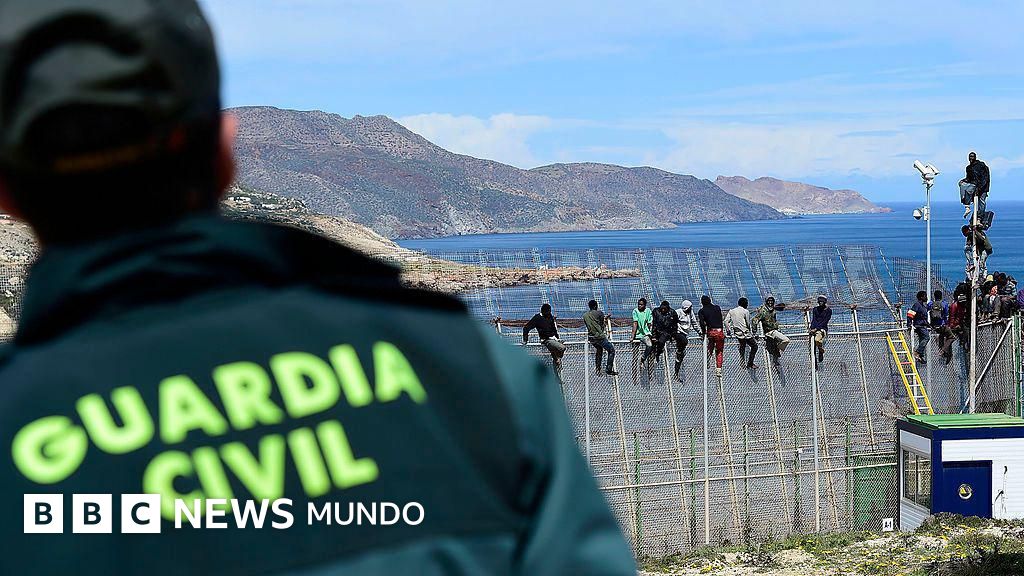
El secreto histórico: Por qué Ceuta y Melilla son españolas estando en África
Ceuta and Melilla: The Spanish Cities in Africa – Explained Simply
Important Points
- Ceuta and Melilla are Spanish cities located in North Africa, bordering Morocco
- They have been Spanish for over 500 years, but Morocco claims them as its own
- International law and the UN recognize them as Spanish territories, not colonies
- They are the EU’s only land borders with Africa, making them migration flashpoints
- Recent diplomatic shifts involving Western Sahara have changed Spain-Morocco relations
What Are Ceuta and Melilla?
Imagine two Spanish cities sitting on the northern coast of Africa, right across the water from mainland Spain. That’s Ceuta and Melilla. They’re special because:
- They belong to Spain – have been Spanish for 500+ years
- They’re in Africa – geographically on the African continent
- They border Morocco – separated by fences and border crossings
- They’re fully Spanish – not colonies, but integral parts of Spain with the same rights as Madrid or Barcelona
How Did They Become Spanish?
Melilla: The First to Join Spain (1497)
- 1497 – Spanish forces under the Catholic Monarchs (Ferdinand and Isabella) captured the port city
- This happened just 5 years after they completed the Reconquista (reconquering Spain from Muslim rule) in Granada
- Melilla became a strategic outpost against piracy
Ceuta: A Longer Journey (1415 → 1640)
| Year | Event |
|---|---|
| 1415 | Portugal conquers Ceuta from Muslim rulers |
| 1580 | Portugal and Spain unite under one king (Iberian Union) – Ceuta becomes Spanish too |
| 1640 | Portugal regains independence, but Spain keeps Ceuta |
Simple Explanation: Think of it like this – Portugal grabbed Ceuta first, then Spain and Portugal merged for a while, and when they split up, Spain said "we’re keeping this one."
Why Are They So Important to Spain?
Strategic Location
- Ceuta sits right at the Strait of Gibraltar – the gateway between Atlantic and Mediterranean
- Only 14 km (8.7 miles) from mainland Spain
- Melilla provided a base to fight pirates threatening Spanish ships
Military Significance
- 1912–1956: Served as command centers for Spain’s protectorate in northern Morocco
- 1936: The Spanish Civil War started with a military uprising in Melilla
- Best troops were stationed here, making them loyal to the nationalist cause
Modern Status
- Ciudades Autónomas (Autonomous Cities) – unique status between a city council and a region
- More powers than a normal town, fewer than a full region like Catalonia
- Spanish constitution treats them as integral parts of Spain
Why Does Morocco Want Them?
The "Greater Morocco" Idea
Since independence in 1956, Morocco has claimed:
- Ceuta and Melilla
- Other small Spanish territories (Perejil Island, Chafarinas Islands, etc.)
- Western Sahara (a much larger dispute)
Morocco’s Arguments
- Claims they’re "occupied territories" waiting to be decolonized
- Says Spain should negotiate handover like it did with Ifni (returned in 1969)
- Views them as the "last European colonies in Africa"
Spain’s Response
- Absolute refusal to negotiate sovereignty
- "Spanish for 500+ years" – long before modern Morocco existed
- UN agrees: Not on the list of non-self-governing territories needing decolonization
What Does International Law Say?
Key Legal Points
| Argument | Explanation |
|---|---|
| Pre-existence | Cities became Spanish centuries before Morocco became a modern state (1956) |
| Integration | Fully integrated into Spanish Constitution – not colonies |
| Population | ~85,000 people live there (civilians with full rights) – unlike other disputed rocks/islands |
| Self-determination | Residents overwhelmingly identify as Spanish |
Expert Consensus
- Jamie Trinidad (Cambridge): "Legally, it’s quite clear they’re Spanish. Morocco will find it very hard to change this."
- UN position: Never classified them as colonies requiring decolonization
- Political reality: Morocco keeps claims alive as leverage in broader negotiations (especially Western Sahara)
Daily Life in the Enclaves
Unique Identity
- Mixed population: Spanish, Moroccan-origin, Jewish, Hindu communities
- Languages: Spanish (official), Darija (Moroccan Arabic), Tamazight (Berber)
- Religions: Catholic, Muslim, Jewish, Hindu coexisting
- Most residents of Moroccan descent feel strongly Spanish – cite better rights, healthcare, freedoms
Economic Challenges
| Issue | Impact |
|---|---|
| Lowest GDP per capita in Spain | Both cities rank last nationally |
| Dependence on Morocco | Cross-border trade (formal + informal) vital |
| Border closures hurt | 2020–2022 COVID closure devastated local economy |
| Smuggling/Informal trade | Historically major economic activity |
Migration Pressure
- Only EU land border with Africa → magnet for migrants
- Major crises:
- May 2021: ~8,000 crossed into Ceuta in one day (Moroccan guards allegedly stood aside)
- June 2022: At least 23 dead (NGOs say 37) attempting Melilla crossing
- Spain accuses Morocco of using migration as political pressure
The Western Sahara Connection
The Game-Changer (March 2022)
Spain ended decades of neutrality by backing Morocco’s autonomy plan for Western Sahara – a territory Spain ruled until 1975.
Why This Matters
| Before 2022 | After 2022 |
|---|---|
| Spain: "UN referendum needed" | Spain: "Morocco’s autonomy plan is most credible" |
| Tense relations with Morocco | Dramatic improvement in bilateral ties |
| Algeria (Morocco’s rival) was ally | Algeria furious – recalled ambassador, cut gas pipeline |
Does This Solve Ceuta/Melilla?
- Optimists: Better relations = less pressure on enclaves
- Realists (Carlos Echeverría, Observatory Director): "Morocco hasn’t dropped its claim in writing. Nothing fundamentally changed."
Summary
- History: Ceuta (Portuguese 1415 → Spanish 1640) and Melilla (Spanish since 1497) have been Spanish for 500+ years
- Law: International law/UN recognize them as Spanish – not colonies, fully integrated, populated by citizens
- Dispute: Morocco claims them as part of "Greater Morocco" since 1956 independence
- Strategy: Vital for controlling Gibraltar Strait, fighting piracy, military bases
- Life: Unique multicultural cities, but poorest in Spain, dependent on Morocco trade
- Migration: EU’s only African land border → constant pressure, used as political tool
- New Era: Spain’s 2022 Western Sahara shift improved relations but didn’t resolve sovereignty claims
FAQ
1. Are Ceuta and Melilla colonies?
No. The UN does not classify them as colonies. They’re fully integrated into Spain’s constitution with the same legal status as Madrid or the Canary Islands. They have civilian populations, elected governments, and full EU membership.
2. Why doesn’t Spain just give them to Morocco?
Three main reasons: (1) Legal – they’ve been Spanish since before Morocco existed as a modern state; (2) Democratic – residents overwhelmingly want to stay Spanish; (3) Strategic – they control the Mediterranean entrance and are NATO territory.
3. Can people freely cross between Morocco and the enclaves?
Not anymore. Before 2020, there was heavy daily cross-border movement. Since COVID closure (2020–2022) and diplomatic tensions, crossings are tightly restricted. Only residents with special permits and goods trucks cross regularly.
4. What’s the difference between Ceuta/Melilla and Gibraltar?
Gibraltar is a British Overseas Territory claimed by Spain. Ceuta/Melilla are Spanish cities claimed by Morocco. Both are sovereignty disputes at the Mediterranean entrance, but with reversed roles for Spain.
5. Will the dispute ever be resolved?
Unlikely soon. Morocco treats the claim as a permanent diplomatic tool. Spain refuses negotiation. The 2022 Western Sahara deal improved relations but didn’t include any written Moroccan renunciation of Ceuta/Melilla claims. Status quo persists.