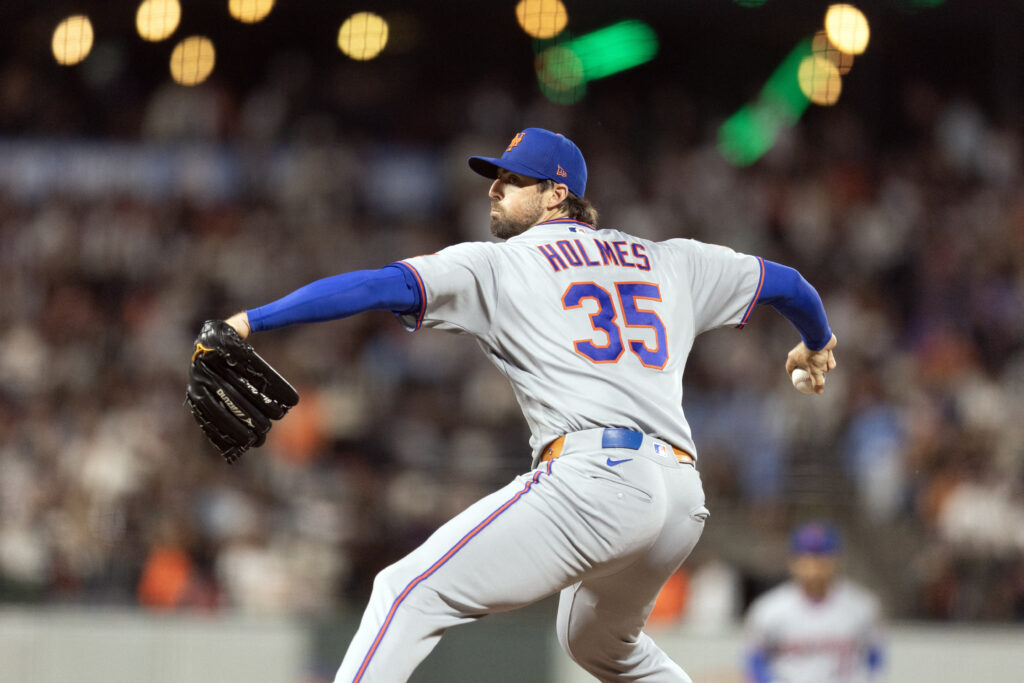
Brewers Enter Sweepstakes for Elite Closer Clay Holmes
Mets Expected to Trade Clay Holmes Before Deadline: What You Need to Know
The Big News
The New York Mets are widely expected to trade starting pitcher Clay Holmes before today’s trade deadline. Multiple reporters confirm the Milwaukee Brewers are among several teams talking to the Mets about a deal.
Important: MLB insider Mark Feinsand reports Holmes is expected to be traded within the next six hours.
Why the Brewers Want Holmes
They Missed Out on a Superstar
- The Brewers tried to acquire Tarik Skubal (a two-time Cy Young Award winner)
- They were even willing to pay his remaining $32 million salary
- But they couldn’t get a deal done
Holmes Fits Their Budget
- Holmes has about $3.96 million left on his contract this season
- Since the Brewers were ready to pay Skubal’s huge salary, Holmes’ much smaller number isn’t a problem
- The Mets don’t want to pay down salaries on their other veterans, making Holmes an easier get
Their Rotation Is Hurting
The Brewers lost two starters for the season:
- Brandon Woodruff (injured)
- Quinn Priester (injured)
Current Rotation Has Questions
| Pitcher | Status |
|---|---|
| Jacob Misiorowski | Cy Young favorite – the ace |
| Kyle Harrison | Returning soon from forearm/elbow issue |
| Logan Henderson | Young arm, nearing innings limit |
| Brandon Sproat | Young arm |
| Shane Drohan | Already topped last year’s innings total |
| Robert Gasser | First full season back from elbow surgery, workload concerns |
Bottom line: They need a reliable veteran arm, and Holmes fits perfectly.
Who Is Clay Holmes?
The Basics
- Age: 33 years old
- Position: Starting pitcher (used to be a reliever)
- Contract: Signed 3-year, $38 million deal with Mets before 2025 season
- Injury: Fractured fibula in May (hit by a line drive back at him)
- Status: Hasn’t pitched in a big league game since May
His Mets Success Story
Converting from reliever to starter was "one of the few things to have gone right for the Mets over the past couple seasons."
Since signing with the Mets:
- 218⅓ innings pitched
- 3.26 ERA (very good!)
- 18.9% strikeout rate
- 9.1% walk rate (doesn’t walk many batters)
- 55.8% ground ball rate (gets batters to hit the ball on the ground)
The Secret Weapon: Ground Balls + Great Defense
Holmes gets batters to hit ground balls over half the time (55.8%). This is huge for the Brewers because their infield defense is outstanding:
- Brice Turang — Plus defender
- Cooper Pratt — Plus defender
- Joey Ortiz — Plus defender
Key Insight: When a pitcher gets lots of ground balls AND plays in front of great infielders, more outs happen. It’s a perfect match!
The Contract Complication
There’s a catch with Holmes’ contract that affects his trade value:
The Player Option
- 2026 Salary: $12 million
- But: It’s a player option — Holmes decides whether to stay or become a free agent
The Dilemma for the New Team
| Scenario | What Happens |
|---|---|
| Holmes pitches well | He opts OUT → becomes free agent → new team loses him |
| Holmes struggles or gets hurt | He opts IN → new team stuck paying $12M for a bad/injured pitcher |
This "heads I win, tails you lose" situation lowers what teams will give up for him.
Why the Mets Will Trade Him Anyway
1. Strong Interest
Multiple teams want him — competition drives up the return.
2. No Extension Talks
Holmes himself says there have been no contract extension discussions.
3. Better Than the Alternative
If the Mets kept him and made a "qualifying offer" after the season:
- They’re a luxury tax payor (high payroll team)
- They’d only get a draft pick between rounds 4 and 5
- A trade should bring back better value than that
Summary
| What’s Happening | Why It Matters |
|---|---|
| Mets trading Clay Holmes today | Deadline approaching, multiple suitors |
| Brewers are leading candidates | Need rotation help, have money, great defense |
| Holmes has been excellent as a starter | 3.26 ERA, elite ground ball rate |
| Perfect fit for Brewers’ infield | Ground balls + great defenders = more outs |
| Contract has player option risk | Lowers trade value slightly, but deal still likely |
| Mets motivated to deal | Better return than draft pick compensation |
FAQ
What is the trade deadline?
The trade deadline is the last day during the season when teams can trade players with each other. After this date, no trades are allowed until the offseason.
What’s a "player option"?
A player option lets the player (not the team) decide if they want to stay for the final year of their contract. If they play well, they can leave for more money. If they play poorly or get hurt, they can stay and collect the guaranteed money.
Why does ground ball rate matter?
Ground balls are easier for defenses to turn into outs than fly balls (which can become home runs) or line drives. A 55.8% ground ball rate is elite — most pitchers are around 40-45%.
What’s a "qualifying offer"?
A one-year contract offer teams can make to their own free agents. If the player rejects it and signs elsewhere, the original team gets a draft pick as compensation. The pick’s position depends on the team’s payroll status.
Who is Jacob Misiorowski?
He’s the Brewers’ ace — their best starting pitcher. He’s having such a good season he’s considered a favorite to win the Cy Young Award (given to the best pitcher in each league).
Trade deadline drama moves fast! By the time you read this, Holmes might already be a Brewer — or headed somewhere else entirely.