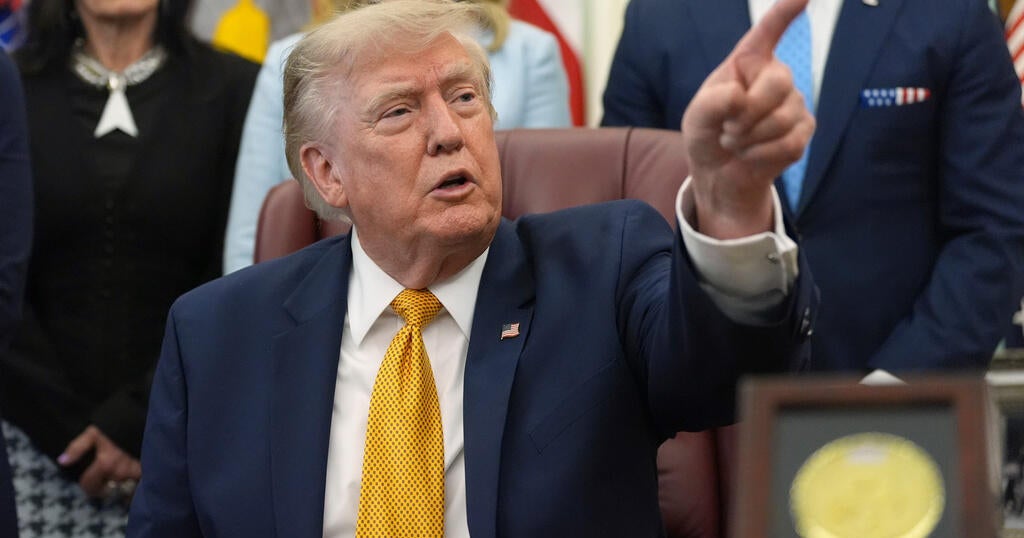
Trump Hints at Iran Talks; Officials Say ‘None Planned’
Trump and Iran: A Simple Guide to the Latest Disagreement
What Just Happened?
Imagine two kids on a playground who aren’t getting along. One says, "We’re going to talk this afternoon!" The other says, "No we’re not — I’m only talking to my friend over here." That’s basically what happened between the United States and Iran this week.
The Timeline: Step by Step
- Sunday — President Trump announces he called off planned military strikes on Iran
- Sunday — Trump says U.S.-Iran talks will restart Monday afternoon and a "deal is imminent"
- Monday — Iran says: "Wait, no talks are planned. We’re only talking to Oman about the Strait of Hormuz"
- Monday — Trump responds on Truth Social, calling Iran’s leaders "unbelievably duplicitous" (that means dishonest or two-faced)
Important Point: The Strait of Hormuz is a narrow waterway where a huge amount of the world’s oil passes through. It’s like a critical hallway that everyone needs to use.
What Each Side Is Saying
President Trump’s Claims
- He called off "massive strikes" because Gulf allies and Iran asked for diplomacy
- Iran "begged" for talks
- Talks were scheduled to begin Monday with more planned
- Iran will never get a nuclear weapon — period
Iran’s Response
- No talks with the U.S. were planned for Monday
- They’re only negotiating with Oman right now
- Those talks are about the Strait of Hormuz, not a nuclear deal
Why This Matters (In Simple Terms)
| Issue | Why It Matters |
|---|---|
| Nuclear Weapons | The world doesn’t want Iran building nuclear bombs |
| Oil Prices | Fights near the Strait of Hormuz can make gas prices go up everywhere |
| War vs. Peace | Talks = chance for peace. No talks = higher chance of fighting |
| Trust | If countries say different things about whether they’re talking, it’s hard to believe either one |
Key Players You Should Know
- Donald Trump — U.S. President (at the time of this event)
- Iran’s Leadership — The government of Iran, led by Supreme Leader Ayatollah Khamenei
- Oman — A neighboring country that often helps mediate (help two sides talk) in the region
- Gulf Allies — Countries like Saudi Arabia and UAE that are U.S. partners in the region
Summary
President Trump said he stopped planned attacks on Iran because both sides agreed to talk. He announced talks would restart Monday. Iran said "that’s not true — we’re only talking to Oman about a shipping lane." Trump then got angry and posted that Iran’s leaders are dishonest and "begged" for meetings. The big picture: the U.S. wants to stop Iran from getting nuclear weapons, and both sides are sending mixed messages about whether diplomacy is actually happening.
FAQ
Did the U.S. and Iran actually talk on Monday?
No. Iran explicitly denied any talks were scheduled with the U.S. that day.
Why did Trump call off the strikes?
He says Gulf allies and Iran asked him to give diplomacy a chance instead of military action.
What is the Strait of Hormuz and why does it matter?
It’s a narrow waterway between Iran and Oman where about 20% of the world’s oil passes through. If it gets blocked or threatened, gas prices everywhere can spike.
What does "duplicitous" mean?
It means two-faced or dishonest — saying one thing but doing another, or telling different stories to different people.
Can Iran get a nuclear weapon now?
That’s the core disagreement. The U.S. says "never." Iran says its nuclear program is for peaceful energy. International inspectors monitor this, but trust is very low.
This article explains a breaking news event in simple terms. For the latest updates, check reliable news sources.