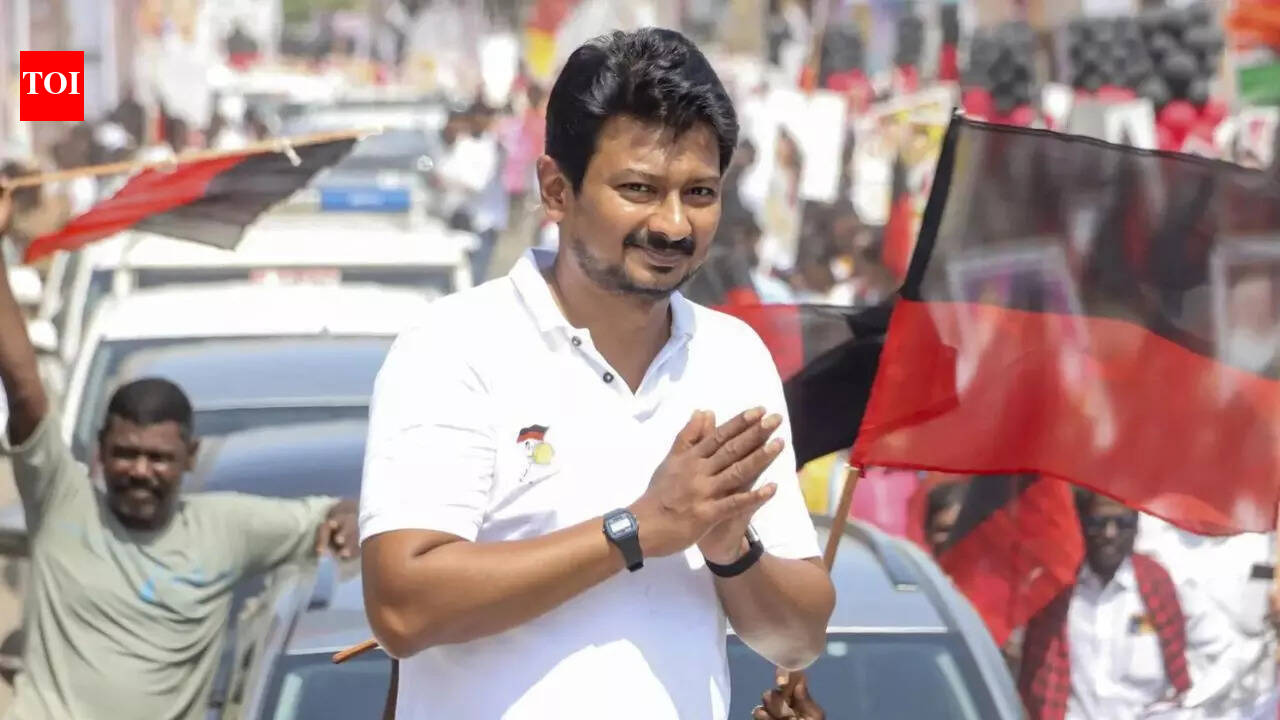
Udhayanidhi Stalin Rushes to Madras HC for Bail Over ‘Vulgar’ Remarks Storm
DMK Leader Udhayanidhi Stalin Seeks Court Protection After Controversial Rally Remarks
TL;DR: Tamil Nadu politician Udhayanidhi Stalin asked a court for protection from arrest after his speech at a protest rally sparked complaints about "vulgar" and "sexually suggestive" comments aimed at the Chief Minister and women in general.
What Happened? (The Simple Version)
Imagine a big public meeting where a politician is speaking. He makes a joke that has two meanings — one innocent, one dirty. People get angry. A rival party complains to the police and a national women’s rights group. The politician worries he might get arrested, so he runs to a high court asking: "Please don’t let them arrest me yet."
That’s exactly what happened in Tamil Nadu this week.
The Timeline: Step by Step
- Monday – DMK holds a rally in Thanjavur to protest about Cauvery water sharing (a long-standing dispute with Karnataka).
- During the speech – Udhayanidhi Stalin (DMK leader & Leader of Opposition) responds to crowd slogans with a double-entendre remark targeting Chief Minister C. Joseph Vijay.
- Same day – Rival party TVK (Tamilaga Vettri Kazhagam) files a police complaint → FIR registered against Udhayanidhi.
- Tuesday morning – Udhayanidhi’s lawyer rushes to Madras High Court seeking anticipatory bail (protection from arrest before it happens).
- Tuesday afternoon – Justice G.K. Ilanthiraiyan agrees to hear the plea later that day.
- Also Tuesday – TVK complains to the National Commission for Women (NCW), alleging the remarks were:
- "Vulgar"
- "Objectifying"
- "Sexually suggestive"
- An insult to women’s dignity in public life
Who’s Who? (Key Players Made Simple)
| Person / Group | Role |
|---|---|
| Udhayanidhi Stalin | DMK leader, Tamil Nadu Leader of Opposition, son of CM M.K. Stalin |
| C. Joseph Vijay | Chief Minister of Tamil Nadu (referred to in the original report) |
| TVK (Tamilaga Vettri Kazhagam) | Rival political party that filed complaints |
| Pazha Selvakumar | TVK national spokesperson |
| NCW (National Commission for Women) | Government body protecting women’s rights |
| Madras High Court | Top court in Tamil Nadu where bail plea was filed |
| Justice G.K. Ilanthiraiyan | Judge hearing the anticipatory bail petition |
What Is "Anticipatory Bail"?
Think of it like a "pre-emptive shield."
Normally, police arrest you first, then you ask for bail.
Anticipatory bail lets you ask a court before arrest: "If they try to arrest me, please say no — I’ll cooperate with the investigation."
It’s granted under Section 438 of the CrPC (now Section 484 of the Bharatiya Nagarik Suraksha Sanhita, 2023).
Why Is the NCW Involved?
The NCW steps in when a complaint alleges:
- Outraging the modesty of women (a criminal offence)
- Public obscenity
- Sexually suggestive language in public discourse
TVK’s complaint says Udhayanidhi’s remarks:
- Objectified women
- Lowered standards of political speech
- Undermined dignity of women in public life
They’ve asked the NCW to:
- Take formal notice of the speech + video
- Demand an explanation & unconditional public apology
- Push for legal action under the Bharatiya Nyaya Sanhita (BNS) — India’s new criminal law code
Important Points to Remember
CALL OUT BOX: KEY TAKEAWAYS
- The FIR was filed after a political rally, not a private conversation.
- The remark was allegedly a double entendre — a phrase with a "clean" and a "dirty" meaning.
- Two parallel tracks now:
① Criminal case in Thanjavur (police/FIR)
② Rights-based complaint at NCW (women’s dignity)- Anticipatory bail ≠ innocence — it only delays arrest while the court checks if the case has merit.
- The Bharatiya Nyaya Sanhita (BNS) replaced the old IPC in July 2024 — so new sections apply.
Summary
- Udhayanidhi Stalin made a controversial remark at a Cauvery protest rally in Thanjavur.
- TVK called it vulgar and sexist → filed police complaint (FIR) + NCW complaint.
- Fearing arrest, Udhayanidhi asked Madras High Court for anticipatory bail.
- Court agreed to hear it the same afternoon.
- The case now sits at the intersection of political rivalry, free speech, and women’s rights.
FAQs (Your Questions, Answered Simply)
1. What is a "double entendre"?
A phrase that has two meanings — one innocent, one sexual or offensive. Example: "That’s what she said" jokes.
2. Can a politician be arrested for a speech?
Yes. Freedom of speech isn’t absolute. Laws ban obscenity, defamation, hate speech, and outraging modesty. If a court thinks the remark crosses the line, arrest is possible.
3. What happens if anticipatory bail is granted?
Police cannot arrest him without court permission. He must still cooperate with the investigation (appear when called, don’t tamper with evidence).
4. What is the Bharatiya Nyaya Sanhita (BNS)?
India’s new criminal law (effective July 2024), replacing the 1860 Indian Penal Code (IPC). It has updated sections for obscenity, women’s dignity, etc.
5. Why did TVK go to both police AND NCW?
Police handle criminal cases (FIR, arrest, trial).
NCW protects women’s constitutional rights — it can recommend action, summon people, and pressure authorities. Two different tools for two goals.
This article is based on a news report from The Times of India (Chennai edition) and simplified for easy understanding. No legal advice is intended.