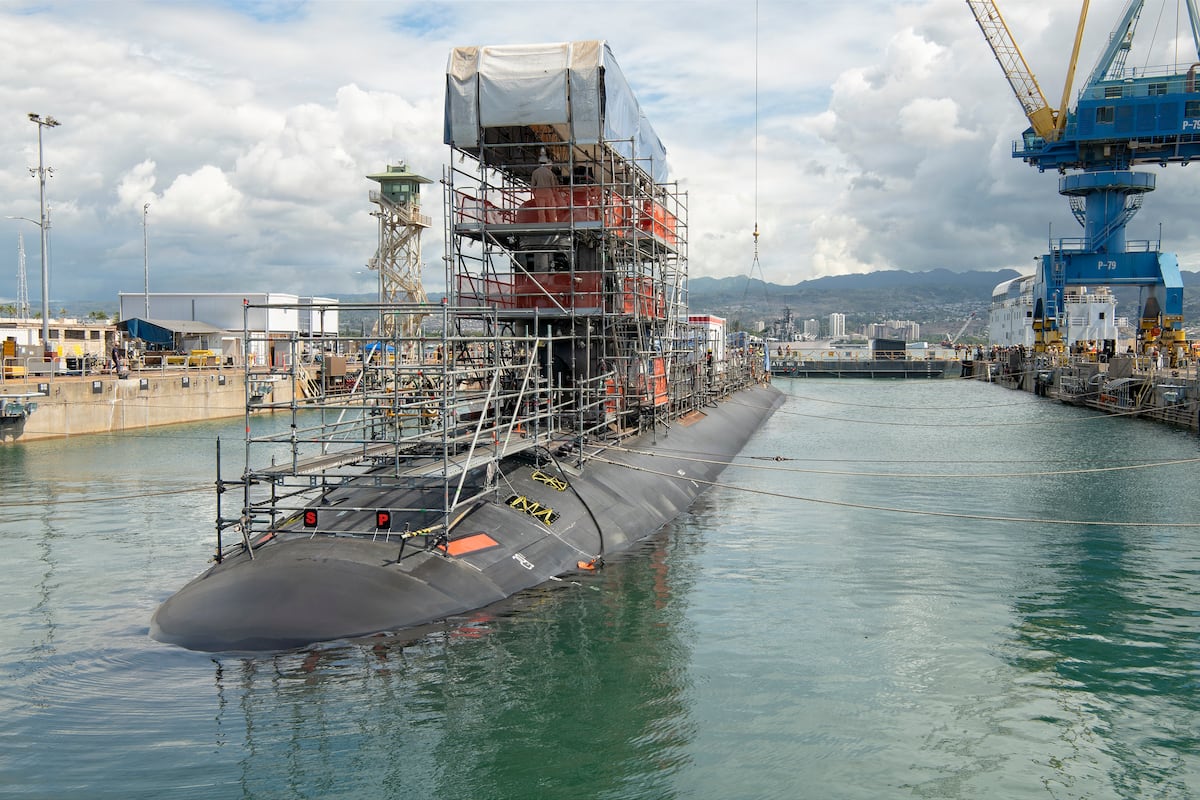
$76.6 Billion: Navy Locks In Next-Gen Submarine Power
U.S. Navy Invests $76.6 Billion in New Submarines: What You Need to Know
The Big Announcement
The U.S. Navy just made one of the biggest shipbuilding deals in history. Think of it like placing a massive order for the most advanced underwater vehicles on the planet. Here’s the headline:
The Department of Defense is spending $76.6 billion to build 14 new submarines over the coming years.
This isn’t just about buying boats—it’s about maintaining America’s ability to operate secretly and powerfully beneath the ocean waves for decades to come.
Breaking Down the $76.6 Billion
The contract splits the money between two major shipbuilders and three distinct purposes:
| Amount | Purpose | Details |
|---|---|---|
| $29.5 billion | 5 Columbia-class submarines (Build II) | Built by General Dynamics Electric Boat |
| $42.1 billion | 9 Virginia-class submarines (Block VI) | Built by both General Dynamics Electric Boat and Huntington Ingalls Industries–Newport News Shipbuilding |
| $5 billion | Nuclear shipbuilding programs & infrastructure | Investments to support both shipyards |
IMPORTANT POINT: This contract keeps both production lines running continuously. That means steady jobs, stable supply chains, and no gaps in capability.
Meet the Two Submarine Classes
The Columbia-Class: The "Ultimate Insurance Policy"
- Mission: Carry nuclear missiles as part of America’s nuclear triad (land, air, and sea-based nukes)
- Replaces: The aging Ohio-class submarines
- Started construction: 2020
- First delivery: Originally 2027 → now 2028 (delayed due to steam turbine and bow/stern issues)
- Superpowers:
- More missiles than the Ohio-class
- Better stealth (quieter, harder to detect)
- Will carry Trident II D5 missiles + future hypersonic missiles
Fun Fact: An Ohio-class sub just proved its worth in June 2025 during Operation Midnight Hammer, launching strikes against Iranian nuclear facilities.
The Virginia-Class: The Versatile Workhorse
- Mission: Fast-attack, intelligence gathering, special ops support
- Replaces: Los Angeles-class submarines
- First launched: 2003 (so this design is battle-tested)
- Special feature: A reconfigurable torpedo room that can house Special Operations Forces for long missions
- Current fleet: 26 active + 23 more already in the pipeline
Why This Matters: The Nuclear Triad
You might hear the term "nuclear triad" thrown around. Here’s the ELI5 version:
America’s nuclear deterrent rests on three "legs":
- Land: Missiles in silos (Minuteman III ICBMs)
- Air: Bombers (B-2, B-52, future B-21)
- Sea: Submarines (Ohio-class now, Columbia-class soon)
The submarine leg is considered the most survivable because hidden subs are nearly impossible to find and destroy. That’s why the Columbia-class is the Navy’s #1 priority.
Current Status and Challenges
What’s Going Well
- 7 Columbia-class subs already under contract
- 49 Virginia-class subs total (26 active + 23 building)
- FY2027 budget requests $378 billion including 1 Columbia + 2 Virginias
The Challenges
- Columbia delays: First sub pushed from 2027 → 2028
- GAO warning (Jan 2023): Contractor hadn’t done a "schedule risk analysis" – basically a "what could go wrong and when" study
- Complexity: Building nuclear subs is arguably the hardest manufacturing challenge on Earth
IMPORTANT POINT: The Government Accountability Office (GAO) acts like a financial watchdog. Their 2023 report flagged that without proper risk analysis, the Columbia program might face more delays and cost overruns.
What’s Next?
The Road Ahead (Simplified)
- Shipyards ramp up – Both Electric Boat and Newport News expand facilities/workforce
- Columbia construction continues – Overcoming turbine and hull section delays
- Virginia Block VI builds – Incorporating latest tech upgrades
- Infrastructure investment – That $5 billion modernizes the industrial base
- First Columbia delivers (2028) – Then steady production begins
- Ohio-class retires – As Columbias come online, Ohios bow out
Summary
- $76.6 billion for 14 new submarines (5 Columbia + 9 Virginia)
- Columbia-class = Nuclear deterrent replacement (top priority)
- Virginia-class = Multi-mission attack subs (proven design)
- Delays exist but funding is locked in for continuous production
- Goal: Unmatched undersea superiority for decades
FAQ
Why does the Navy need two different types of submarines?
A: They do totally different jobs. Columbia-class are "boomers" – their only job is to hide and carry nuclear missiles for deterrence. Virginia-class are "hunter-killers" – they hunt enemy ships/subs, gather intel, launch conventional missiles, and drop off Navy SEALs.
What’s a "schedule risk analysis" and why does it matter?
A: It’s a formal study that asks: "What could delay this project, how likely is it, and how bad would it be?" The GAO recommends it for big programs. Without it, you’re flying blind on timeline risks – which is exactly what happened with Columbia’s delays.
How many submarines does the Navy currently have?
A: 26 active Virginia-class submarines right now, plus 23 more already funded and in the pipeline. For Columbia-class, 7 are under contract but none delivered yet (first arrives ~2028).
What are hypersonic missiles and why do they matter on a sub?
A: Hypersonic missiles fly faster than Mach 5 (3,800+ mph) and can maneuver unpredictably. Putting them on a stealthy submarine means the Navy could strike targets almost anywhere, with almost no warning, from a platform nobody can find.
Is this $76.6 billion on top of the regular Navy budget?
A: This contract covers multi-year procurement – buying in bulk to save money. The FY2027 budget request of $378 billion includes funding for the next Columbia and two Virginias. So it’s part of the overall plan, not a surprise add-on.