
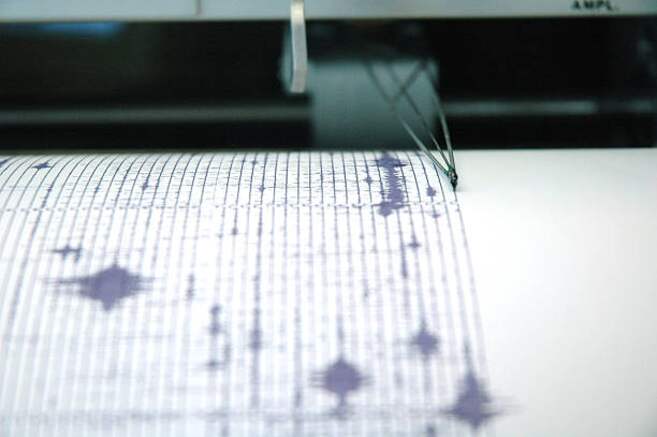
¡ALERTA ROJA! Sismo de 6,7 estremece a Colombia completa
Strong Earthquake Shakes Colombia: What Happened and Why It Matters
What Happened? The Morning Shake
On Monday, August 10th, at 7:34 AM, a strong earthquake hit Colombia. Here are the key facts you need to know:
| Detail | Information |
|---|---|
| Magnitude | 6.6 (Considered a "strong" earthquake) |
| Depth | 96 kilometers (Relatively shallow, which means shaking is felt more strongly at the surface) |
| Epicenter | San José del Palmar, Chocó (A municipality in the Pacific region) |
| Felt In | All over the country! Reports came from Bogotá, Medellín, Cali, Bucaramanga, Villavicencio, Cúcuta, Valledupar, Envigado, and many more. |
Official Response
- UNGRD (National Disaster Risk Management Unit): Immediately started coordinating with local authorities to check for damage.
- Bogotá Mayor Carlos Galán: Reported no major structural damage or injuries, only "some cracks in buildings." City emergency teams began checking every neighborhood.
Why Does Colombia Shake So Much? (The "ELI5" Geology Lesson)
Imagine the Earth’s crust is like a giant, cracked eggshell floating on hot, melted rock. These pieces of shell are called Tectonic Plates. Colombia sits right on top of where three massive plates crash into each other:
- The Nazca Plate (Pacific Ocean floor)
- The South American Plate (Where we live)
- The Caribbean Plate (North of Colombia)
The "Crash Zones" (Subduction)
When two plates meet, one usually dives under the other. This is called Subduction. It’s like sliding a rug under a sofa—it bunches up, builds pressure, and snaps (an earthquake!).
- Pacific Coast: The Nazca Plate dives under South America. This creates the Andes Mountains, volcanoes, and lots of earthquakes.
- Caribbean Coast: The Caribbean Plate dives under South America. Another major shake zone.
The "Bucaramanga Seismic Nest" – A World Rarety
Near the town of Los Santos (Santander), there is a bizarre geological spot called the Nido Sísmico de Bucaramanga (Bucaramanga Seismic Nest).
DID YOU KNOW?
60% of ALL earthquakes in Colombia happen right here.
There are only THREE places like this in the entire world:
- Bucaramanga, Colombia
- Vrancea, Romania
- Hindu Kush, Afghanistan
It’s a unique spot where quakes happen continuously at intermediate depths (not on the surface, not super deep).
By The Numbers
- ~2,500 earthquakes per month (on average).
- ~300,000 total recorded in the last 30 years by the National Seismological Network.
- Most are tiny—you don’t feel them. But the big ones remind us: We live on shaky ground.
Can We Predict Earthquakes?
The Short Answer: NO.
Despite amazing science, no one can predict exactly when, where, or how big an earthquake will be. The Earth’s crust is too complex; the "breaking point" is impossible to forecast like weather.
The Good News: Early Warning Systems (Alertas Tempranas)
Your phone might buzz seconds before shaking starts. This is NOT prediction. It is fast detection.
How It Works (The Race of the Waves)
Earthquakes send out two main types of waves:
- P-Waves (Primary): Fast, gentle, arrive first.
- S-Waves (Secondary): Slower, violent, do the damage.
The System:
- Sensors near the epicenter feel the P-waves.
- Computers instantly calculate: "Big quake coming! S-waves are 10 seconds away from Bogotá!"
- Alert sent to phones/sirens before the S-waves arrive.
What Can You Do With 10–30 Seconds?
- Drop, Cover, Hold On.
- Open elevator doors / stop trains.
- Shut off gas valves / industrial machinery.
- Surgeons can pause operations.
LIMITATIONS:
- Only works if sensors are close to the epicenter.
- Only works if you are far enough from the epicenter (if you’re on top of it, the S-waves arrive almost with the P-waves—no time!).
- Requires infrastructure: Countries like Mexico, Japan, and the USA have advanced networks. Colombia is working on it.
So… What Should Colombia Do? (Building a "Quake Culture")
Julio Fierro, former director of the Servicio Geológico Colombiano (SGC), says it best:
"We cannot predict them. We MUST build a culture of what it means to live in a seismically active zone. Like Mexico, Chile, or Japan."
4 Steps to a Safer Colombia
- Build Right: Enforce strict anti-seismic building codes (flexible structures, good foundations).
- Prepare People: Regular drills (simulacros) in schools, offices, homes. Everyone knows: Drop, Cover, Hold On.
- Plan Ahead: Family meeting spots, emergency backpacks (water, flashlight, docs, meds), know how to shut off gas/electricity.
- Invest in Tech: Expand the sensor network for early warnings nationwide.
KEY TAKEAWAYS (Important Points)
- Colombia is HIGHLY seismic. Three tectonic plates meet here.
- The August 10th quake (M6.6) was strong but deep (96km); widely felt, limited damage reported so far.
- 60% of quakes come from the unique Bucaramanga Seismic Nest (1 of 3 globally).
- PREDICTION = IMPOSSIBLE. Don’t believe anyone who says "a big one is coming Tuesday."
- EARLY WARNING = REAL. Seconds of notice via phone alerts (where system exists) = Lifesaving action time.
- PREPARATION = OUR BEST DEFENSE. Building codes + Drills + Family Plans = Saved Lives.
Summary
Colombia just experienced a significant Magnitude 6.6 earthquake centered in Chocó, felt nationwide. While major damage appears minimal this time, the event is a stark reminder: Colombia sits on a tectonic triple junction. With the Nazca, South American, and Caribbean plates colliding, and a world-rare Seismic Nest in Bucaramanga producing 60% of the country’s quakes, shaking is a fact of life. We cannot predict earthquakes. But we can detect the first fast waves (P-waves) to send early warnings seconds before the destructive waves (S-waves) hit. The only true safety lies in preparation: earthquake-resistant construction, practiced drills, family emergency plans, and investing in a nationwide sensor network. Live ready, stay calm.
FAQ: Your Earthquake Questions Answered
1. Why was the August 10th quake felt so far away (even in Bogotá) if the epicenter was in Chocó?
Because it was relatively shallow (96 km) and large (M6.6). Shallow quakes transmit energy efficiently through the crust. Think of hitting a bell— the vibration travels far.
2. Is the "Bucaramanga Seismic Nest" a volcano?
No. It’s a zone deep underground (~150km) where a piece of plate is possibly tearing or stuck, causing constant small-to-moderate quakes. There are no volcanoes directly associated with it.
3. If my phone didn’t alert me, does the system not work in Colombia?
Colombia does not yet have a nationwide, public cell-phone early warning system like Mexico’s SASMEX or Japan’s EEW. Some private apps or building systems may exist, but a national public alert system is still in development.
4. What is the single most important thing to do DURING shaking?
DROP, COVER, HOLD ON.
- DROP to hands and knees (prevents falling).
- COVER head/neck under sturdy table/desk (or against interior wall).
- HOLD ON to your shelter until shaking stops. DO NOT RUN OUTSIDE. Falling debris kills.
5. Are big quakes becoming more frequent in Colombia?
No. The rate is stable (~2,500/month). We just detect more small ones now with better instruments, and social media makes every felt quake instantly viral. Awareness ↑, not necessarily hazard ↑.