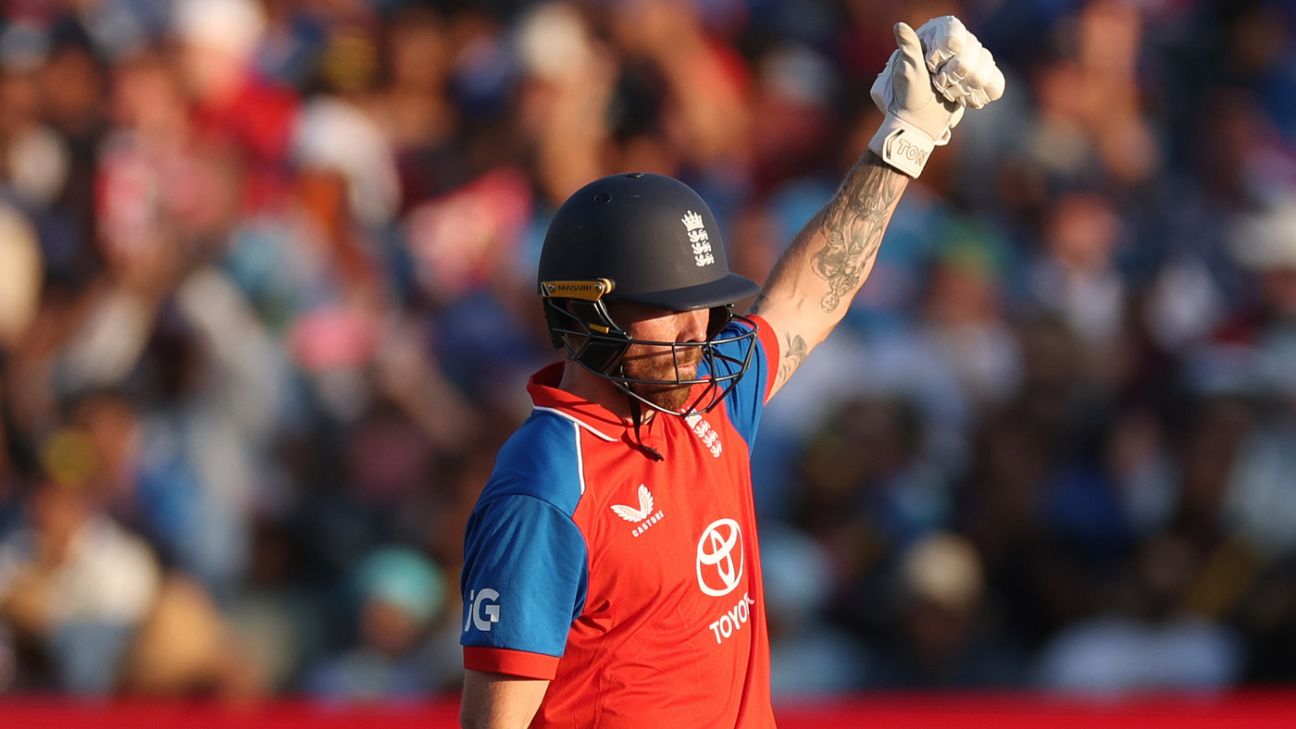
ENG vs IND 2026: 5th T20I Preview — Who Will Dominate?
India’s Cricket Struggles in England: A Simple Guide to the T20I Series
Big Picture: India Seek More Than a Consolation
Imagine a school trip where you were supposed to celebrate a friend’s first day at a new game, but instead you keep tripping and falling in brand-new, embarrassing ways. That’s what’s happening with India’s short-format cricket team (called T20I – think of it as a quick match where each side gets just 20 turns, called overs, to score runs).
India’s tour of Ireland and the UK was meant to spotlight the international debut (first ever match for the country) of young player Vaibhav Sooryavanshi. Instead, they’ve been collecting unwanted firsts:
- First-ever defeat to Ireland.
- First time losing five T20I matches in a row.
- First defeat to England in a multi-match head-to-head series (called bilateral, meaning just two teams playing each other).
- Heaviest defeat (biggest loss by runs or wickets) in this format.
- Heaviest series loss (even if they win the final game).
In past two-team series, India had only lost three games once before – a 3‑2 loss away to West Indies in 2023. They have never been whitewashed (meaning losing every single match) in series of three games or more. Unless they stop the losing streak in Southampton and avoid a 4‑0 score, that will add two more unwanted firsts.
Important Callout: If England win the fifth match, they will take India’s No. 1 world ranking (like being top of the class). This doesn’t mean much because India won the last two Men’s T20 World Cups, but it would still boost England’s new captain‑coach pair, Harry Brook and Brendon McCullum, who might soon work together in the longer red‑ball format too. England have won 19 of their last 22 games since last summer and are playing brilliantly.
There’s never a good time to lose in international cricket, especially when you’re trying to rebuild after being champions, like India is. The only way to break the bad habit is to win.
Form Guide
Think of this as recent report cards (most recent match first):
- India: L L L L L (five losses in a row)
- England: W W W L W (mostly wins, one loss)
In the Spotlight: Jos Buttler and Shreyas Iyer
Jos Buttler (England): He’s had a tough time. For 18 straight innings, he hasn’t scored 40 runs in a T20I. Normally he averages much higher, but lately he’s averaged only 15.16 runs and scored at a slower pace (strike rate 131.88, which means runs per 100 balls faced). Usually, his opening partner Phil Salt and he make a great pair, but only one is doing well now.
Picture note: In the 3rd match at Nottingham on July 07, 2026, a player named Prince Yadav bowled Buttler out with his very first ball (Getty Images).
Shreyas Iyer (India): When he came to Belfast to start the tour, he likely hoped for success. After six finished games, his only wins have been the coin toss (he called it right all six times!). He did show batting skill, like an unbeaten 80 runs from 48 balls in the last game, but that just showed his teammates didn’t support him enough.
Team News: Could Shedge Get a Chance?
England’s captain Brook said they’ll “stick to their guns” (keep the same plan). They picked Rehan Ahmed for extra batting on a small field in Bristol, but neither he nor Liam Dawson has bowled or faced a ball in the last two games anyway.
England’s likely players (numbered as batting order):
- Phil Salt
- Jos Buttler (wicketkeeper)
- Harry Brook (captain)
- Jacob Bethell
- Tom Banton
- Sam Curran
- Will Jacks
- Rehan Ahmed
- Adil Rashid
- Jofra Archer
- Josh Tongue
India might bring in Suryansh Shedge instead of Dube to mix up the batters (break a line of left‑handed players) and give him a look. They will miss Harshit Rana and Varun Chakravarthy, who got tour‑ending injuries in Nottingham.
India’s likely players (numbered as batting order):
- Abhishek Sharma
- Vaibhav Sooryavanshi
- Ishan Kishan (wicketkeeper)
- Shreyas Iyer (captain)
- Tilak Varma
- Shivam Dube or Suryansh Shedge
- Axar Patel
- Washington Sundar
- Arshdeep Singh
- Prince Yadav
- Prasidh Krishna
Pitch and Conditions: Big Boundaries and Good Memories
The Utilita Bowl ground in Southampton has some of the biggest edges (boundary ropes) in England, with roughly equal distances all around. India won the only previous T20I there four years ago comfortably. This season, in local Hampshire “Blast” games, the average first‑innings score was 174, and teams successfully defended scores of 173, 190, and 200.
Stats and Trivia
Here are some fun facts and numbers:
- Liam Dawson’s absence in Bristol ended his streak of 24 straight T20I appearances since last June.
- Adil Rashid will become only the sixth player to reach 150 men’s T20I appearances (called caps) if he plays on Saturday. Jos Buttler is set for his 160th cap, moving ahead of George Dockrell and Rohit Sharma as the second most‑capped player, behind Paul Stirling (163).
- Phil Salt faced a maiden over (no runs scored in a set of 6 balls) in only one of his first 341 T20 games, back in 2018 against Sam Curran at Hove. Thanks to Arshdeep Singh, he has now faced maiden overs in two games in a row.
Quotes
“We’re playing some exceptional cricket. We probably didn’t expect to be going into Southampton 3‑0 up, but we’ve played some really good cricket.”
— Harry Brook, surprised by England’s dominance“The big prize is two years down the line in Australia. Do we want to be a team that smashes 250 in India and looks great when you hit an 80‑metre six at Eden Gardens? Or do we want to come to places like [Bristol] and Manchester and Southampton where things are slightly different – and, thinking further down the line, the MCG and those sorts of places? Do we want to be the team that excels in different conditions?”
— India assistant coach Ryan ten Doeschate, pushing batters to adapt
Summary
India’s T20I tour has been full of surprises – but not the good kind. They have suffered record losses, risk losing their top ranking, and need a win in the final match to avoid a complete whitewash. England, led by Brook and McCullum, are flying high. Key players like Buttler and Iyer are under pressure, and team changes are possible. The next game at the big Southampton ground offers India a chance to remember past success and rebuild confidence. In the end, cricket is about learning and adapting, as India’s coach reminds them.
Reporting by Alan Gardner, deputy editor at Cricinfo. @alanroderick
FAQ
Q1: What is a T20I in cricket?
A: It’s a short form of cricket where each team bats for a maximum of 20 overs (each over is 6 balls). The “I” stands for international, meaning it’s between countries.
Q2: What does “whitewash” mean?
A: It means one team loses every single match in a series. For example, if India loses all 4 games, they are whitewashed 4‑0.
Q3: Why is the ICC ranking important?
A: It’s like a global scoreboard that shows which team is considered best based on recent results. But winning big tournaments (like World Cups) matters more for pride.
Q4: What is a “cap” in cricket?
A: A cap is counted each time a player appears in an international match for their country. So 150 caps means they’ve played 150 times.
Q5: What is a strike rate?
A: In batting, it’s how many runs a player scores per 100 balls faced. A higher strike rate means scoring faster.