Cuban Artist Luis Manuel Otero Alcántara Arrives in Miami After Prison Release
Who Is Luis Manuel Otero Alcántara?
Luis Manuel Otero Alcántara is a famous Cuban artist and musician who speaks out against the government (a "dissident"). He is 38 years old. He recently arrived in Miami on Saturday, July 18, 2026, after leaving Cuba. He had been in prison for five years, and he was only let out if he agreed to leave his home country.
Important: He accepted exile (being forced to live outside his country) as the only way to escape being punished and to keep making his art and activism.
A Warm Welcome in Miami
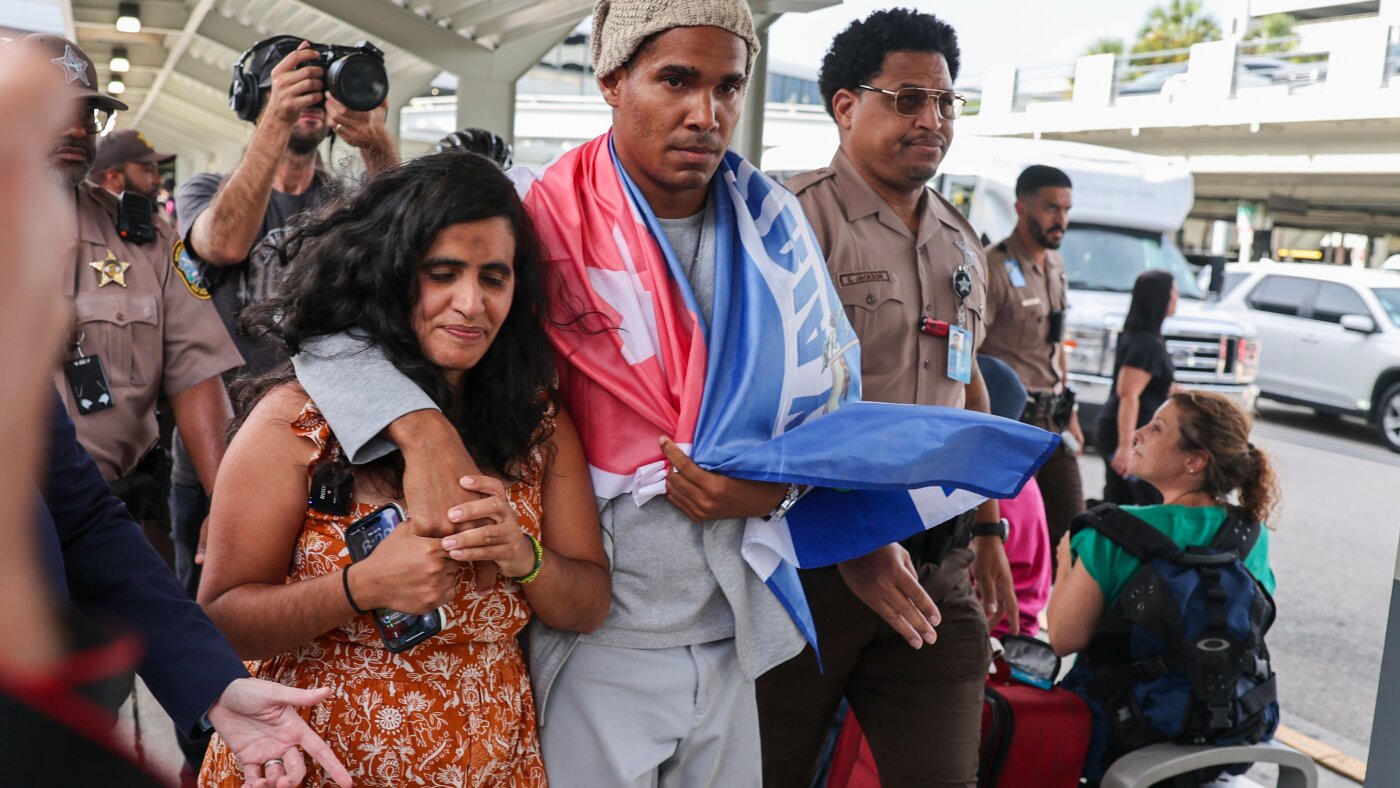
When Alcántara landed at Miami International Airport:
- A crowd was there cheering and singing.
- People held their phones up high to take his photo.
- They wrapped him in a Cuban flag that said "Patria y Vida" ("Homeland and Life").
- That phrase is the title of a song he shared a Grammy Award for.
- The song became a kind of anthem (a rallying song) for people in Cuba who oppose government repression (being controlled harshly).

Credit: David Santiago/AP
How Did He Get to the U.S.?
- The United States let him enter the country earlier in the week on something called "parole." Think of parole like a special permission to be in the country without full immigrant status.
- This was shared on a social media page run by his friends and supporters.
- They said he took exile as the only way to stay safe and keep creating art.
The San Isidro Movement
Alcántara helped start a group called the San Isidro Movement. Here are the simple facts:
- It is made up of artists, writers, and musicians in Havana (Cuba’s capital).
- It is named after the neighborhood where Alcántara lived.
His Arrest and Prison Time
Here is what happened step by step:
- On July 11, 2021, Alcántara was arrested during a public protest.
- In 2022, a court said he must spend five years in prison.
- The charges were: public disorder, contempt, and disrespect toward national symbols (like the flag).
- He was held in a maximum-security prison (a very strict, locked-down jail).
- He was supposed to be released the week before he flew to Miami, but for days no one could reach him or know where he was.
Concerns About His Treatment
- Human rights groups and the U.S. government said his arrest and jail time were wrong.
- Groups like Amnesty International called him a political prisoner (someone jailed for their beliefs, not a crime).
- The Cuban government said that was not true.
- An organization called Cubalex, which helps dissidents from outside Cuba, filed a "habeas corpus" petition on Monday. That is a legal request asking the government to prove why someone is being held.
- Until he got on the plane Saturday, his supporters were not sure where he was or if he was really free.
His First Stop and a Symbol of Hope
- Alcántara said his first stop in the U.S. would be the Shrine of Our Lady of Charity to make an offering (a gift or prayer).
- He brought a broken statue of the Virgin Mary from Cuba.
- He said it is a symbol of hope and healing—a chance to put something broken back together from pieces.
Others Still Imprisoned
- His advocates say other political prisoners are still in jail.
- One is his fellow artist Maykel "Osorbo" Castillo Pérez.
- They hope Alcántara’s release will push people to demand Pérez also be freed.
Summary
Luis Manuel Otero Alcántara, a 38-year-old Cuban dissident artist, arrived in Miami on July 18, 2026, after five years in prison. He was released only if he left Cuba. The U.S. gave him parole to enter. He co-founded the San Isidro Movement, was arrested in 2021 after a protest, and was sentenced in 2022. Supporters and human rights groups called him a political prisoner. He was welcomed in Miami with cheers and a flag, visited a shrine, and carried a broken statue as a symbol of hope. Others, like artist Osorbo, remain imprisoned.
FAQ
1. What does "dissident" mean?
A dissident is a person who publicly disagrees with their government, especially in a country where that is not allowed.
2. Why did Alcántara have to leave Cuba?
He was released from prison only on the condition that he leave the country, which is called exile.
3. What is the San Isidro Movement?
It is a group of Cuban artists, writers, and musicians started by Alcántara and others, named after his neighborhood in Havana.
4. What is "parole" in this story?
It is special permission from the U.S. government to enter and stay in the country without full immigration status.
5. Who is still in prison?
His fellow artist Maykel "Osorbo" Castillo Pérez is one of the political prisoners still held.
 1
1